


Views: 258 Author: Hongyuan Silicone Publish Time: 2026-10-19 Origin: Site


Content Menu
● How Silicone Factories Turn Global Orders Into Production Plans
>> Confirm Specifications Before Reserving Capacity
>> Separate OEM and ODM Scheduling Requirements
● Capacity Planning: Why Factory Size Is Only the Starting Point
>> Calculate Saleable Output, Not Theoretical Output
>> Schedule the Bottleneck First
● Material Readiness and Mold Availability Set the Pace
>> Align Material Purchasing With the Approved Order
>> Reserve Molds as Carefully as Machines
● An Illustrative 60-Day Silicone Kitchenware Production Schedule
● Scheduling Multiple Markets Without Mixing Requirements
>> Create a Destination-Specific Compliance Checklist
>> Distinguish Certifications, Audits, and Regulatory Compliance
● Three Scheduling Practices That Reduce Avoidable Delays
>> 1. Use a Frozen Production Window
>> 2. Group Similar Jobs Without Ignoring Delivery Priorities
>> 3. Allocate Work Across Sites by Capability
● Quality Control Must Be Built Into the Timeline
>> Use Quality Gates Before More Value Is Added
>> Keep Batch Identity Through Packing
● What Buyers Should See in a Production Status Update
● Plan Your Next Global Order With Hongyuan
>> How long does silicone kitchenware production take?
>> What usually delays a global silicone kitchenware order?
>> Can different silicone kitchenware products share one order?
>> Does production lead time include international shipping?
>> Can OEM and ODM orders use the same timeline?
>> What should buyers check before accepting a delivery promise?
Silicone factories manage production schedules for global orders by coordinating materials, molds, machine capacity, quality inspections, packaging, and shipping deadlines. For buyers sourcing silicone kitchenware, the most important question is not simply how quickly a factory can manufacture products. It is whether the supplier can turn an approved specification into a reliable delivery plan.
At Yangjiang Hongyuan Trading Co., Ltd., our manufacturing footprint includes a 4,500-square-meter main factory and a 2,000-square-meter branch factory. Our stated capability to complete one million products within 60 days provides a useful starting point for capacity discussions. However, every commitment must reflect the actual product mix, tooling requirements, customization, and destination.
From our perspective as a silicone kitchenware manufacturer, successful scheduling depends on one principle: coordination. A production promise becomes credible only when every department works toward the same release date.

An international purchase order is not yet a production-ready instruction. Before scheduling begins, the factory and buyer must agree on exactly what will be manufactured.
A complete order specification should identify:
- Product dimensions, weight, material, and hardness.
- Colors, logos, and surface finishes.
- Quantities for each stock-keeping unit, or SKU.
- Packaging, barcode, and carton requirements.
- Destination-specific testing and documentation.
- Inspection criteria and the required shipment milestone.
For silicone spatulas, baking molds, brushes, and utensil sets, small changes can affect different production stages. A revised handle design may require tooling changes. A new gift box may create an additional packaging lead time.
The practical rule is straightforward: freeze the specification before treating the delivery date as firm.
OEM projects generally follow buyer-defined specifications, while ODM projects typically start from a manufacturer-developed design that the buyer adapts.
Neither model guarantees a shorter lead time.
An existing design with approved tooling may move quickly. A heavily customized project may require engineering review, mold development, sampling, and additional testing before mass production can begin.
Buyers should therefore request separate dates for sample approval, tooling readiness, production completion, and shipment release.
Our combined factory area totals 6,500 square meters. That footprint supports a capacity discussion, but floor space alone cannot establish a reliable silicone kitchenware production schedule.
Actual output depends on available machines, compatible molds, working hours, operators, maintenance, and downstream processing.
A practical planning model is:
Saleable output = completed molding cycles × active cavities per mold × first-pass yield.
Suppose a mold produces several items per cycle. The planner must still account for setup time, equipment downtime, rejected pieces, and quality checks.
Our one-million-piece, 60-day capability should therefore be evaluated against the requested order configuration. A single standardized product and a mixed collection of differently packaged utensils create very different scheduling demands.
Buyers should also clarify whether "60 days" means calendar days or production days, and when the clock starts.
The busiest stage is not always molding.
A factory may have sufficient molding capacity but limited resources for:
- Trimming complex shapes.
- Product-specific post-curing, where required.
- Logo application.
- Assembling utensils with additional components.
- Building retail sets.
- Inspecting and packing finished goods.
A credible schedule checks the entire production route. Otherwise, unfinished inventory accumulates between departments while the shipping deadline approaches.
Production cannot start reliably unless the correct materials and tooling are ready.
Silicone compounds, pigments, inserts, handles, and packaging materials should be matched to the approved bill of materials.
For customized silicone kitchenware, planners should confirm material availability before promising a production start date. Incoming checks should verify that received materials match the agreed specification and supporting documentation.
Substitutions require controlled approval. An apparently minor material or pigment change can affect appearance, processing behavior, or the relevance of existing test reports.
A free machine does not create usable capacity if the required mold is unavailable.
Factories should account for mold maintenance, trial runs, cavity condition, and compatibility with the selected equipment.
Where backup tooling is available, planners should verify that it can produce equivalent products before relying on it for emergency capacity. Adding another mold without validating its output may create dimensional or cosmetic differences rather than solve the delay.

The following framework illustrates how a large order might be organized. It is not a documented customer case or a guaranteed Hongyuan production calendar.
It assumes established tooling, manageable customization, timely approvals, and suitable material availability.
| Planning window | Main activities | Release condition |
|---|---|---|
| Days 1–7 | Final specification review, capacity allocation, material confirmation | Approved production requirements |
| Days 8–14 | Material checks, tooling preparation, pilot production | Accepted pilot samples |
| Days 15–42 | Rolling molding, trimming, applicable secondary processing | Conforming batches released downstream |
| Days 25–50 | Assembly and packaging alongside completed batches | Correct products, labels, and pack quantities |
| Days 51–56 | Final inspection and document review | Approved shipment release |
| Days 57–60 | Loading preparation and agreed handover | Shipment milestone completed |
The overlap matters. Packaging can begin for approved batches while later batches remain in production, provided traceability and segregation remain intact.
International transit is separate unless explicitly included in the agreement. Factories and buyers should distinguish factory completion, carrier handover, vessel departure, and arrival at the destination warehouse.
Hongyuan serves customers across the European Union, United States, United Kingdom, Australia, and South America. These destinations should not be treated as one interchangeable compliance category.
Before production release, each order should identify:
1. The destination and intended food-contact use.
2. Relevant regulatory requirements and buyer specifications.
3. Required tests and representative samples.
4. Labeling and packaging requirements.
5. Documents required before shipment.
Testing should be planned early enough to allow investigation and corrective action if necessary.
For applicable repeated-use rubber articles in the United States, 21 CFR 177.2600 includes compositional and extraction requirements. German food-contact assessments may draw on BfR Recommendation XV for silicones, but that recommendation is not itself a binding legal standard.
These distinctions affect which samples, records, and approvals must be ready before dispatch.
Buyers often group ISO 9001, BSCI, LFGB, FDA, and REACH under "certifications." They describe different things.
| Term | What buyers should verify |
|---|---|
| ISO 9001 | Quality management system certificate, scope, covered site, and validity |
| amfori BSCI | Social compliance audit information; BSCI is not a product certification |
| LFGB | Relevant German legal requirements and product-specific supporting test evidence |
| FDA | Compliance with applicable U.S. requirements, not a blanket product approval claim |
| REACH | Applicable chemical restrictions and information obligations |
Hongyuan's stated credentials should be assessed through current supporting documents for the relevant facility and product. No single certificate demonstrates suitability for every market or application.
Once an order enters a committed production window, changes should pass through formal review.
A request to alter color, logo placement, or packaging should trigger an assessment of:
- Material already purchased.
- Work already completed.
- Additional sampling or testing.
- Revised production and shipment dates.
This protects the buyer from discovering the delivery impact only after the change has been accepted.
Manufacturers can reduce setup losses by sequencing compatible products, molds, or materials together.
However, the longest production run is not automatically the best schedule. A large batch may delay a smaller order with an earlier shipping deadline.
The planner must balance changeover efficiency against committed dates, available materials, and customer priorities.
A main factory and branch factory can provide scheduling flexibility, but they should not be treated as automatically interchangeable.
Before transferring work, confirm:
- Equipment and mold compatibility.
- Operator capability.
- Inspection arrangements.
- Traceability requirements.
- Buyer approval requirements.
- Transport time between locations.
For Hongyuan, the two-site footprint is a resource to evaluate during planning, not a reason to assume every operation can move freely between facilities.
A schedule that leaves quality checks until the final day is incomplete.
A practical control sequence includes incoming material checks, first-piece approval, in-process inspection, and final inspection.
First-piece approval is especially valuable after a mold change, material change, or setup adjustment. It helps identify problems before a large quantity reaches trimming, assembly, or packaging.
Inspection checkpoints should address the agreed requirements, including dimensions, appearance, assembly, markings, and packaging accuracy.
When products serve several markets, packaging mistakes can disrupt an otherwise successful order.
Batch records should connect finished goods with production information and inspection results. Carton labels, SKU quantities, and destination instructions should remain identifiable throughout packing.
This also supports targeted investigation if a buyer later raises a product concern.
"Production is progressing" is not a useful update by itself.
A practical report should show:
| Metric | Why it matters |
|---|---|
| Planned versus completed quantity | Reveals whether output matches the schedule |
| Accepted quantity | Separates usable products from unfinished or rejected goods |
| Packaging completion | Shows readiness beyond molding |
| Pending approvals | Identifies decisions blocking progress |
| Inspection status | Clarifies whether shipment release remains achievable |
| Expected handover date | Connects factory progress with logistics planning |
Factories should also explain emerging risks and the proposed recovery action.
If molding is ahead but packaging is behind, the response should address packaging capacity—not simply increase molding output.
A dependable silicone kitchenware production schedule starts with clear specifications and ends with an agreed handover—not merely completed molding.
At Yangjiang Hongyuan Trading Co., Ltd., our manufacturing footprint and stated high-volume capability provide a foundation for discussing OEM and ODM requirements. The final schedule should always reflect the products, approvals, documentation, and delivery conditions involved.
Send our team your product list, quantities by SKU, customization requirements, destination market, packaging specifications, and target shipment date. Request a quotation with milestone dates, approval deadlines, and a clearly defined delivery scope.
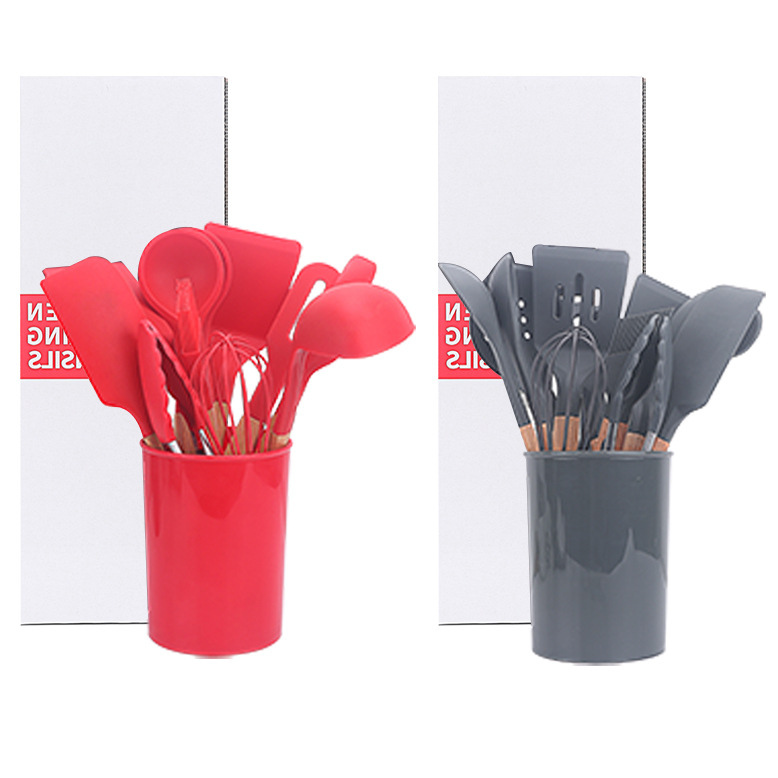
Lead time depends on tooling, materials, customization, quantity, testing, and packaging. Hongyuan states a capability of one million products within 60 days, subject to order-specific confirmation.
Unapproved specifications, unavailable molds, late materials, packaging changes, inspection failures, and delayed buyer decisions can affect the schedule. A milestone plan helps identify these risks early.
Yes, but each SKU needs its own material, tooling, processing, and packaging review. Mixed orders should be scheduled by operation rather than treated as one uniform production run.
Not automatically. The agreement should distinguish manufacturing completion, shipment release, carrier handover, and destination arrival. Transport and customs time should be addressed separately.
Sometimes, but not by default. An established design may require less development work, while new tooling or substantial customization adds approval stages before production.
Ask whether materials, molds, production capacity, testing, packaging, and inspection slots have been confirmed. Also request the schedule's starting conditions and the exact delivery milestone.
1. SAP Learning. "Identifying the Basic Principles and Tools of Capacity Planning." Explains work-center capacity evaluation, finite scheduling, and sequencing to reduce setup time. [learning.sap]
2. U.S. Electronic Code of Federal Regulations. "21 CFR § 177.2600—Rubber Articles Intended for Repeated Use." Provides applicable compositional, extraction, and preparation requirements. [ecfr]
3. German Federal Institute for Risk Assessment. "XV. Silicones" and "BfR Recommendations on Food Contact Materials." Covers silicone-specific recommendations and explains their nonbinding legal status. [bfr.bund]
4. International Organization for Standardization. "ISO 9001 Explained." Describes quality management systems and independent certification. [iso]
5. amfori. "amfori BSCI—Business Social Compliance Initiative." Explains the social compliance framework and confirms that BSCI is not a certification. [amfori]
6. European Chemicals Agency. "Guidance on REACH—Requirements for Substances in Articles." Addresses obligations relevant to producers and importers of articles. [echa.europa]


