


Views: 233 Author: Hongyuan Silicone Publish Time: 2026-11-12 Origin: Site


Content Menu
● What Is TPE Material, and How Does It Work?
● Main Types of Thermoplastic Elastomers
● Key Properties of TPE for Kitchenware Buyers
>> Adjustable Hardness and Flexible Handling
>> Overmolding and Integrated Product Design
>> Resistance to Cleaning and Repeated Use
>> Efficient Thermoplastic Processing
● TPE vs. Silicone: Which Material Fits Your Kitchen Product?
>> When TPE Deserves Consideration
>> When Silicone Is Often the Better Starting Point
● Is TPE Safe for Food Contact?
>> What Buyers Should Check for the United States
>> What Buyers Should Check for European Markets
● A Five-Step Process for Qualifying TPE Kitchenware
>> 1. Define Real Use Conditions
>> 2. Lock the Material Specification
>> 3. Test Production-Representative Samples
>> 4. Match Documents to the Finished Article
>> 5. Establish Batch Traceability
● Turning Customer Feedback into Measurable Improvements
● Is TPE Recyclable? Understand the Limitations
● Planning OEM and ODM Silicone Kitchenware with Hongyuan
>> Is TPE the same as silicone?
>> Can TPE kitchenware go in the oven?
>> Can TPE replace silicone in kitchen utensils?
>> Does a softer TPE make a better handle?
TPE, or thermoplastic elastomer, is a family of materials that combines rubber-like flexibility with thermoplastic processing. For kitchenware buyers, understanding TPE means knowing where it can improve grip, sealing, and manufacturing efficiency—and where silicone may be the better choice.
At Yangjiang Hongyuan Trading Co., Ltd., our focus is silicone kitchenware for international brands, wholesalers, supermarkets, and online retailers. Our material-selection perspective is straightforward: start with the product's intended use, not a material's marketing label.
This guide explains TPE properties, thermoplastic elastomer advantages, and practical considerations when comparing TPE with silicone for kitchen products.
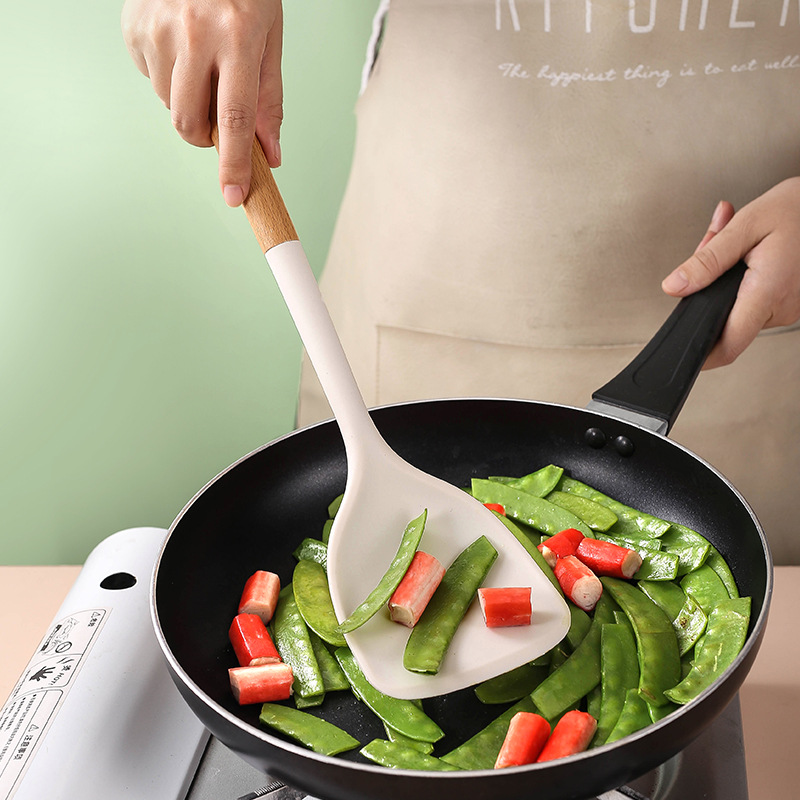
Thermoplastic elastomers behave like flexible rubber during use but soften sufficiently for molding when heated. After cooling, they regain their solid form.
Many TPE formulations contain hard and soft regions. The soft regions provide flexibility, while the harder regions help maintain structure. Their exact behavior depends on polymer chemistry, formulation, and processing.
Unlike conventional cured silicone rubber, TPE can generally be reheated and reprocessed. This makes it useful for injection molding, extrusion, and selected multi-material manufacturing processes.
However, TPE is a material category, not a single specification. Two compounds labeled "TPE" can differ significantly in heat resistance, hardness, chemical compatibility, and food-contact suitability.
For purchasing decisions, the compound grade matters more than the abbreviation.
Different TPE families address different engineering requirements. The following overview is a starting point, not a substitute for grade-specific technical information.
| TPE family | Typical characteristics | Potential applications |
|---|---|---|
| Styrenic TPE, including SBS- and SEBS-based compounds | Adjustable softness, colorability, selected overmolding capabilities | Soft-touch handles and grips |
| TPU: thermoplastic polyurethane | Abrasion resistance and mechanical toughness | Wear-resistant flexible components |
| TPV: thermoplastic vulcanizate | Rubber-like recovery with thermoplastic processing | Seals and flexible technical parts |
| TPO: thermoplastic polyolefin | Toughness and flexibility, depending on formulation | Flexible molded components |
| Copolyester and polyamide elastomers | Specialized mechanical and environmental performance | Technical applications requiring specific properties |
A family name alone does not establish suitability for kitchenware. Buyers still need to verify temperature limits, contact conditions, cleaning exposure, and finished-product performance.
TPE compounds offer different hardness levels, allowing designers to adjust how a grip or flexible component feels.
For kitchen tools, softer does not automatically mean better. An excessively soft handle may twist during use, while an overly firm grip may feel uncomfortable.
Evaluate hardness alongside geometry, wall thickness, surface texture, and the supporting structure. These factors determine the finished product's handling more reliably than a hardness number alone.
Selected TPE grades can bond to compatible rigid plastics during overmolding. This allows a firm structural component and a softer surface to become one assembled design.
Potential benefits include:
- More comfortable handling.
- Fewer separately assembled components.
- Integrated sealing features.
- Distinctive color and texture combinations.
Adhesion is not universal. A compound that bonds to polypropylene may not bond adequately to another plastic. Material pairing, surface condition, and molding parameters require verification.
Chemical resistance varies across TPE formulations.
Kitchenware may encounter oils, acidic foods, detergents, hot water, and repeated washing. A general statement such as "chemical resistant" does not establish suitability for every exposure.
Ask how the proposed grade performs under your product's actual conditions. Then test the complete article, including seams, overmolded interfaces, and any rigid inserts.
TPE can support high-volume injection molding without the same curing process used for conventional thermoset rubber.
Nevertheless, production cost depends on more than material type. Tool design, part thickness, cavity count, cooling requirements, scrap rates, and inspection needs all influence the final quotation.
Avoid treating a quoted cycle time as a universal advantage. It must correspond to the actual product and tooling configuration.
The most useful comparison is not "Which material is best?" It is "Which material fits this component and its intended conditions?"
| Selection factor | TPE | Cured silicone rubber |
|---|---|---|
| Processing | Typically thermoplastic molding or extrusion | Requires curing |
| Heat exposure | Strongly grade-dependent; softening can limit use | Often preferable for sustained high-temperature applications |
| Soft-touch grips | Suitable with an appropriate formulation | Also possible, with different processing considerations |
| Bonding to rigid plastics | Selected grades support direct overmolding | Depends on silicone system and substrate design |
| Reprocessing | Manufacturing scrap may be reusable under controlled conditions | Cannot simply be remelted |
| Food-contact suitability | Requires formulation- and use-specific verification | Requires formulation- and use-specific verification |
TPE may be worth evaluating for soft-touch handles, non-slip bases, and selected container seals.
Its advantages become especially relevant when a compatible rigid plastic and flexible surface can be combined through overmolding.
The material must still withstand foreseeable heat, washing, loading, and food exposure.
For baking molds, oven accessories, and utensil heads exposed to substantial heat, an appropriately specified silicone formulation is often the stronger starting point.
That does not make every silicone product oven-safe. Temperature claims must match the formulation, product construction, and supporting validation.
A silicone head attached to a different handle material also needs a whole-product assessment. The lowest-performing component may determine the usable limits.
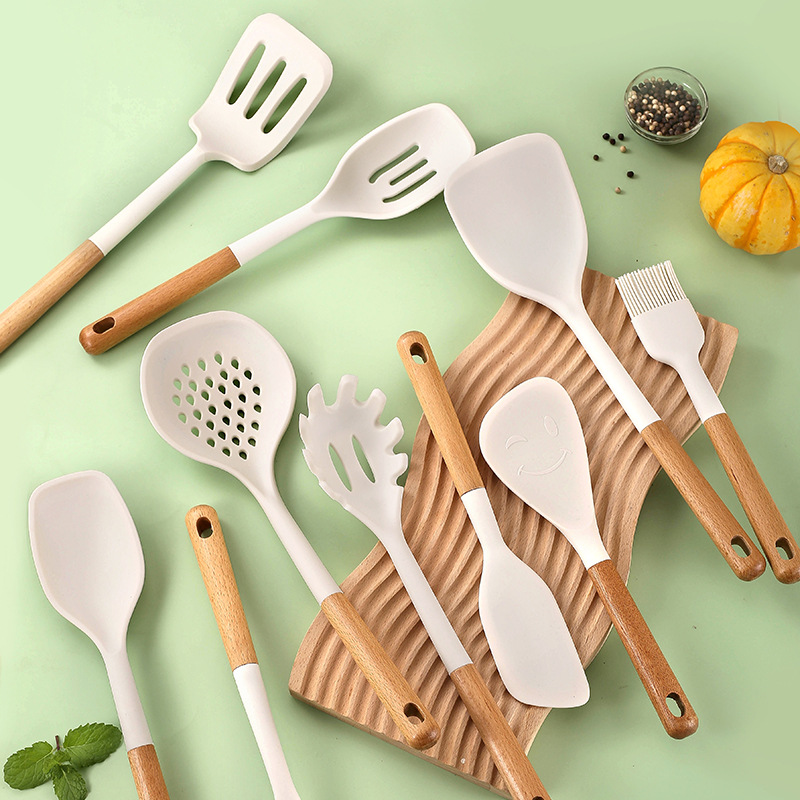
TPE can be suitable for food-contact applications, but food-contact safety is not an automatic property of the entire material family.
The assessment must account for:
- The complete formulation, including colorants and additives.
- Food types, including fatty or acidic foods.
- Contact time and temperature.
- Single-use or repeated-use conditions.
- Applicable destination-market requirements.
For the United States, ask which regulatory authorizations cover the relevant substances and intended use.
"FDA approved" is often too broad to explain the status of a finished kitchen utensil. A useful supplier response identifies the applicable regulatory basis, specifications, restrictions, and supporting documentation.
A report for another compound or unrelated product does not establish that your finished item meets its intended requirements.
European food-contact products must meet the applicable framework and manufacturing requirements, together with relevant material-specific and national provisions.
The precise route depends on the material and destination. Do not assume that plastic and silicone products follow identical requirements.
Similarly, an "LFGB tested" description should lead to a review of the underlying report: what was tested, under which conditions, against which criteria, and for which article?
REACH documentation addresses chemical obligations, but it does not replace food-contact verification.
A structured approval process helps buyers avoid selecting a material from appearance or price alone.
Write a product brief covering food contact, expected temperatures, cleaning methods, mechanical loads, and foreseeable misuse.
Distinguish brief exposure from continuous exposure. A handle near a hot pan presents different conditions from a utensil head resting inside it.
Record the compound supplier, grade, hardness, color formulation, and any approved reprocessed content.
Require written approval before substitutions. A visually similar material may behave differently or require a different compliance assessment.
Evaluate samples made with the intended materials and manufacturing process.
Depending on the product, checks may include:
- Grip performance with wet hands.
- Handle twisting and bending.
- Seal leakage after repeated opening.
- Bond integrity after washing.
- Odor and appearance after conditioning.
Agree on methods and acceptance criteria before testing.
Check that reports identify the relevant sample, formulation, test conditions, and applicable requirements.
Confirm that critical differences—such as colorants, coatings, or material combinations—have been addressed. A generic raw-material declaration is useful background, not the entire verification package.
Retain approved reference samples and connect production batches to material records and inspection results.
This makes investigations more targeted if a retailer later reports odor, delamination, deformation, or inconsistent sealing.
Customer reviews are most useful when translated into product requirements rather than copied into promotional claims.
The following are illustrative feedback themes, not verified reviews of our products.
| Possible feedback theme | Investigation priority | Practical validation |
|---|---|---|
| "The handle becomes slippery" | Texture, geometry, wet-hand performance | Defined wet-grip evaluation |
| "The soft layer is peeling" | Material compatibility and molding conditions | Bond testing before and after washing |
| "The lid leaks after repeated use" | Seal geometry, fit, recovery | Repeated opening and leakage checks |
| "There is an unpleasant smell" | Formulation, processing, storage conditions | Controlled odor assessment and relevant chemical testing |
This approach gives product teams something actionable.
For example, "improve quality" is difficult to verify. "Maintain the agreed seal performance after the specified opening-and-washing sequence" creates a clear development target.
Real customer feedback should inform the next sample revision and acceptance criteria—not become an unsupported testimonial.
Many TPEs can be reprocessed, making controlled recovery of manufacturing scrap possible.
However, technical reprocessability is different from practical consumer recycling.
An overmolded kitchen tool may combine TPE with rigid plastic, metal, coatings, or adhesives. These combinations can complicate separation and recycling. Local collection systems also influence what happens after disposal.
Reprocessing may affect appearance or performance, and food-contact applications require additional scrutiny.
Before making environmental claims, ask:
1. Is the claim about factory scrap or the finished product?
2. Is the relevant collection and recycling route available?
3. Has the proposed material combination been assessed?
4. Can the claim be supported in the intended sales market?
Avoid treating "TPE" as proof that a kitchen product will be recycled.
Yangjiang Hongyuan Trading Co., Ltd. manufactures silicone kitchenware for supermarkets, wholesalers, brands, and online retailers serving the EU, United States, United Kingdom, Australia, and South America.
Our company information identifies a 4,500-square-meter main factory and a 2,000-square-meter branch factory, supporting an order-delivery capability of one million pieces within 60 days. Confirm project-specific timing against product complexity, tooling, approved samples, packaging, and available capacity.
For OEM and ODM discussions, we recommend preparing:
- Product drawings or reference samples.
- Intended markets and use conditions.
- Material and performance requirements.
- Branding, colors, and packaging specifications.
- Order quantities and delivery expectations.
Assess documentation by purpose. ISO 9001 concerns quality management; BSCI concerns social-performance assessment. Neither replaces product-specific food-contact evidence.
Send Hongyuan your product brief, target market, and order quantity to request a silicone kitchenware proposal covering customization, sampling, testing documentation, and a confirmed production schedule.
No. TPE is a thermoplastic elastomer family. Conventional cured silicone rubber is a thermoset material. Their processing, heat behavior, and reprocessing options differ.
Do not assume so. Oven suitability requires an appropriate material grade, construction, and validated temperature rating. Many common TPE applications are not intended for oven exposure.
No. Suitability depends on the formulation, intended contact conditions, and applicable requirements. Request documentation matching the proposed material and finished product.
Sometimes, particularly in grips or selected flexible components. It should not replace silicone in a heat-exposed application without validating thermal, mechanical, and food-contact performance.
Only when the complete product has been validated for the claimed washing conditions. Detergent exposure, heat, repeated cycles, and bond integrity all matter.
Not necessarily. Good handling depends on hardness, texture, geometry, and structural support. Compare finished samples under realistic conditions rather than choosing by softness alone.
2. [Avient — "A Beginner's Guide to TPE"]. Background on thermoplastic elastomer families, processing, applications, and limitations. Broad safety statements were not carried over as universal claims. [avient]
3. [Avient — "What's the Difference? TPEs vs. Silicones"]. Technical comparison covering thermoplastic and thermoset behavior, overmolding, heat performance, and recycling limitations. [cn.avient]
4. [KRAIBURG TPE — "No Shortcuts with TPE in Smart Food Containers"]. Industry example supporting discussion of selected food-contact TPE grades, polypropylene bonding, and application-specific material assessment. This is not a Hongyuan case study. [kraiburg-tpe]
5. [U.S. Food and Drug Administration — "Determining the Regulatory Status of Components of a Food Contact Material"]. Authoritative explanation of substance-level authorization, specifications, and intended-use limitations. [fda]
6. [European Commission — "Food Contact Materials"]. Official overview of Regulation (EC) No 1935/2004, good manufacturing practice, material-specific measures, and national requirements. [food.ec.europa]
7. [European Commission — "Overview over Set Out of the Plastic Implementing Measure"]. Explanatory background distinguishing plastic food-contact provisions from silicone material definitions. Current requirements should be checked for each project. [food.ec.europa]


