


loading



T64636
Make Every Scoop a Little Easier
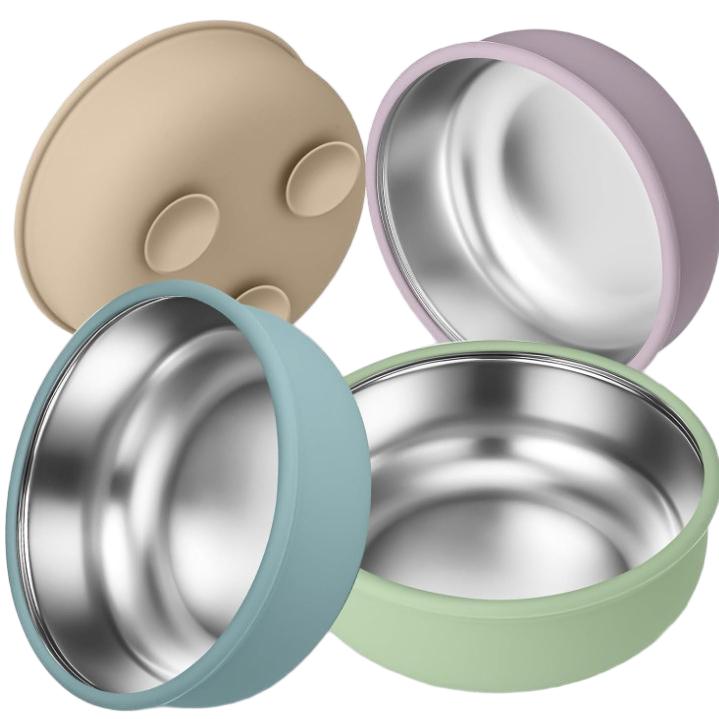
Mealtime is an important part of your baby’s journey toward independence. Our Stainless Steel Baby Bowl is thoughtfully designed to help little ones learn to self-feed with more confidence, while making everyday meals easier and less messy for parents.
Made from high-quality, food-grade stainless steel, this baby bowl is safe, durable, odor-resistant, and suitable for daily use. Unlike plastic bowls, stainless steel does not easily absorb food odors, colors, or stains from ingredients such as tomato sauce, pumpkin puree, berries, or curry. Its smooth, non-porous surface is easy to clean and helps maintain a more hygienic eating environment for babies and toddlers.
The bowl features a deep, rounded interior that helps keep food gathered in one place. Whether your child is eating oatmeal, mashed vegetables, yogurt, rice, pasta, fruit pieces, or snacks, the raised sides make it easier for small hands to guide a spoon and scoop food successfully. This simple design supports the development of hand-eye coordination, fine motor skills, and confidence during self-feeding practice.
To reduce sliding and tipping during meals, silicone suction points are placed underneath the bowl. These non-slip silicone details help keep the bowl more stable on smooth dining tables, high-chair trays, and kitchen countertops. A steadier bowl means fewer accidental spills, less frustration for babies, and less cleanup for parents.
The stainless steel construction is strong enough for everyday family use and more resistant to cracking or breaking than many traditional plastic or ceramic baby bowls. It is lightweight enough for children to use comfortably, yet sturdy enough to handle frequent washing, travel, daycare meals, and busy family routines.
With its practical shape, reliable stability, and child-friendly design, this stainless steel bowl is an ideal choice for babies beginning their self-feeding journey. Every little scoop becomes easier, cleaner, and more rewarding—for both baby and parent.


Learn how to source silicone baking products from China, compare OEM and ODM quotes, verify food-contact test reports, and approve samples before bulk production. This guide helps importers, retailers, and brands calculate landed costs and avoid costly mismatches between samples and shipments.

Compare leak-resistant ice trays and standard covered trays for RV freezers, boat galleys, and camping trips. See which design handles spills, tight storage, and everyday cleaning better, then use a simple sample test to check lid fit and leakage before choosing a tray or placing a bulk order.

Compare the best silicone bakeware products for retail brands, from muffin pans and baking mats to loaf pans and seasonal molds. Learn how to build a private-label range, test samples, review food-contact documents, and choose between existing molds and custom OEM or ODM development.

Airtight ice tray lids help keep freezer odors out, while ventilated lids may freeze water faster when their openings allow enough airflow. Compare both designs for odor protection, freezing speed, spill resistance, and stacking, then use a simple side-by-side test to choose a silicone ice tray.

Explore silicone bakeware trends for global brands, from air fryer molds and small-batch pans to private-label collections. Learn how to check appliance fit, evaluate samples, verify food-contact documentation, and prepare a clearer OEM or ODM brief before placing a high-volume order.

Compare 10 silicone kitchenware manufacturers in China by product focus, OEM and ODM capabilities, capacity, MOQ, and compliance evidence. Learn how to qualify factories, test production samples, prevent material substitutions, and negotiate terms that protect quality from tooling through shipment.

Learn how to bake in silicone molds, from checking oven ratings and filling cavities to testing doneness and releasing delicate cakes. Compare silicone and metal bakeware, troubleshoot sticking and uneven browning, and see what to verify before sourcing custom molds for wholesale or private label.

Source silicone kitchenware from China with greater confidence. This buying guide explains how to verify factories, assess food-contact documentation, compare OEM and ODM options, control production quality, and plan bulk orders with Yangjiang Hongyuan Trading Co., Ltd. for your target market.

What is TPE, and how does it compare with silicone? Explore thermoplastic elastomer properties, kitchenware applications, food-contact requirements, and practical sourcing checks to choose suitable materials and plan reliable OEM or ODM kitchenware projects with Yangjiang Hongyuan Trading Co., Ltd.
Discover why international buyers choose Chinese silicone suppliers for kitchenware. Explore OEM and ODM options, production capacity, compliance checks, quality controls, and practical sourcing steps—with insights from Yangjiang Hongyuan Trading Co., Ltd. for more confident purchasing decisions.

Compare PP lids vs silicone lids for ice trays to understand warping, odor absorption, sealing, and stackability. Learn how material grades, lid design, practical testing, and food-contact documentation help brands and wholesalers choose the right option for reliable everyday freezer use.

Discover how Chinese silicone manufacturers help global brands develop custom kitchenware, manage quality, plan large orders, and prepare market-specific documentation. Explore practical OEM and ODM sourcing steps with Yangjiang Hongyuan Trading Co., Ltd., from product briefs to shipment planning.

Discover how silicone products are made, from material selection and molding to curing, testing, and packaging. This practical OEM kitchenware guide helps brands, wholesalers, and retailers assess quality, verify compliance documents, and plan custom production with Yangjiang Hongyuan Trading Co., Ltd.

Compare branded ice sphere molds and plain cavities for hospitality promotions. Explore logo visibility, service efficiency, usable yield, compliance documentation, and sampling methods to choose the right silicone mold for signature cocktails, branded gifts, and everyday bar service.

At the 140th Canton Fair in 2026, we showcased our collapsible silicone bakeware, new portable outdoor products, and an expanded baby care range. Our collections highlight space-saving designs, travel convenience, and a focus on safety to meet the everyday needs of kitchens, outdoor adventures, and families.

Silicone rubber vs natural rubber: compare heat resistance, durability, food-contact requirements, sustainability, and cost. This practical guide helps kitchenware brands, wholesalers, and importers choose suitable materials and qualify reliable OEM and ODM products for their target markets.

Compare 45 mm vs 55 mm ice sphere molds to find the right fit for whiskey glasses. Explore internal clearance, ice volume, dilution, silicone mold quality, and practical testing tips, plus OEM and ODM considerations for brands, wholesalers, and retailers developing reliable barware collections.

Learn how to judge the quality of silicone products through practical inspections, food-contact documentation, and supplier checks. This guide helps kitchenware buyers assess test reports, avoid misleading home tests, and set clear quality standards before placing OEM or ODM orders with manufacturers.

Compare whiskey ice sphere molds and large square ice cube molds through melting science, equal-volume calculations, usability, and sourcing criteria. Learn why size matters as much as shape—and how to select silicone molds for whiskey service, retail collections, and private-label kitchenware.
Compare individual ice ball molds and multi-cavity sphere trays for cocktail bars. Explore ice quality, freezer space, labor, cleaning, and purchasing costs, with a practical capacity model and sample-testing checklist to help you select the right silicone molds for reliable daily service.


