


loading




T64635
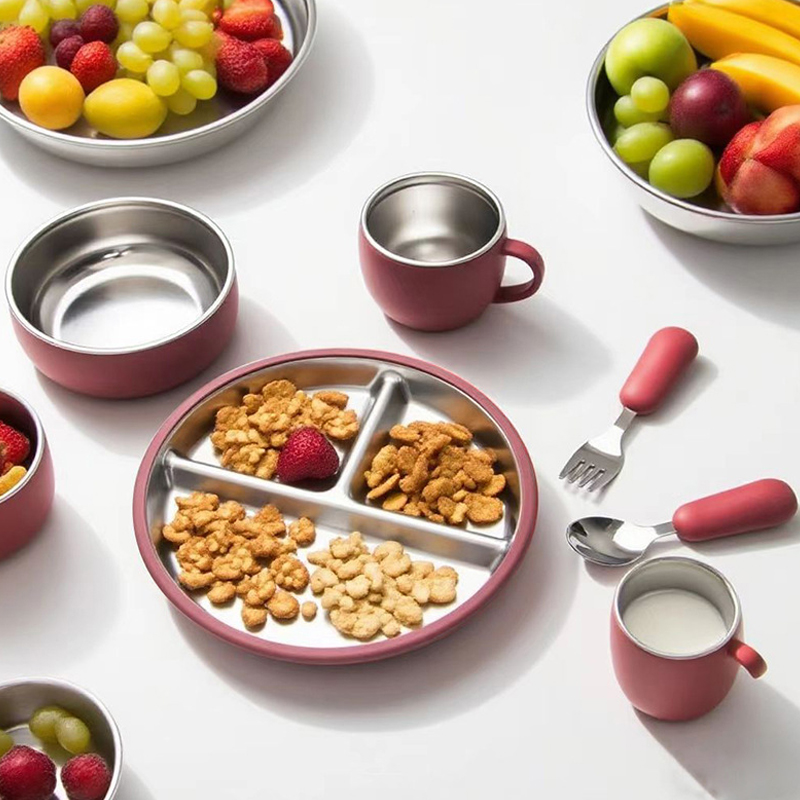
Let little explorers feel every moment at mealtime. Designed for curious babies and growing toddlers, this 304 stainless steel toddler plate turns everyday feeding into a more engaging sensory and self-learning experience. From the first attempts at scooping soft foods to confident independent eating, the plate provides a stable, practical surface that supports each stage of development.
The smooth stainless steel surface creates a gentle sound and tactile response when little hands use spoons, forks, or fingers to pick up food. Babies can tap, scoop, push, and explore different textures while becoming more familiar with their meals. These small interactions help make feeding feel more active and enjoyable, encouraging toddlers to participate in the process rather than simply being fed.
Made from durable food-grade 304 stainless steel, the plate is built for repeated daily use. It does not easily retain food odors, colors, or stains, helping it stay clean and fresh even when serving colorful foods such as berries, tomato sauce, pumpkin puree, or vegetables. The sturdy metal construction also provides a long-lasting alternative to lightweight plastic plates, making it suitable for busy families, daycare settings, and travel use.
Four silicone suction points on the bottom help keep the plate securely in place on smooth surfaces. This added stability reduces sliding, tipping, and accidental spills when energetic toddlers are learning to feed themselves. With less movement during meals, children can focus more easily on practicing hand-eye coordination, utensil control, and food-picking skills. Parents can also spend less time repositioning the plate and cleaning up dropped food.
The toddler-friendly design balances durability with everyday convenience. Its smooth edges are gentle for little hands, while the easy-to-clean stainless steel surface supports hygienic feeding routines. Whether used for breakfast, snacks, lunch, or dinner, this suction toddler plate helps create a calmer and more independent mealtime environment.
Give little ones a secure place to explore new foods, build confidence, and enjoy every scoop, tap, and bite.


Compare OEM and ODM silicone kitchenware for your brand. Learn how tooling, product design, food-contact testing, ownership, lead times, and landed cost affect your choice. Explore practical sourcing steps and see how Yangjiang Hongyuan can support custom or private-label kitchenware.

Compare large-cube and standard-cube silicone ice trays for cocktails. Learn why cube size affects chilling and dilution, when each format works best, how to test melting fairly, and what OEM and ODM buyers should check before ordering.

Learn how ODM silicone kitchen products can shorten development without sacrificing product control. This guide covers ODM versus OEM, assortment planning, sampling, food-contact evidence, realistic timelines, quality checks, and the information brands should send a manufacturer before launch.

Stackable ice trays can free up valuable shelf space, but they are not the best fit for every freezer. Compare tray footprint, stack height, cube capacity, lid performance, and daily handling to choose a silicone ice tray that genuinely works in a compact freezer.

Follow the silicone kitchenware OEM process from product brief and design to sampling, compliance planning, mass production, inspection, and delivery. Learn what brands and retail buyers should approve at each stage to reduce sourcing risks and build a reliable private-label range.

Compare 10 Chinese silicone chocolate mold suppliers by customization, reported capacity, MOQ and compliance evidence. Learn how to assess food-contact reports, approve production samples, prevent material substitutions and choose a partner for private-label or confectionery projects.

Open silicone ice trays vs ice trays with lids: which keeps freezer odors out of your ice? Compare exposure, lid fit, silicone odor retention, cleaning, storage, and OEM specifications. Learn why a fitted cover helps, when an open tray works, and how buyers can test samples before ordering.

Explore how a professional silicone kitchenware factory operates, from material control and mold development to quality checks, food-contact documentation, OEM/ODM customization, packaging, and high-volume order delivery for global brands, wholesalers, retailers, and online sellers.

Discover the silicone rubber temperature range for kitchenware, including oven, freezer, and food-contact use. Learn how to choose safe, durable silicone spatulas, baking mats, molds, lids, and custom OEM products for global markets.

Discover what overseas buyers should know about silicone factory production capacity, quality control, food-contact documentation, OEM and ODM customization, tooling, inspection, and delivery planning. Learn how Yangjiang Hongyuan supports silicone kitchenware orders of up to 1 million pieces within 60 days.

Compare thick-wall and thin-wall silicone ice cube trays for repeated freezing cycles. Learn how wall thickness, silicone quality, cavity design, reinforcement, and compliance affect durability, ice release, shape retention, and OEM sourcing decisions.

Learn how to audit a silicone kitchenware factory before cooperation. This buyer’s guide covers factory capacity, food-contact documents, quality control, OEM and ODM evaluation, certification checks, warning signs, and practical supplier-audit steps for global sourcing projects.

This guide reviews 10 China-based silicone cake mold manufacturers for global buyers seeking OEM/ODM supply. Compare their product focus, production scale, certifications, customization capability, MOQ considerations, and buyer-verification practices before selecting a long-term partner.
Compare LFGB silicone and FDA-grade silicone ice cube trays for global sourcing. Learn which standard importers should specify for U.S., German, EU, and multi-market kitchenware programs, plus documentation, testing, quality-control, and OEM purchasing tips.

Discover the key differences between silicone and rubber for kitchenware, bakeware, food-contact products, industrial seals, and OEM manufacturing. Compare heat resistance, durability, compliance, cost, applications, and sourcing considerations to choose the right material for your brand.

Color consistency is a critical quality requirement for silicone kitchenware brands, retailers, wholesalers, and online sellers. This in-depth guide explains how professional silicone manufacturers control pigment selection, mixing, molding, curing, inspection, Delta E measurement, and repeat-order standards to deliver reliable custom-colored food-grade silicone products.

Silicone kitchenware buyers need more than a “food-grade” claim to protect their brand, customers, and supply chain. This guide explains FDA, LFGB, EU food-contact, REACH, and quality-control considerations, showing how to build a practical testing plan for silicone spatulas, baking molds, lids, air fryer liners, and other reusable kitchen products.

Discover practical silicone kitchenware packaging solutions for retail, wholesale, and e-commerce brands. This guide explains how to select packaging formats, improve product protection, support food-contact documentation, reduce unnecessary materials, optimize export cartons, and create premium shelf appeal for silicone utensils, baking tools, and kitchenware sets.

Discover how silicone compression molding creates durable, custom silicone kitchenware. Learn the process, design rules, food-contact considerations, quality controls, OEM and ODM options, and how Yangjiang Hongyuan Trading Co., Ltd. supports global bulk orders.

This guide reviews 10 China-based silicone baking mold manufacturers for importers, retailers, and private-label brands. It compares supplier strengths, production scale, certification expectations, OEM/ODM capability, MOQ considerations, material controls, sampling, factory verification, and common sourcing risks.


