


Views: 212 Author: Hongyuan Silicone Publish Time: 2026-11-07 Origin: Site


Content Menu
● Branded Ice Sphere Molds vs Plain Cavities: The Essential Differences
● When Branded Ice Sphere Molds Work Better
>> Signature Cocktails and Brand-Owned Experiences
>> Promotional Gifts That Continue Working After the Event
● When Plain Cavities Work Better
>> Multi-Brand Venues and Changing Campaigns
>> Service Environments Where Simplicity Comes First
● Visual Performance: Will Guests Actually See the Logo?
>> Evaluate the Ice in the Finished Drink
>> Simplify Artwork Before Developing Tooling
● Cooling and Dilution: Does Branding Change Performance?
● A Practical Pilot Test Before Bulk Ordering
>> Step 1: Define Success Before Testing
>> Step 2: Run Matched Freezing Cycles
>> Step 3: Inspect at Real Service Intervals
>> Step 4: Make the Decision on Usable Output
● Cost Comparison: Calculate Cost per Acceptable Sphere
>> Illustrative Break-Even Example
● Food-Contact Documentation: Compare Evidence, Not Labels
● From Approved Sample to Hospitality Campaign Delivery
● Which Option Should Hospitality Buyers Choose?
● FAQ
>> 1. Can a branded silicone mold produce a clear logo on every ice sphere?
>> 2. Are plain ice sphere cavities cheaper?
>> 3. Do branded ice sphere molds make ice melt more slowly?
>> 4. Can plain cavities still support a branded hospitality promotion?
>> 5. What should buyers approve before mass production?
>> 6. Does a normal silicone sphere mold guarantee clear ice?
Branded ice sphere molds turn a functional drink component into a recognizable brand detail. Plain cavities produce unmarked ice spheres that work across different drinks, venues, and campaigns. For hospitality promotions, the better choice depends on whether your priority is brand visibility, operational flexibility, or the cost of delivering a consistent guest experience.
From our perspective as a silicone kitchenware manufacturer, neither option wins automatically. A logo that looks impressive in a drawing may disappear in a dark cocktail. A plain sphere may look elegant but communicate nothing about the sponsor.
The practical answer is fit: choose branded molds when the ice itself must carry your identity, and plain cavities when versatility and straightforward service matter more.

In this comparison, branded ice sphere molds have cavity details designed to reproduce a logo, monogram, or symbol on the ice. Plain cavities create smooth, unmarked spheres.
A logo printed only on the mold's exterior is different. It brands the kitchen tool, not necessarily the drink.
| Comparison factor | Branded ice sphere molds | Plain cavities |
|---|---|---|
| Guest-facing identity | Can display a recognizable mark on ice | No direct brand mark |
| Design development | Requires artwork and molded-sample approval | Avoids logo-detail development |
| Promotional flexibility | Usually linked to one identity or campaign | Can support multiple brands |
| Visual consistency | Depends on logo reproduction and visibility | Depends mainly on sphere quality |
| Cleaning inspection | Fine details require closer inspection | Fewer decorative features to inspect |
| Best-fit applications | Signature cocktails, launches, VIP events | Everyday service, mixed campaigns, general giveaways |
| Financial evaluation | Include development and usable branded yield | Include production, handling, and replacement costs |
These are procurement considerations, not guaranteed performance differences. A well-designed branded mold can outperform a poorly designed plain mold in everyday use.
Custom logo ice molds make the most sense when the drink belongs to a clearly defined brand experience.
Potential applications include:
- A hotel's signature welcome cocktail.
- A distillery tasting featuring its own spirits.
- A restaurant anniversary menu.
- A product launch with controlled presentation.
- A corporate reception serving one featured drink.
In these settings, branded ice can reinforce an identity already present on menus, glassware, and event materials.
Our recommendation is to treat the logo as a supporting detail, not the entire promotion. Staff presentation, drink quality, and service timing still determine whether the experience feels considered.
For take-home hospitality gifts, distinguish between branding the product and branding the ice.
A custom silicone ice sphere mold can carry your identity through:
1. A logo reproduced on the frozen sphere.
2. A mark on the mold body.
3. A branded sleeve, box, or instruction card.
Plain cavities with branded packaging may be sufficient when recipients mainly value a useful kitchen accessory. Branded cavities become more relevant when reproducing the logo at home is part of the campaign concept.
Plain cavities offer flexibility when one operation serves several identities.
A hotel group may rotate beverage sponsors. An event caterer may work for different corporate clients every week. A distributor may supply several hospitality accounts from shared inventory.
In these situations, unmarked spheres avoid tying the ice to a previous campaign. Branding can move to menus, coasters, packaging, or presentation cards instead.
That flexibility is especially useful when campaign schedules remain uncertain or surplus inventory is likely.
For busy teams, the important question is not whether branded ice looks more distinctive. It is whether staff can produce and serve enough acceptable spheres reliably.
Both formats need:
- Stable filling and sealing.
- Suitable freezer space.
- Predictable release.
- Clear cleaning instructions.
- Practical storage between freezing and service.
Plain cavities remove logo readability from the acceptance checklist. However, they do not automatically freeze faster, release better, or last longer. Those outcomes require product-specific testing.
A molded logo should be assessed in its intended environment, not only against a bright background.
Visibility can change with:
- Ice clarity and surface condition.
- Drink color.
- Glass shape and thickness.
- Venue lighting.
- Sphere orientation.
- Time between pouring and presentation.
A mark visible in an empty glass may become difficult to identify once submerged. A sphere may also rotate, moving the logo away from the guest.
For that reason, we recommend approving finished-drink samples rather than relying exclusively on digital artwork.
For custom logo ice sphere molds, begin with a simplified symbol rather than the full corporate identity.
Ask the manufacturer to evaluate:
- Narrow lettering and small gaps.
- Closely spaced lines.
- Deep or delicate details.
- Features near the mold seam.
- The direction in which the ice releases.
There is no universal minimum logo size that suits every design. Detail depth, silicone formulation, cavity geometry, and release behavior interact.
Likewise, neither branded nor plain cavities automatically produce clear ice. Clarity should be treated as a separate performance requirement and verified using the intended freezing setup.
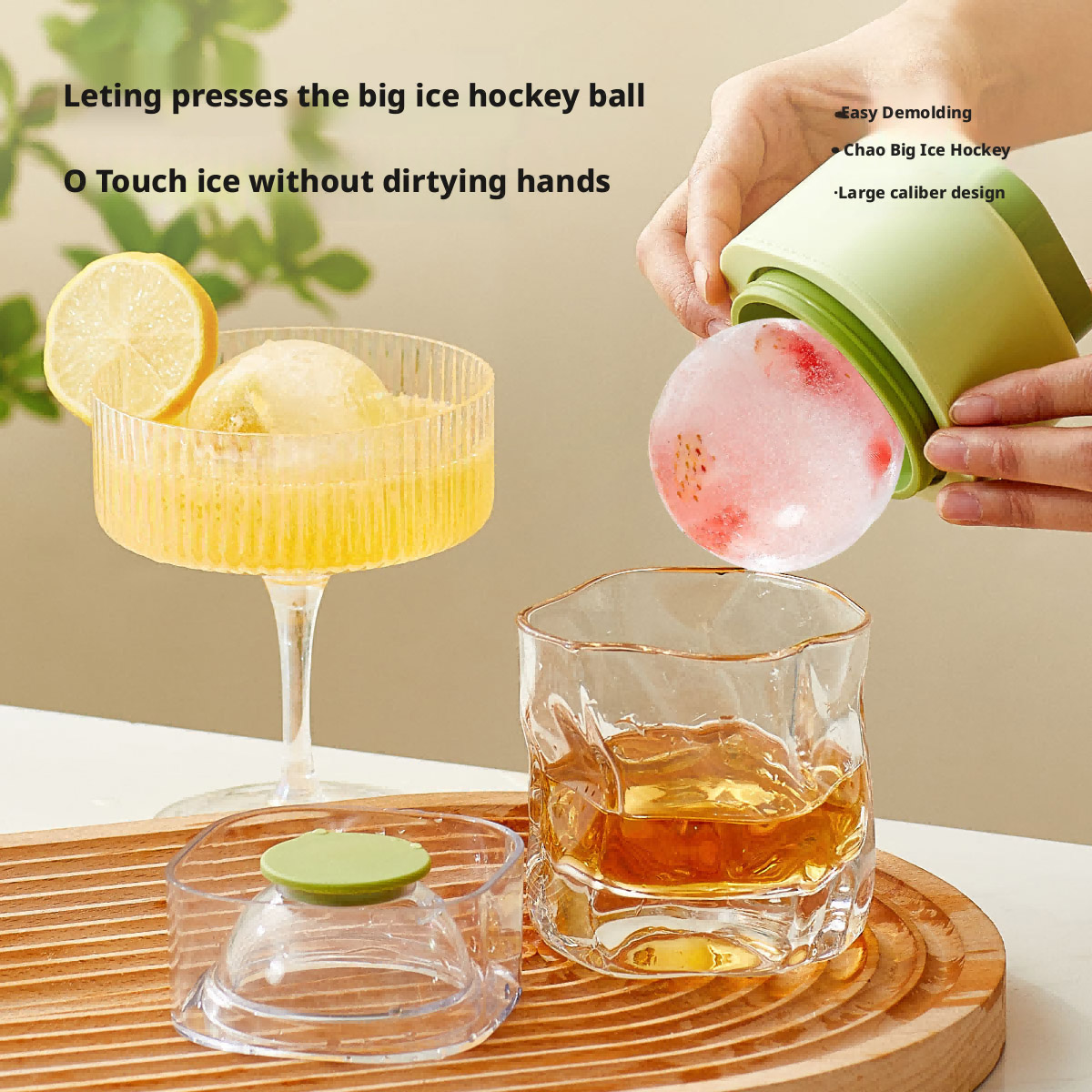
A logo should not be purchased as a cooling advantage.
For a meaningful comparison, hold sphere size, ice mass, starting temperature, drink recipe, and service conditions as consistent as practical. Otherwise, differences attributed to branding may actually come from unequal samples.
Logo relief changes the local surface geometry, but its practical effect on a particular drink needs testing. Avoid claims such as "branded spheres melt 30% slower" without controlled evidence.
For procurement purposes, specify the desired drink experience first: glass fit, serving size, appearance, and acceptable dilution. Then compare molds against that specification.
The following is a proposed evaluation method, not a published industry standard.
Write a short acceptance checklist covering:
- Sphere dimensions and glass fit.
- Leakage during filling and freezing.
- Intact release rate.
- Logo recognition, where applicable.
- Cleaning and inspection time.
- Acceptable appearance at presentation.
For branded molds, define what counts as recognizable. "Looks good" is too subjective for production approval.
Test both formats under the same practical conditions.
Use the same water source, freezer, loading pattern, and handling procedure. Record the number of cavities filled and the number of acceptable spheres produced.
Repeat across several cycles and include different staff members. One successful demonstration does not establish routine usability.
Check the sphere immediately after pouring and again at intervals relevant to the venue, such as two and five minutes.
For branded ice, record whether the mark remains identifiable and whether orientation affects presentation. For both formats, record cracks, incomplete filling, and handling damage.
Photographs taken under consistent conditions help separate actual improvement from personal preference.
Compare accepted spheres per cycle, staff handling time, and promotional usefulness.
A branded mold deserves a premium only when its additional value survives the complete workflow—from filling through guest presentation.
Unit price alone does not capture the economics of hospitality ice production.
A useful internal calculation is:
Cost per acceptable sphere=Allocated tooling, mold, labor, utility, and replacement costs/Number of acceptable spheres produced
For branded formats, rejected spheres include those with unreadable logos if logo recognition is mandatory.
Suppose a branded option adds $600 in development costs and serves 12,000 promotional drinks. The additional development allocation is $0.05 per drink before differences in labor, rejection, or replacement.
These figures are hypothetical, not a supplier quotation or market benchmark.
The next question is commercial: does the branded detail justify that cost for this campaign? Possible measures include guest recognition, photographed presentations, or attributed offer redemptions. Do not assume those benefits without measuring them.
Both branded and plain silicone ice molds require documentation appropriate to their formulation, intended use, and destination market.
In the United States, regulatory status depends on the substances used and their authorized conditions of use. A generic "FDA certificate" should not replace a product-specific compliance review.
ISO 9001 concerns quality-management systems. It does not, by itself, establish that a particular silicone mold meets food-contact requirements.
Similarly, amfori BSCI assesses social performance at production sites. It is not a food-safety or product-safety certification.
For purchasing teams, request:
- Current documents identifying the relevant manufacturer or site.
- Reports that match the supplied product and formulation.
- Applicable test methods and conditions.
- Traceability between approved samples and production batches.
- A clear explanation of the destination-market requirements covered.
LFGB-related testing and REACH documentation should also be evaluated for their actual scope. Avoid treating a collection of familiar acronyms as proof of universal market access.
At Yangjiang Hongyuan Trading Co., Ltd., our company-provided production profile includes a 4,500-square-meter main factory and a 2,000-square-meter branch factory.
We report capacity to fulfill orders of one million products within 60 days. For a specific project, quantities, tooling approval, packaging, inspection, and the meaning of the delivery milestone should be confirmed in writing. This capacity statement should not be read as an unconditional arrival guarantee for every destination.
Our customer base includes supermarkets, wholesalers, brands, and online retailers serving the EU, United States, United Kingdom, Australia, and South America.
For OEM and ODM silicone ice tray projects, the most useful starting brief includes:
1. Intended promotional setting.
2. Target sphere size and glass dimensions.
3. Logo artwork and branding location.
4. Order quantity and packaging requirements.
5. Destination market and required documentation.
6. Sample-approval and campaign dates.
The company background supplied for this article lists ISO 9001, BSCI, LFGB, FDA, and REACH-related credentials. Buyers should verify current certificates, audit reports, and product-specific compliance documents rather than interpreting those terms as interchangeable certifications.
Choose branded ice sphere molds when a recognizable mark on the ice is central to a signature drink, controlled event, or premium promotional gift.
Choose plain cavities when you need adaptable inventory, frequent campaign changes, or an unmarked presentation that works across clients.
For mixed requirements, consider branded molds for featured drinks and plain cavities for routine service. This keeps customization focused where it contributes most.
Send Yangjiang Hongyuan Trading Co., Ltd. your artwork, sphere dimensions, estimated quantity, target market, and campaign date to request a feasibility review and a side-by-side sampling proposal before committing to bulk production.
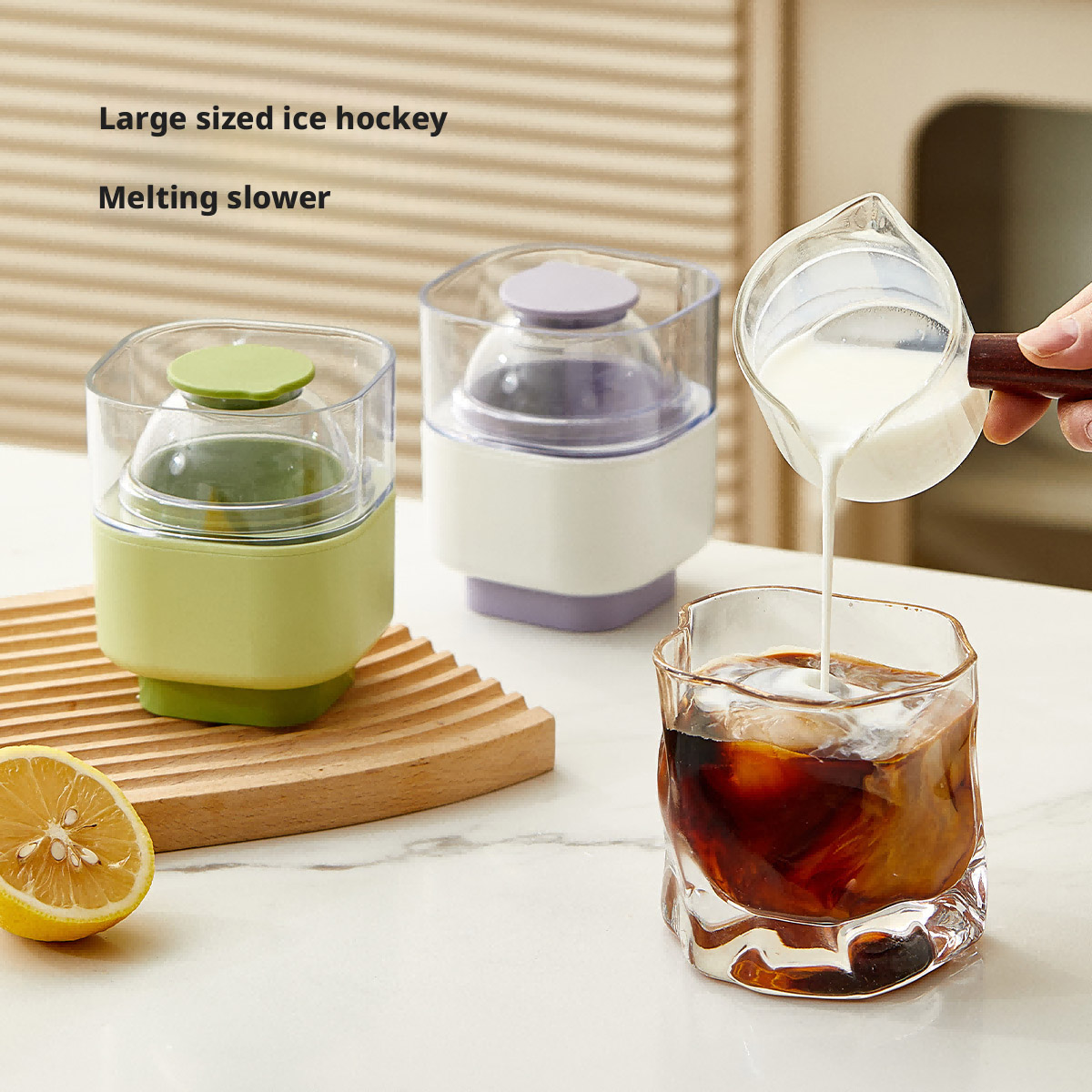
Not automatically. Artwork detail, filling, freezing, release, and drink presentation affect the result. Approve physical samples and define an acceptable logo-recognition standard before ordering.
They avoid cavity-logo development, but the final comparison depends on design, quantity, packaging, handling, and usable yield. Compare equivalent specifications rather than assuming every plain mold costs less.
Branding alone does not establish slower melting. Compare equivalent ice mass, starting temperature, drinks, and service conditions before making performance claims.
Yes. Branding can appear on the mold exterior, packaging, menus, or presentation materials while the ice remains unmarked. This approach can preserve flexibility across campaigns.
Approve a physical sample, artwork reproduction, glass fit, filling and release behavior, packaging, and the applicable documentation. Record the agreed acceptance criteria so production inspection follows the same standard.
No such guarantee should be assumed. Request a demonstration using the intended freezing process and assess clarity separately from cavity shape or logo detail.
1. U.S. Food and Drug Administration. "Determining the Regulatory Status of Components of a Food Contact Material." Explains component-level authorization, intended-use limitations, and manufacturer responsibilities. [fda]
2. U.S. Food and Drug Administration. "Understanding How FDA Regulates Substances that Come into Contact with Food." Explains food-contact authorization pathways and safety assessment. [fda]
3. International Organization for Standardization. "ISO 9001 — Quality Management Systems." Describes the scope of quality-management requirements; this source does not verify the company's certification status. [iso]
4. amfori. "Understanding the amfori Social Monitoring Procedure." Clarifies that BSCI social audits are distinct from quality, food-safety, and product-safety audits or certification systems. [amfori]


