


Views: 264 Author: Hongyuan Silicone Publish Time: 2026-11-20 Origin: Site


Content Menu
● 1. Define Your Silicone Bakeware Specification Before Requesting Quotes
● 2. Verify Who Manufactures Your Silicone Baking Products
>> What to check before paying a deposit
● 3. Match Food-Contact Evidence to the Finished Product and Destination
● 4. Choose Stock Molds, ODM, or Custom OEM Tooling
● 5. Compare Landed Cost, Not Just the Factory Price
● 6. Approve a Production Sample and Inspect Before Shipment
>> Example: A muffin tray that passes the drawing but fails in use
● Request a Silicone Bakeware Sourcing Quote
>> What is the minimum order quantity for silicone bakeware from China?
>> Is an "FDA-approved silicone" claim enough to place an order?
>> Can one LFGB test report cover multiple silicone bakeware colors?
>> Is platinum-cured silicone always the better choice?
>> How long does a custom silicone bakeware order take?
>> Should I use a stock mold for an initial order?
To source silicone baking products from China, start with a written product brief, compare suppliers against the same requirements, and approve a production-representative sample before placing a bulk order. The lowest quote means little if it covers a thinner muffin pan, excludes retail packaging, or comes with a food-contact report for a different material or color.
At Yangjiang Hongyuan Trading Co., Ltd., we manufacture silicone bakeware and kitchenware for supermarkets, wholesalers, brands, and online retailers. Our recommendation is to evaluate the product, the production site, and the supporting documents together. This guide shows what to request, what to check, and what to approve before committing to tooling or volume.
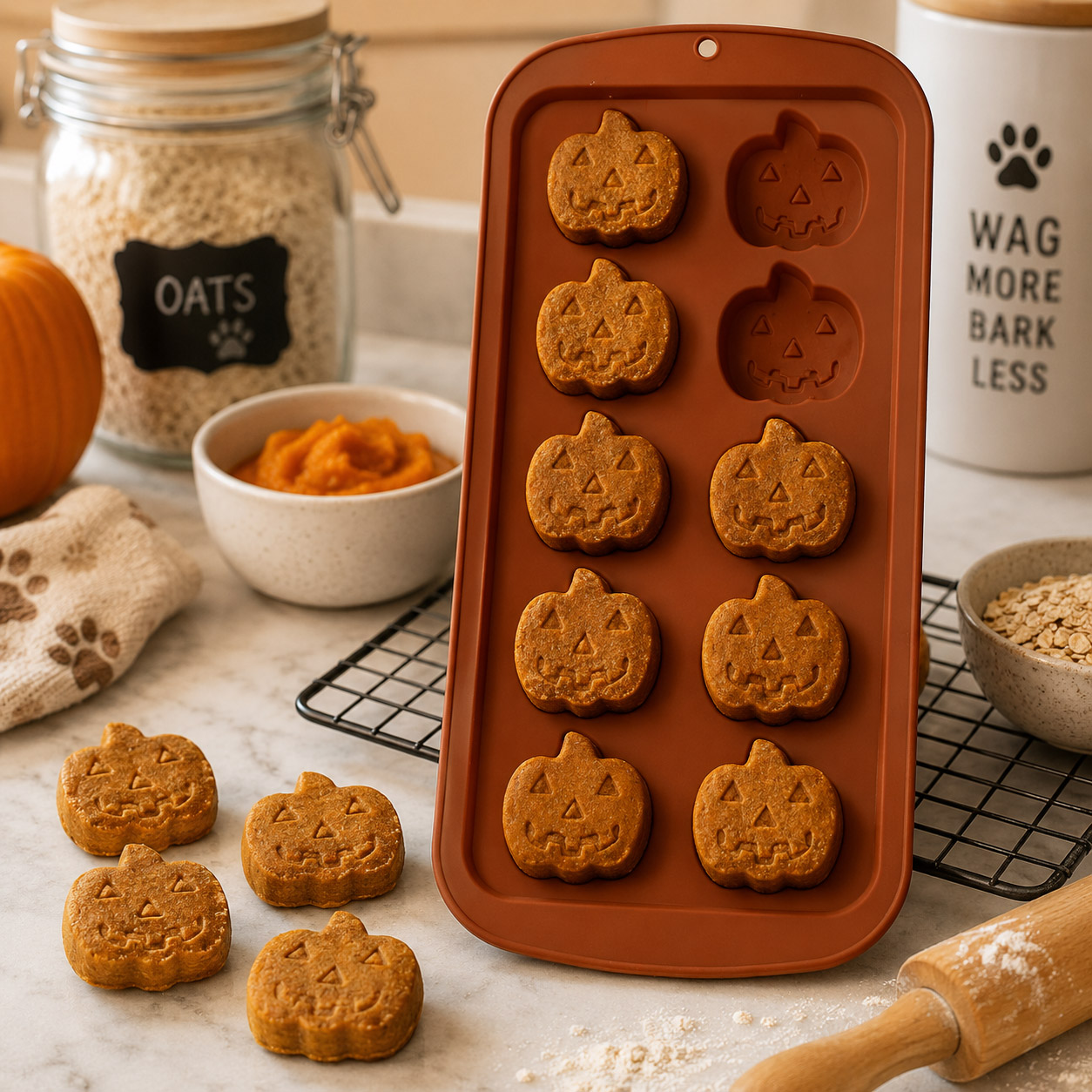
A request for "10,000 food-grade silicone muffin pans" leaves suppliers to make their own assumptions about weight, stiffness, packaging, and testing. A detailed request for quotation (RFQ) gives each factory the same product to price.
| RFQ item | What to specify |
|---|---|
| Product design | Product type, dimensions, cavity count, cavity volume, wall thickness, and target unit weight |
| Material and finish | Silicone hardness if specified, approved colors, surface texture, and any reinforcing frame |
| Intended use | Destination markets, food types, oven or freezer use, claimed temperature limits, and cleaning instructions |
| Branding and packaging | Logo position, artwork, barcode, retail packaging, carton quantity, and labeling languages |
| Order and delivery | Units per SKU and color, delivery target, shipping term, and whether tooling and testing should be itemized |
Translate shopper expectations into checks a factory can reproduce. For a six-cavity muffin pan, specify how it should behave when filled and moved. Should it hold its shape unaided, or will the instructions tell users to place it on a baking sheet before filling? Decide before approving the design, packaging, and product photos.
If you do not yet know the ideal weight or hardness, ask for two sample constructions. Compare them side by side with the same batter load. Record which version you prefer and why, rather than approving a sample simply because it feels thicker.
A supplier's company name does not tell you who will mold, finish, inspect, or pack your order. Ask for the legal seller's name, the production address, and a breakdown of which operations take place at each site. If a second factory will be used, confirm which SKUs it will make and whether it follows the same approved specification.
- Request a factory visit or live walkthrough covering molding, finishing, packing, and lot identification. Ask how the facility separates approved material from material awaiting release.
- Request the scope and site address on any ISO 9001 certificate. A quality management certificate does not establish that a finished baking mold meets food-contact requirements.
- If your retailer requires an amfori BSCI audit, verify that the audit covers the planned production site. Review relevant findings and corrective actions separately from product testing.
- Ask for a production schedule that shows molding, packing, inspection, and handover. Have the supplier state what must be approved before the schedule starts.
Yangjiang Hongyuan operates a 4,500-square-meter main factory and a 2,000-square-meter secondary facility. We report the capacity to deliver orders of one million pieces within 60 days. Use that figure as a starting point for planning, not a blanket lead-time promise: ask for a schedule based on your SKU mix, mold availability, packaging approvals, and inspection requirements.
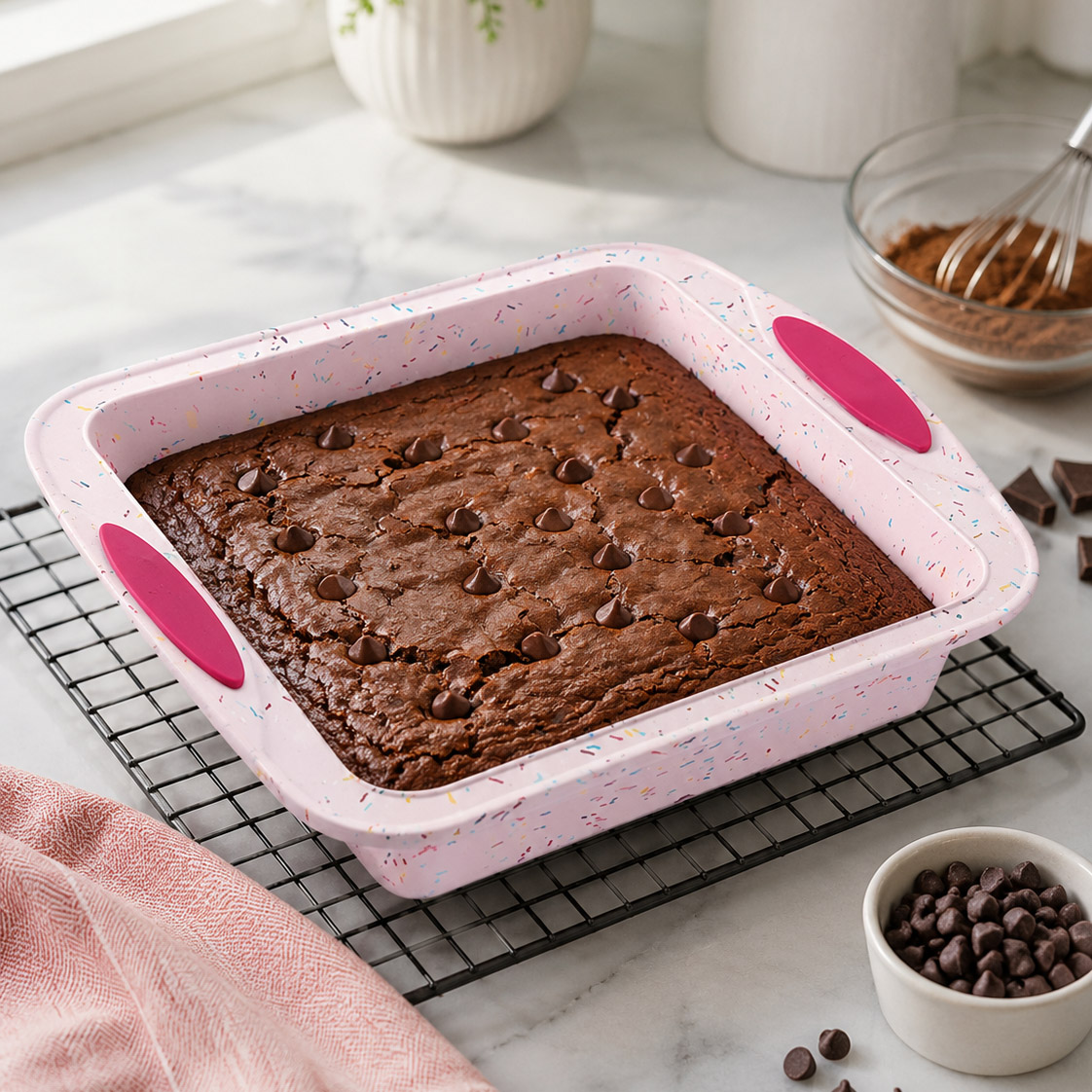
"Food-grade silicone" is not a complete purchasing specification. Ask what regulation or testing method the supplier is referencing, what was tested, and which conditions the results cover. A report for a raw silicone compound is useful background, but it does not automatically establish that a finished, pigmented baking mold is suitable for its intended use.
| Destination or requirement | What the buyer should verify |
|---|---|
| United States | Determine whether 21 CFR 177.2600 applies. Where it does, review formulation restrictions and relevant finished-article extractives requirements for the intended food contact. |
| European Union | Review Regulation (EC) No 1935/2004, applicable good manufacturing practice requirements, and any national rules that apply in the country of sale. |
| Germany | Distinguish the LFGB, Germany's food and feed code, from BfR Recommendation XV, a technical recommendation for silicones rather than a binding legal standard. Ask which provisions and methods the report actually covers. |
| EU chemical obligations | Review applicable REACH requirements separately. Candidate List duties can arise when a listed substance exceeds 0.1% by weight in an article; this is not a food-contact test or a universal pass/fail threshold. |
| Other destinations | Confirm requirements for the specific country of sale and intended use. Do not assume one report serves the UK, Australia, or every South American market. |
Compare the lab report's sample description, photos, material reference, and color with the item you will buy. Then check the test date, methods, conditions, and results. Ask for a written explanation if the supplier proposes using one report to cover several colors or models. Have your lab or compliance team review whether that explanation supports the proposed coverage.
Treat a new pigment, formulation, or food-contact component as a change to review before production, not after shipment. Agree on who decides whether additional testing is needed and who pays for it. This matters when the approved sample is plain silicone but the retail version adds a printed logo, a second color, or a reinforcing component.
Start with a stock mold when you want to trial demand using an existing shape. An ODM program uses a supplier's design as the starting point and can add agreed changes such as a custom color or branded packaging. An OEM program built to your design makes more sense when dimensions, cavity geometry, or other product features are central to your offer. Suppliers may use these terms differently, so put the actual scope in writing.
For a new mold, confirm who owns it, where it will be stored, whether the supplier can use it for other customers, who pays for maintenance, and whether it can be transferred. Define the number of included sample rounds and what happens if a trial part does not meet your drawing.
Ask for the minimum order quantity (MOQ) per product, per color, and per packaging design. For example, a quote may meet a 6,000-unit product minimum but still fall short of the minimum for each of four custom carton designs. Resolve that before finalizing the assortment.
Request itemized quotes on the same shipping basis and at the same order quantities. Separate unit price from tooling, retail packaging, testing, inspection, freight, duties, and destination charges. Confirm who pays each charge and what the shipment milestone actually means.
Consider two illustrative quotes for 10,000 pieces. Supplier A offers a unit price of US$1.05 plus US$1,800 for tooling. Supplier B offers US$1.15 per unit and an existing mold with no tooling charge. Before other costs, A totals US$12,300 and B totals US$11,500. The cheaper unit quote costs US$800 more on the first order. If you reorder and can reuse A's mold without another charge, the comparison changes.
Ask for packed carton dimensions, gross weight, and units per carton. For online retailers in particular, compare the retail pack as well as the master carton. A bakeware set that nests neatly in a sample room may still take up more space than expected once sleeves, inserts, and protective packaging are added.
A showroom sample helps you judge a supplier's range. A production-representative sample helps you decide whether the factory can make your specific item. Approve it against the intended material, color, dimensions, markings, and retail packaging.
1. Record the approved sample. Keep matching reference samples with the buyer and supplier, and record the SKU, revision date, dimensions, and packaging artwork.
2. Trial the product as sold. Check handling when full, food release after baking and cooling, and cleaning under the conditions you plan to claim. These checks assess performance; they do not replace lab testing.
3. Define defects before production. Agree how to classify tears, contamination, incorrect barcodes, uneven trim, or out-of-tolerance dimensions. Give inspectors measurable limits or example photos.
4. Agree on a shipment release process. Set the sampling plan and inspection timing in advance. If a lot fails, document the corrective action and require the agreed reinspection before release.
Imagine a tray that meets its overall dimensions and target weight, but its rim folds when lifted after the cavities are filled. An inspector checking only weight and dimensions could accept it. A buyer who specified a filled-tray handling check would catch the mismatch before shipment.
The fix depends on the product promise. If the tray is supposed to work with a rigid baking sheet, confirm that the instructions and photos show that setup clearly. If the brand promises a tray users can carry without support, revise the rim or add reinforcement and repeat the relevant checks. The lesson: turn the selling point into an acceptance criterion.
Send Yangjiang Hongyuan Trading Co., Ltd. your target market, product drawings or reference photos, quantity per SKU and color, packaging requirements, and required delivery date. Ask for a quotation that separates tooling, testing, and packaging and identifies which documents cover the proposed finished product.
We serve supermarkets, wholesalers, brands, and online retailers across the EU, US, UK, Australia, and South America. If you are still comparing options, request two proposals: an existing-mold version for a trial order and a custom version with the tooling cost and approval schedule shown separately.
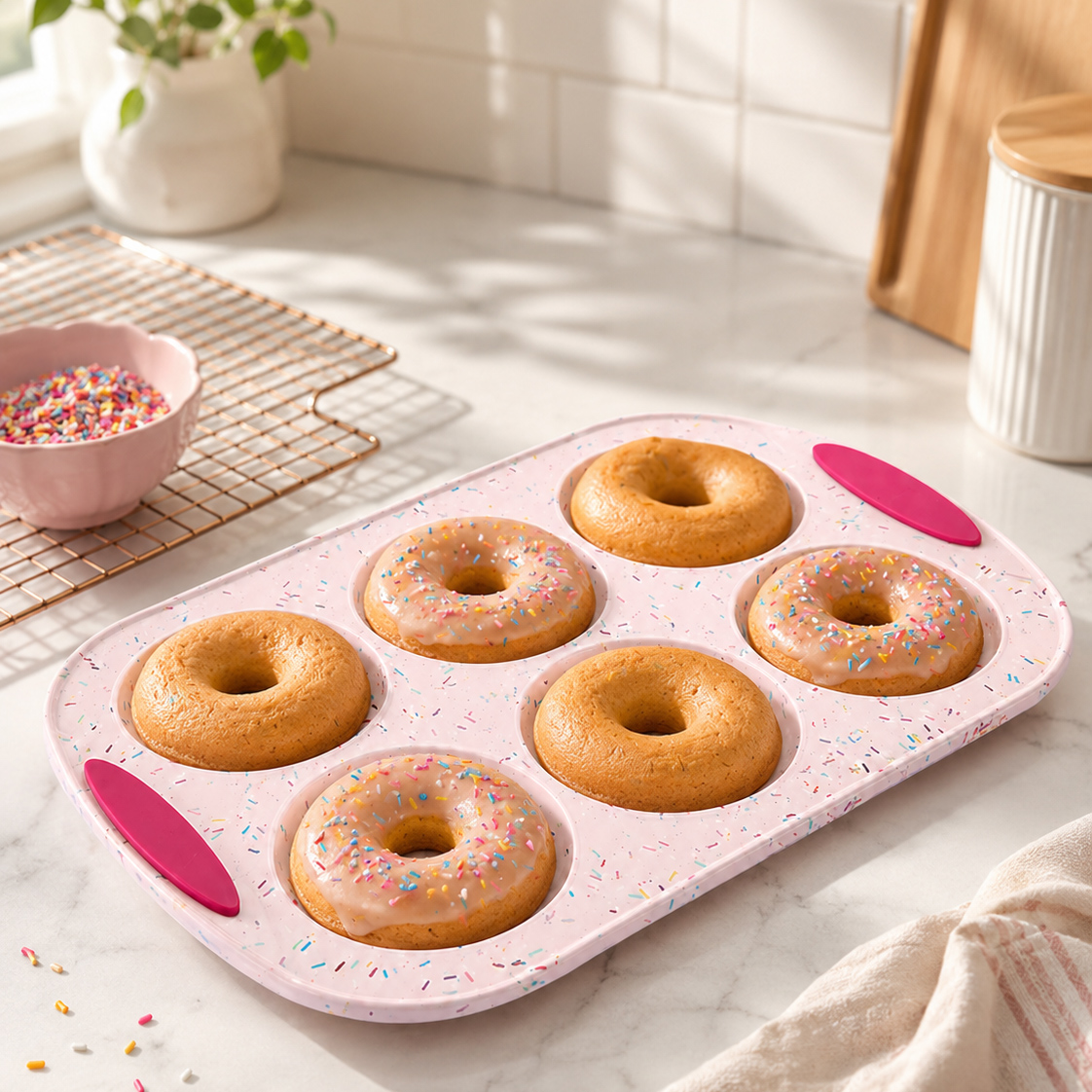
There is no single MOQ. Ask for separate minimums for the model, each custom color, and each packaging design. If your first order is small, compare a stock mold and standard packaging with a fully customized quote.
No. Ask which regulatory provision the supplier is relying on and what evidence supports the finished article under its intended conditions of use. A generic badge or raw-material report is not a substitute for checking product-specific coverage.
Do not assume so. Ask whether the lab report identifies the colors and formulations covered. If the supplier proposes extending coverage to another color, have your lab or compliance team evaluate the justification before approving production.
Not automatically. Treat the curing system as one part of the specification, not proof of compliance or performance. Compare production samples for the stiffness, release, and handling your product requires, and review the relevant finished-product test evidence.
Request a timeline that separates tooling, sample revisions, testing, production, packing, inspection, and transit. Confirm whether the quoted lead time starts at deposit, artwork approval, or final sample approval, and whether it ends at factory release or delivery.
A stock mold is worth comparing if you are testing demand and can accept an existing shape. If a specific cavity design or handling feature is essential to the product's value, price custom tooling from the start and include the sample approval schedule.
- U.S. Electronic Code of Federal Regulations, *21 CFR § 177.2600 — [ecfr]
- German Federal Institute for Risk Assessment (BfR), *Recommendations on Food Contact Materials*. Explains the status of BfR recommendations and their relationship to the EU framework and Germany's LFGB. [bfr.bund]
- European Parliamentary Research Service, *Food Contact Materials — Regulation (EC) No 1935/2004*. Background on the EU framework and material-specific requirements. [europarl.europa]581411_EN.pdf)
- European Chemicals Agency (ECHA), *Summary of obligations resulting from inclusion of SVHCs in the Candidate List*. Explains the 0.1% weight threshold and distinguishes communication and notification duties. [echa.europa]
- Silicones Europe, *Good Manufacturing Practices for Organosilicon Materials Intended to Come into Contact with Food*. Industry guidance on food-contact manufacturing practices and traceability. [silicones]


