


Views: 201 Author: Hongyuan Silicone Publish Time: 2026-11-11 Origin: Site


Content Menu
● 1. Chinese Silicone Suppliers Offer More Than a Low Unit Price
>> Compare Suppliers Against the Same Specification
● 2. OEM and ODM Services Support Different Brand Strategies
>> OEM Silicone Kitchenware for Established Designs
>> ODM Silicone Products for Faster Range Development
● 3. Production Capacity Helps Buyers Plan Larger Orders
>> Factory Capacity Is Not the Same as Delivered Lead Time
● 4. Reliable Silicone Kitchenware Suppliers Explain Compliance Clearly
>> Why "FDA Certified Silicone" Needs Clarification
>> Why European Buyers Need Product-Specific Evidence
● 5. Better Product Engineering Supports Better Customer Experiences
>> Translate Marketing Claims Into Testable Requirements
● 6. Export Experience Can Improve Commercial Coordination
>> Different Sales Channels Need Different Solutions
● 7. A Practical Supplier Scorecard Makes Comparisons More Objective
● 8. Use Approval Gates Before Committing to Bulk Production
>> Gate One: Approve the Product Brief
>> Gate Two: Approve Representative Samples
>> Gate Three: Approve Compliance Evidence
>> Gate Four: Approve Bulk Production Controls
>> Gate Five: Authorize Shipment
● 9. Build Long-Term Value Through Controlled Reorders
● Start Your Silicone Kitchenware Project With a Clear Brief
>> 1. Why do international buyers source silicone kitchenware from China?
>> 2. How can I verify a silicone kitchenware supplier's compliance claims?
>> 3. What is the difference between OEM and ODM silicone kitchenware?
>> 4. Can Yangjiang Hongyuan Trading Co., Ltd. handle large orders?
>> 5. What should I include in a request for quotation?
>> 6. Does one test report cover every silicone kitchen product?
International buyers choose Chinese silicone suppliers for more than competitive pricing. For supermarkets, wholesalers, kitchenware brands, and online retailers, the real advantage is finding a manufacturing partner that can connect product customization, production capacity, quality control, and export preparation.
At Yangjiang Hongyuan Trading Co., Ltd., we view successful sourcing as a balance between commercial opportunity and consistency. An attractive silicone spatula sample matters, but the next shipment must deliver the same appearance, performance, and approved specifications.
Our company operates a 4,500-square-meter main factory and a 2,000-square-meter branch factory. We serve customers across the European Union, United States, United Kingdom, Australia, and South America through OEM and ODM services.
These capabilities help explain the appeal of sourcing silicone kitchenware from China. However, buyers should evaluate individual suppliers—not assume that every manufacturer offers the same standards.
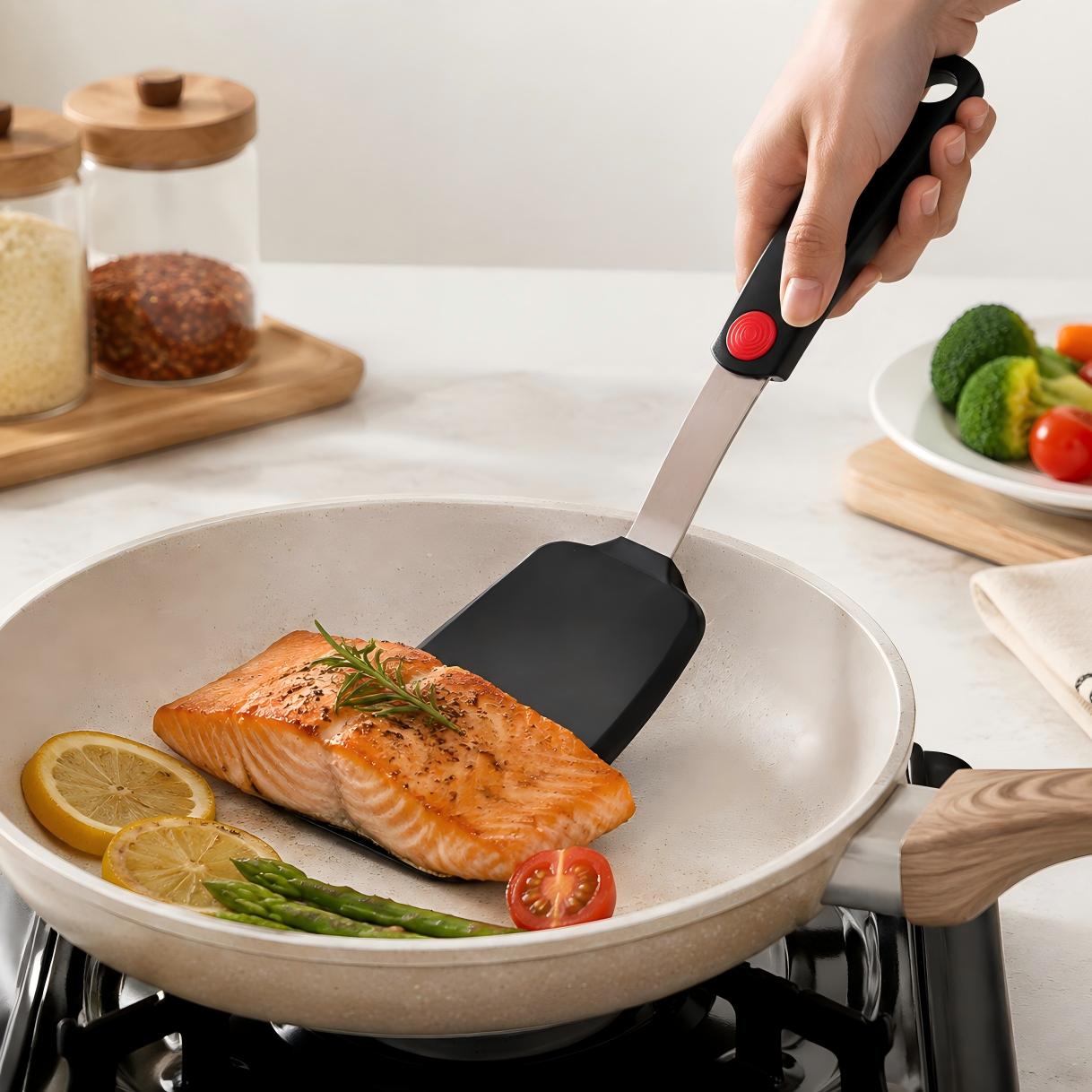
A purchasing decision should start with total cost, not the quotation's lowest number.
For silicone kitchen utensils, the final commercial result depends on material specifications, tooling, finishing, packaging, inspection, freight, and the number of products that arrive ready for sale.
A cheaper spatula becomes expensive if its handle separates, its color differs between batches, or its packaging needs replacement.
Before comparing quotations, define:
- Product dimensions, weight, and tolerances.
- Silicone hardness and intended flexibility.
- Reinforcement materials and construction.
- Required food-contact testing.
- Logo method, colors, and packaging.
- Inspection criteria and delivery terms.
This creates a meaningful comparison between Chinese silicone kitchenware manufacturers.
From our manufacturing perspective, clear specifications also reduce avoidable sampling rounds. They help buyers distinguish genuine production efficiency from a lower price achieved by changing materials or reducing product weight.
International buyers rarely need identical products. A supermarket may prioritize coordinated seasonal collections, while an online brand may need a distinctive utensil shape or compact gift set.
Chinese silicone suppliers can be valuable when their development services match these different requirements.
OEM generally involves manufacturing to the buyer's specifications. Depending on the agreement, this can include custom dimensions, tooling, colors, branding, and packaging.
Buyers should establish who owns the design and molds, whether exclusivity applies, and how tooling maintenance will be handled.
ODM typically starts with supplier-developed designs that buyers adapt for their markets. This can reduce development work when an existing product already meets the intended application.
At Yangjiang Hongyuan Trading Co., Ltd., our OEM and ODM services support buyers with different levels of product-development readiness.
The practical question is not which model sounds more advanced. It is which approach best fits the buyer's differentiation goals, budget, and launch schedule.
Retail promotions and wholesale programs require dependable production planning. A successful sample is only the first stage.
According to our company information, our manufacturing operation can complete orders of one million products within 60 days. Buyers should confirm the applicable product mix, tooling readiness, packaging requirements, and production schedule before treating that capability as an order-specific commitment.
A purchasing schedule should distinguish:
1. Design and specification approval.
2. Tooling preparation and sampling.
3. Testing and packaging approval.
4. Bulk production and inspection.
5. Shipment, customs clearance, and final delivery.
A 60-day manufacturing commitment should not automatically be interpreted as arrival at an overseas warehouse within 60 days.
Buyers should also ask whether capacity is available during their required production window. Factory area provides useful context, but available machines, labor, molds, and competing orders determine actual scheduling.
Food-contact compliance deserves more attention than a row of certification logos.
ISO 9001, amfori BSCI, FDA-related requirements, LFGB, and REACH address different subjects. They should not be presented as interchangeable product approvals.
Our company identifies these areas within its certification, audit, and compliance credentials. Buyers should request the relevant documents and verify their scope against the intended product and destination.
| Credential or framework | What it addresses | What buyers should verify |
|---|---|---|
| ISO 9001 | Quality management systems | Certified entity, site, scope, and validity |
| amfori BSCI | Social responsibility auditing | Audited site, report date, findings, and improvements |
| FDA-related requirements | Applicable U.S. food-contact provisions | Regulatory basis, formulation, and intended-use conditions |
| LFGB-related assessment | German legal requirements and relevant testing | Product identity, methods, and applicable requirements |
| REACH | EU chemicals requirements | Applicable restrictions and substance information |
For applicable repeated-use rubber food-contact articles, 21 CFR 177.2600 includes formulation and extraction requirements.
A supplier's statement that a product is "FDA certified" is not enough to establish suitability. Ask which provisions apply and whether supporting evidence matches the finished article and its intended use.
EU food-contact materials must meet the general requirements of Regulation (EC) No 1935/2004 and applicable manufacturing requirements.
For silicone, BfR Recommendation XV provides technical guidance, but it is not itself a binding legal standard or a universal certificate.
Likewise, amfori BSCI is an auditing system, not product certification. These distinctions help purchasing teams request the right evidence.
A silicone kitchenware product must perform in everyday use, not just photograph well.
A spatula needs an appropriate balance between flexibility and support. A baking mold needs usable dimensions and suitable handling characteristics. A utensil with multiple components needs reliable assembly.
Instead of asking for "premium quality," define what premium means.
| Product feature | Useful evaluation |
|---|---|
| Flexible spatula head | Deflection and recovery under an agreed load |
| Reinforced handle | Agreed bending and attachment-strength checks |
| Dishwasher claim | Repeated cleaning under defined conditions |
| Heat-resistance claim | Testing at the stated temperature and duration |
| Brand color | Comparison against an approved physical standard |
| Finished surface | Checks for flash, contamination, and visible defects |
Avoid selecting a universal heat-resistance figure for every silicone product. Suitability depends on the formulation, construction, exposure time, and intended application.
For buyers, measurable requirements make quality discussions more productive and reduce disagreements after production.
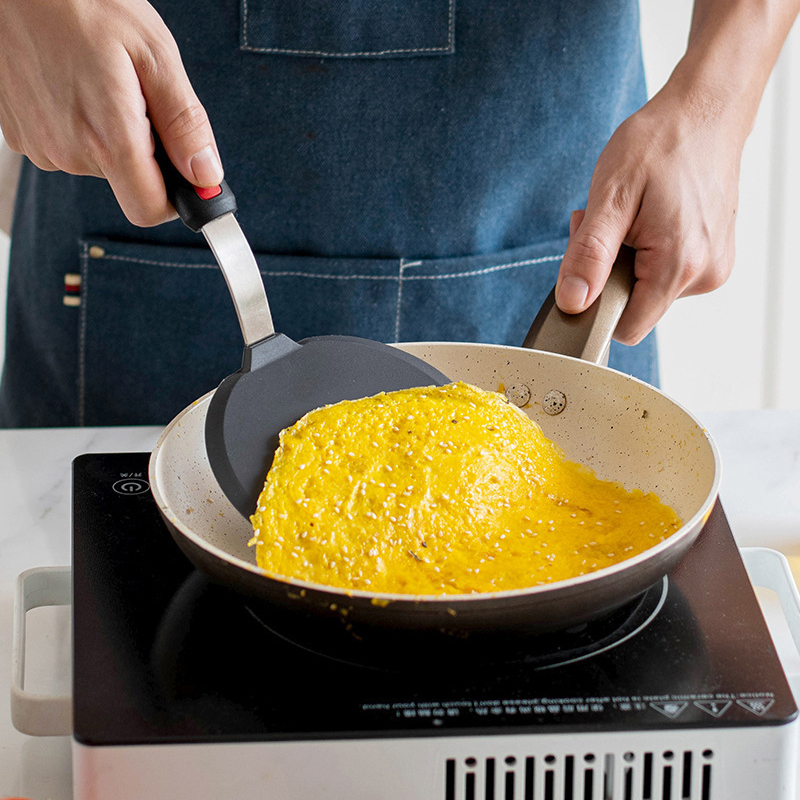
Working with overseas customers requires more than manufacturing ability.
Buyers need coordinated documentation, packaging instructions, carton information, shipment arrangements, and responses to technical questions.
Yangjiang Hongyuan Trading Co., Ltd. serves supermarkets, wholesalers, brands, and online retailers across several international markets. This customer coverage provides context for our export-facing service, although each destination still requires its own compliance review.
- Supermarkets may need retail-ready packaging, barcodes, and fixed promotional dates.
- Wholesalers may prioritize carton quantities and replenishment consistency.
- Brands may require custom designs, controlled colors, and confidentiality.
- Online retailers may focus on protective packaging, product dimensions, and accurate care instructions.
A useful supplier asks about these requirements before confirming the order.
However, previous exports to one country do not prove that every product is automatically suitable for every other market.
One useful way to evaluate Chinese silicone suppliers is to score evidence rather than presentation quality.
The following weighting is a suggested purchasing framework, not an industry standard.
| Evaluation area | Suggested weight | Evidence to request |
|---|---|---|
| Product compliance | 25% | Relevant reports and supporting documentation |
| Quality consistency | 25% | Inspection records and approved sample controls |
| Capacity and scheduling | 20% | Order-specific production plan |
| Development capability | 15% | Samples, drawings, and tooling arrangements |
| Commercial transparency | 15% | Itemized quotation and written terms |
Score each category from one to five using the same criteria for every supplier.
Treat serious compliance gaps as disqualifying issues rather than allowing a low price to offset them. A weighted score supports judgment; it should not replace essential safety requirements.
A structured approval process can reveal problems while changes are still manageable.
Confirm the target market, food-contact application, dimensions, performance requirements, order quantity, and packaging concept.
Check appearance, weight, flexibility, assembly, and branding. Record any differences between prototype samples and the intended production process.
Confirm that reports identify the relevant product, material, or justified product grouping. Ask the laboratory whether changes in color, formulation, or construction require additional evaluation.
Agree on the reference sample, defect classifications, inspection approach, and rules for substitutions.
Review inspection results, quantities, packaging, and required shipping documents.
These gates turn supplier selection into a controlled purchasing process rather than a decision based mainly on sample appearance.
The strongest supplier relationship continues after the first shipment.
For repeat orders, buyers should maintain an approved specification file covering drawings, materials, colors, packaging, and labeling.
Any proposed change should be reviewed before implementation. Even a seemingly minor adjustment to a pigment, reinforcement component, or packaging layout may affect performance, documentation, or retail presentation.
Track practical indicators such as defect rates, schedule performance, complaint patterns, and response times.
This creates a more useful measure of supplier performance than factory size alone. It also gives both sides a factual basis for improving the next order.
International buyers choose Chinese silicone suppliers when manufacturing capability, customization, commercial value, and documentation align with their needs.
At Yangjiang Hongyuan Trading Co., Ltd., we combine OEM and ODM services with two manufacturing facilities and experience serving multiple overseas markets.
Send us your target market, product drawings or reference images, expected quantity, packaging requirements, and launch date. Request a project-specific quotation, sample plan, relevant compliance documentation, and written production schedule before confirming your order.
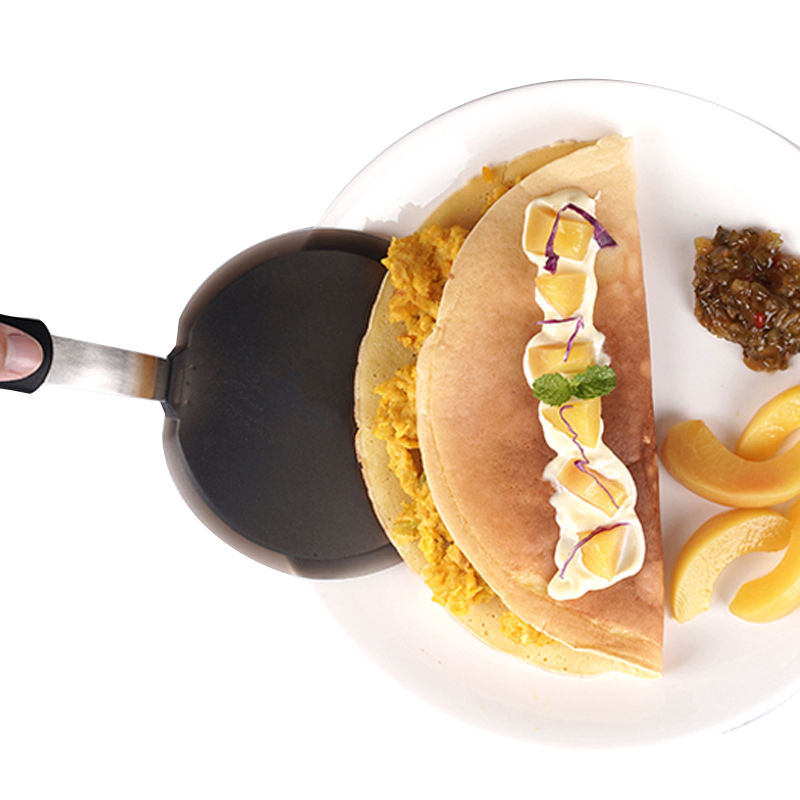
Buyers may find a useful combination of customization, production scale, and competitive commercial terms. The outcome depends on the individual supplier's capabilities and the clarity of the purchasing specification.
Request complete documents rather than logo images. Check the manufacturer, product description, tested materials, methods, report dates, and intended-use conditions. Seek clarification from the issuing laboratory when coverage is unclear.
OEM generally follows buyer-defined specifications. ODM generally adapts supplier-developed designs. Design ownership, exclusivity, tooling rights, and permitted modifications should be established in writing.
The company reports the capability to complete one million products within 60 days. Confirm availability and the exact scope for your product mix. Development, testing, international transport, and customs may require additional time.
Provide the destination market, drawings, dimensions, estimated quantity, colors, logo requirements, packaging, testing needs, delivery terms, and target date. Detailed requests produce more comparable quotations.
Not necessarily. Coverage depends on the tested formulation, construction, colors, intended use, and laboratory assessment. Buyers should confirm whether a report applies to the exact product being ordered.
1. Company-provided background — Yangjiang Hongyuan Trading Co., Ltd. Supplied information on factory areas, production capability, customer markets, OEM/ODM services, and stated credentials. These company-specific claims have not been independently verified; supporting documents should be checked before publication or purchasing.[Yangjiang Hongyuan Trading Co., Ltd.]
2. International Organization for Standardization — [ISO 9001: Quality Management Systems]. Supports the distinction between quality management system requirements and product-specific compliance. [iso]
3. amfori — [amfori BSCI: Business Social Compliance Initiative]. Explains social auditing and confirms that amfori BSCI is not a certification. [amfori]
4. Electronic Code of Federal Regulations — [21 CFR § 177.2600: Rubber Articles Intended for Repeated Use]. Provides formulation, extraction, and use requirements for applicable repeated-use food-contact rubber articles. [ecfr]
5. European Commission — [Food Contact Materials: Legislation]. Explains the EU framework, safety principles, labeling, and traceability requirements. [food.ec.europa]
6. European Commission — [Food Contact Materials]. Summarizes the relationship between Regulation (EC) No 1935/2004, good manufacturing practice, and applicable additional legislation. [food.ec.europa]
7. German Federal Institute for Risk Assessment — [BfR Recommendations on Food Contact Materials]. Explains the scientific role and nonbinding legal status of BfR recommendations. [bfr.bund]
8. German Federal Institute for Risk Assessment — [Recommendation XV: Silicones]. Provides technical recommendations concerning silicone materials intended for relevant food-contact applications. [bfr.bund]
9. European Chemicals Agency — [Understanding REACH]. Explains the EU chemicals framework and the responsibilities of relevant supply-chain participants. [echa.europa]


