


Views: 278 Author: Hongyuan Silicone Publish Time: 2026-10-20 Origin: Site


Content Menu
● Private-Label Ice Trays vs Standard Wholesale Models: What Changes?
>> Private-Label Silicone Ice Trays
>> Standard Wholesale Ice Trays
● Side-by-Side Comparison for B2B Buyers
● Compare Profit After All Relevant Costs
>> Illustrative Margin Comparison
● When Private-Label Ice Trays Deliver Better Margins
>> Your Customers Recognize a Meaningful Difference
>> You Have Evidence of Repeat Demand
>> Your Brand Can Support the Premium
● When Standard Wholesale Ice Trays Produce Better Returns
>> You Need to Validate the Category
>> Your Advantage Is Distribution
>> Inventory Turnover Matters More Than Unit Premium
● A Better Procurement Strategy: Customize in Stages
>> Stage 1: Validate an Existing Mold
>> Stage 2: Add Selective Branding
>> Stage 3: Invest in Proven Improvements
● Compliance and Quality Costs Belong in Both Models
>> Distinguish Certification, Auditing, and Product Testing
>> Build a Product-Specific Inspection Plan
● Manufacturing Capacity: Useful Only When Matched to Your Order
● Request Two Comparable Quotations Before Choosing
>> Are private-label ice trays always more profitable?
>> Can I private-label an existing silicone ice tray mold?
>> Which model is better for a new kitchenware business?
>> Does private labeling require a higher minimum order quantity?
>> Does an FDA-related test report guarantee worldwide compliance?
>> What is the biggest mistake when comparing supplier prices?
Private-label ice trays can deliver stronger margins when branding, product differentiation, and repeat demand justify their additional costs. Standard wholesale models can be more profitable when buyers prioritize fast launches, lower initial commitments, and inventory flexibility. The better choice depends on contribution margin, not simply the supplier's unit price.
For supermarkets, distributors, kitchenware brands, and online retailers, this comparison is especially relevant when sourcing silicone ice trays. Similar-looking products can have very different packaging costs, selling prices, logistics requirements, and inventory risks.
From our manufacturing perspective at Yangjiang Hongyuan Trading Co., Ltd., the right question is practical: which sourcing model produces more sustainable profit for your particular sales channel?

Private-label ice trays are manufactured for sale under your brand. Customization may involve an existing tray design with branded packaging, selected colors, an embossed logo, or a completely new mold.
Private labeling does not automatically mean exclusive product geometry. A standard mold with customized packaging is different from a proprietary design protected by a clear tooling agreement.
Buyers should distinguish three investment levels:
- Existing mold with branded sleeves or cartons.
- Existing mold with customized colors and product branding.
- New tooling with exclusive dimensions, cavities, or functional features.
Each level creates a different balance of differentiation, development expense, and purchasing commitment.
Standard wholesale models use established product specifications and generally require less development work.
They may be supplied unbranded or with the supplier's existing packaging. Buyers still need to confirm stock availability, minimum order quantities, documentation, and lead times.
These models suit businesses testing a category, supplying price-sensitive customers, or building a broad kitchenware assortment without financing multiple custom projects.
| Purchasing factor | Private-label ice trays | Standard wholesale models |
|---|---|---|
| Initial investment | Higher when artwork, testing, or tooling changes | Generally lower development expense |
| Selling-price control | More room for brand-led positioning | More exposed to direct product comparison |
| Launch speed | Requires additional approvals | Can launch faster when stock is available |
| Minimum order quantity | May apply separately to colors and packaging | Often more flexible, depending on the supplier |
| Inventory flexibility | Branded stock is harder to redirect | Generic stock may serve more customers |
| Product exclusivity | Possible when contractually agreed | Usually limited |
| Marketing responsibility | Buyer builds brand demand | Buyer competes through availability, price, or service |
| Margin potential | Higher if differentiation earns a premium | Attractive when turnover and purchasing efficiency are strong |
These are purchasing tendencies, not guaranteed outcomes. A complex wholesale order can still carry a substantial minimum quantity, while a simple private-label packaging project may require little product development.
A low factory price does not necessarily produce the best B2B margin.
For either model, build the calculation around the same selling unit: one tray, one two-piece set, or one retail-ready multipack. Mixing these units can make quotations misleading.
A useful framework is:
Contribution per unit = net selling price − landed product cost − variable selling costs.
Landed product cost should include the product, packaging, freight, insurance, duties, and relevant inbound charges. Variable selling costs can include marketplace fees, fulfillment, payment processing, promotions, and expected returns.
Product development and tooling should then be assessed separately to determine whether the project generates enough total contribution to recover its fixed investment.
The following figures are hypothetical planning assumptions, not market averages, supplier quotations, or reported customer results.
| Per retail-ready unit | Standard wholesale | Private label |
|---|---|---|
| Net selling price | $5.00 | $6.50 |
| Product and packaging | $1.35 | $1.85 |
| Freight, duties, and inbound allocation | $0.45 | $0.50 |
| Variable selling and fulfillment costs | $1.20 | $1.40 |
| Contribution before fixed project costs | $2.00 | $2.75 |
| Contribution margin | 40.0% | 42.3% |
Private label produces $0.75 more contribution per unit in this example.
If it requires $3,000 in additional fixed development costs, the incremental break-even volume is:
$3,000 ÷ $0.75 = 4,000 units.
That threshold assumes both products achieve their planned prices and sell-through. It does not account for financing costs or leftover inventory.
A logo alone does not establish a defensible price premium.
Private-label silicone ice trays become more commercially compelling when customization solves a buying problem. Examples include:
- A supporting frame that improves handling.
- A well-fitting lid with clearly defined performance claims.
- Cavity dimensions matched to a particular drinkware category.
- Packaging designed for gifting or shelf presentation.
- A coordinated color range across kitchen accessories.
These are development options, not guaranteed performance benefits. Samples must demonstrate that the proposed feature works before marketing claims are finalized.
The strongest differentiation is something customers can understand quickly and verify during use.
Private labeling works best when the buyer has reliable demand signals: established customer orders, proven category sales, or a successful trial launch.
For a supermarket program, confirmed distribution can support a larger production commitment. For an online brand, repeat purchasing data and stable acquisition costs can provide a stronger basis for customization than an optimistic launch forecast.
Our commercial recommendation is to invest first in the feature or packaging improvement most closely connected to customer demand, rather than customizing every available detail.
A branded product needs consistent photography, useful instructions, accurate descriptions, and dependable after-sales service.
These activities cost money. However, they also help explain why the product deserves its position in the assortment.
Private label is therefore a business model, not merely a packaging choice. Buyers must budget for both the product and the work required to sell it.
For a first order of wholesale silicone ice trays, an established model can reduce the amount of capital exposed before demand is proven.
It lets buyers test cavity size, pack quantity, preferred colors, and acceptable price points before funding a custom design.
A smaller profitable trial can be more valuable than a large branded launch followed by clearance discounts.
Some B2B buyers win through regional stock availability, consolidated deliveries, flexible case quantities, or relationships with independent retailers.
In these situations, proprietary tooling may contribute less value than dependable replenishment.
Standard wholesale models can support a distribution-led strategy without forcing the buyer to recover substantial development expenses.
Compare total contribution over the same period, not just profit on one sale.
A wholesale model earning $2 per unit across 10,000 annual sales produces $20,000 in contribution. A private-label model earning $2.75 across 6,000 sales produces $16,500 before additional fixed costs.
These illustrative figures show why a higher contribution percentage does not automatically create a stronger business result.
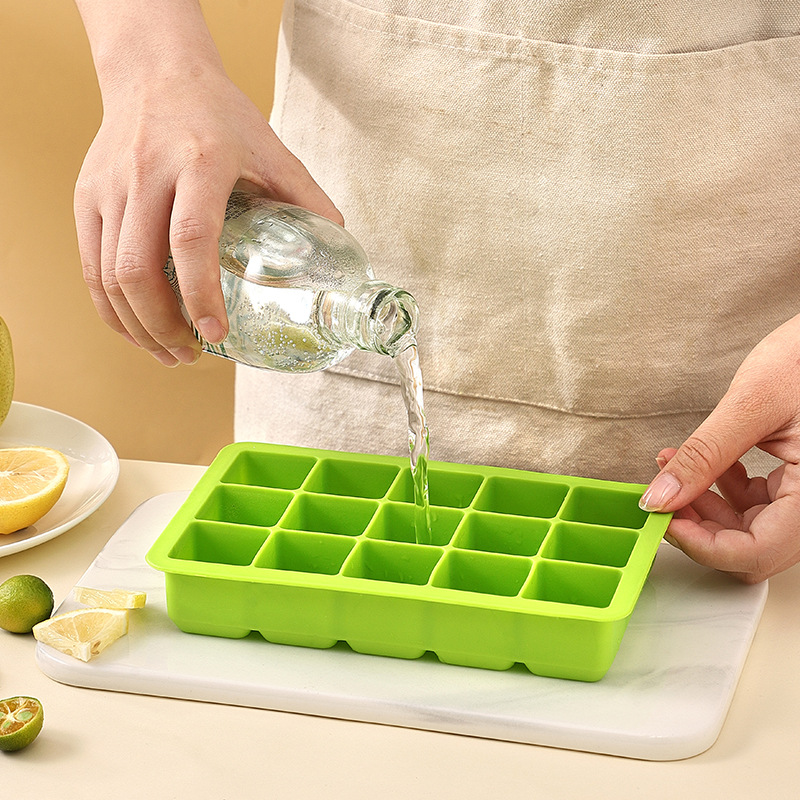
For many buyers, the strongest solution sits between fully generic purchasing and an entirely new product.
Evaluate samples, test the selling price, and confirm the product fits your channel.
Check dimensions, release behavior, handling, lid fit, packaging protection, and customer instructions.
Introduce a branded sleeve, approved artwork, or a focused color selection.
This can create a recognizable retail offer without immediately paying for new geometry. Confirm whether each packaging version or color creates a separate minimum order requirement.
Develop exclusive tooling only when there is a clear commercial reason.
Before paying, document:
1. Mold ownership and permitted use.
2. Exclusivity scope and duration.
3. Maintenance responsibilities.
4. Design-change approval procedures.
5. Tool transfer or replacement arrangements.
This staged approach is our purchasing recommendation, not a guarantee of profitability. Its purpose is to make each additional investment depend on stronger evidence.
Neither private labeling nor standard wholesale purchasing removes the need for destination-specific compliance.
For the United States, 21 CFR 177.2600 is a relevant regulatory reference for repeated-use rubber articles, including applicable silicone formulations. Compliance involves more than describing a product as "food grade."
For the European Union, food-contact materials must meet the applicable framework requirements and good manufacturing practices. Material-specific and national requirements may also apply.
ISO 9001 concerns quality-management systems. BSCI concerns social compliance auditing. FDA-related compliance, German food-contact requirements associated with LFGB, and REACH obligations address different subjects.
They should not be presented as interchangeable product approvals.
Request documents that identify the relevant factory, product, material, test conditions, issuing organization, and validity where applicable. Changes to pigments, formulations, accessories, or intended use may require further assessment.
Yangjiang Hongyuan reports credentials and documentation associated with these areas. Buyers should verify the current scope for their selected products and destination rather than assume universal market approval.
Useful checks for silicone ice trays include:
- Product weight, dimensions, and cavity consistency.
- Visible defects and excessive flash.
- Lid alignment and supporting-frame fit.
- Performance after agreed freezing and washing cycles.
- Packaging, barcode, and carton accuracy.
- Traceability between approved samples and production.
Define acceptance criteria before production. A generic inspection checklist may miss the feature on which your branded price premium depends.
According to our company-provided information, Yangjiang Hongyuan Trading Co., Ltd. operates a 4,500-square-meter main factory and a 2,000-square-meter branch factory, with stated capacity to complete one million products within 60 days.
We provide OEM and ODM services for supermarkets, wholesalers, brands, and online retailers serving the EU, United States, United Kingdom, Australia, and South America.
For buyers, the important distinction is that manufacturing capacity is not the same as a guaranteed door-to-door delivery schedule.
Confirm the timeline for your particular tray design, order mix, tooling, packaging, testing, production allocation, and shipment. Large overall capacity does not establish every SKU's lead time.
The most useful supplier comparison starts with an identical purchasing brief.
Request one quotation for a standard wholesale ice tray and another for a private-label alternative using the same base specification.
Include:
1. Target market and sales channel.
2. Tray dimensions, cavity count, and accessories.
3. Material and testing requirements.
4. Order quantity and color breakdown.
5. Retail packaging and master-carton specifications.
6. Trade terms and destination.
7. Tooling charges and ownership.
8. Approval milestones and shipment requirements.
Then compare contribution, cash commitment, and expected sell-through—not factory price alone.
Contact Yangjiang Hongyuan Trading Co., Ltd. with this brief to request samples and a side-by-side OEM, ODM, or standard-model proposal. Ask for current documentation and project-specific production timing before placing your order.
No. They can earn higher selling prices, but customization, promotion, unsold inventory, and development expenses can offset the premium. Compare total project contribution.
Yes, depending on the supplier's capabilities. Branding may involve packaging, color, or an added logo. Confirm whether the underlying design remains available to other buyers.
A standard model or lightly customized existing design is often a practical starting point. The decision should reflect available capital, customer commitments, and the cost of testing demand.
Not always. Minimum quantities depend on the mold, material, color, packaging, and production process. Request separate requirements for each customization element.
No. Regulatory requirements differ between destinations. Documentation must match the product, intended use, and applicable market requirements.
Comparing different specifications or excluding downstream costs. Align the selling unit, packaging, trade terms, testing, freight assumptions, and expected return allowance before judging value.
- Shopify, "Private Label Products: How to Start Selling." Background on minimum order commitments, inventory exposure, and landed-cost pricing. [View source]. [shopify]
- Shopify, "What Is a Private Label? How Private Labels Work." Background on brand ownership, upfront investment, supplier dependence, and margin opportunities. [View source]. [shopify]
- Electronic Code of Federal Regulations, "21 CFR § 177.2600—Rubber Articles Intended for Repeated Use." Primary regulatory reference for composition, extraction requirements, and repeated food-contact applications. [View regulation]. [ecfr]
- European Commission, "Food Contact Materials." Official overview of the European food-contact framework, manufacturing requirements, and national legislation. [View source]. [food.ec.europa]
- Measurlabs, "21 CFR 177.2600: Rubber Articles for Repeated Use." Technical explanation of applicability to elastomers, including silicone, and extractables testing. [View source]. [measurlabs]


