


Views: 271 Author: Hongyuan Silicone Publish Time: 2026-08-28 Origin: Site


Content Menu
● Why Custom Silicone Ice Trays Matter for Brands
● Start With the Intended Use Case
● Choose the Right Ice Shape and Capacity
>> Standard Cubes for Everyday Sales
>> Large Cubes for Drinks and Gifting
>> Sphere, Diamond, and Novelty Shapes
● Select Silicone Material and Compliance Documentation
>> Practical Material Checklist for Buyers
● Build a Better User Experience Into the Mold
>> Prioritize Easy Filling and Carrying
>> Design for Easy Ice Release
>> Add Lids Only When They Solve a Real Problem
● Custom Branding Options for Private Label Programs
● Decide Between Existing Molds and a New Custom Mold
>> Option 1: Existing Mold With Custom Branding
>> Option 2: Modified Existing Design
>> Option 3: Fully Custom Silicone Ice Tray Mold
● A Practical Development Process for Brand Buyers
>> Recommended Development Sequence
>> Choosing a Shape That Is Difficult to Use
>> Using Generic Packaging for a Premium Product
>> Treating Documentation as an Afterthought
>> Overloading the Product With Features
● Work With Yangjiang Hongyuan on Your Next Project
>> Can I add my logo to a silicone ice tray?
>> What is the minimum order quantity for custom silicone ice trays?
>> Can silicone ice trays be made in custom colors?
>> Which certifications can be provided for silicone ice trays?
>> How long does it take to produce a large order?
>> Should I choose an existing mold or develop a new mold?
>> Are lids necessary for silicone ice cube trays?
A well-designed custom silicone ice tray can turn a functional freezer accessory into a recognizable, repeat-purchase product line. For supermarket buyers, online retailers, promotional-product companies, and kitchenware brands, the strongest designs balance ice performance, food-contact compliance, packaging efficiency, and a visual identity that customers recognize immediately.
At Yangjiang Hongyuan Trading Co., Ltd., we manufacture silicone kitchenware for international B2B customers across the EU, United States, United Kingdom, Australia, and South America. With a 4,500 m² main factory plus a 2,000 m² supporting facility, our production system is built to complete orders of up to 1 million pieces within 60 days, depending on the confirmed design, packaging, and order schedule.
This guide explains how brands can develop a custom silicone ice cube tray that is commercially attractive, practical to use, and ready for different retail channels.

The ice tray category is no longer limited to simple rectangular plastic molds. Consumers now look for products that fit specific drinks, lifestyles, kitchen sizes, and gifting occasions. This gives brands room to differentiate through shape, capacity, color, packaging, and functional details.
A custom silicone ice tray can help a brand:
- Build a more recognizable kitchenware collection
- Serve niche drink occasions, such as whiskey, cocktails, iced coffee, or baby food storage
- Create bundles with tumblers, bar tools, drinkware, or silicone baking products
- Improve shelf appeal through distinctive colors and packaging
- Add a branded touchpoint to e-commerce fulfilment, gifting, and promotional campaigns
- Reduce direct price comparison with generic ice cube trays
For private-label buyers, design is not decoration alone. It can influence perceived quality, user satisfaction, return rates, packing efficiency, and repeat purchase potential.
The most successful product is usually not the one with the most features. It is the one that solves a specific customer need clearly and reliably.
Before selecting cavity shapes or colors, define the product's primary use. A tray designed for daily family use requires different decisions from a premium cocktail ice mold or a compact freezer-storage solution.
| Product direction | Typical user need | Common design features |
|---|---|---|
| Everyday household tray | Easy ice making for water, juice, and soft drinks | Small or medium cubes, stackable body, easy-release silicone |
| Whiskey ice cube tray | Slow-melting large ice for spirits | Large square cavities, spherical molds, leak-resistant lids |
| Cocktail ice mold | Visually appealing ice for entertaining | Diamond, sphere, rose, skull, hexagon, or specialty shapes |
| Iced coffee tray | Coffee cubes that avoid drink dilution | Larger cubes, easy-fill shape, lidded design |
| Baby food freezer tray | Portion-controlled freezing | Small cavities, food-contact materials, secure lid, easy release |
| Outdoor and travel tray | Cleaner transport and freezer storage | Lid, reinforced rim, compact dimensions, stackability |
| Seasonal gift item | Novelty and impulse purchase | Holiday shapes, themed packaging, retail-ready branding |
A supplier should ask these questions early:
1. Who will buy the product?
2. What beverage or food will customers freeze?
3. Is the product intended for mass retail, premium gifting, or online sales?
4. Will the tray be sold individually, in a bundle, or as part of a kitchenware collection?
5. Does the target market require specific testing or documentation?
6. What price range and packaging format will the buyer need?
These answers guide every later choice, from silicone hardness to cavity count.
Ice shape is one of the first details a consumer notices. It also affects freezing time, release experience, tray size, water-fill volume, and transport stability.
Classic cube trays remain suitable for supermarkets, discount retailers, and broad household markets. They are familiar, easy to explain, and efficient to pack. Brands can still make them distinctive through:
- A custom cavity size
- A branded tray silhouette
- Color combinations
- A matching lid
- An embossed logo
- A reinforced rim for easier carrying
Small cubes freeze relatively quickly and suit daily drinks. Medium cubes offer a balance between convenience and presentation. Larger cubes create a more premium appearance and are popular for cocktails and whiskey.
Large square ice molds are often positioned for whiskey, bourbon, cocktails, and premium home-bar occasions. The larger ice format can create a more premium drinking presentation and gives brands an opportunity to use darker colors, sophisticated packaging, or barware bundles.
When developing large-cube molds, focus on:
- Cavity uniformity
- Easy release after freezing
- Stable walls that prevent deformation
- A rim rigid enough for filling and carrying
- A lid that reduces spill risk and freezer odor transfer
For a premium retail program, a two-pack or gift set can create stronger value perception than a single tray.
Round ice balls, diamonds, skulls, roses, hearts, stars, and themed shapes are particularly useful for e-commerce, gifting, and seasonal promotions. They appeal to shoppers seeking a product that looks good in drink photos and feels different from an ordinary kitchen tool.
However, novelty designs must remain practical. An attractive mold that leaks, sticks, or is difficult to fill may receive poor reviews even if it looks impressive in product images.
A strong product-development rule is simple: design for the customer's hands, not only for the product photo.
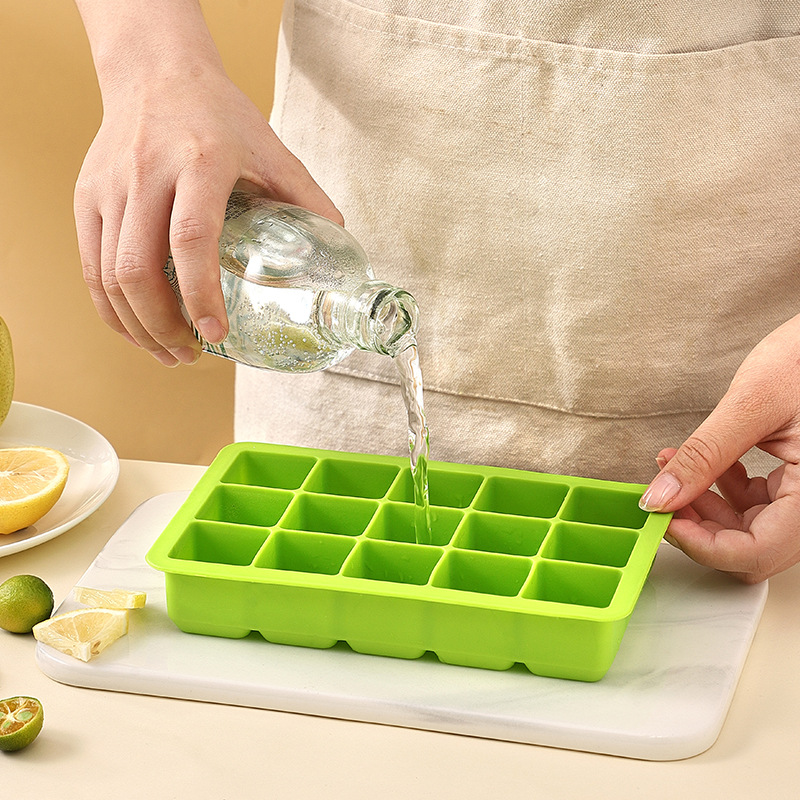
Food-contact performance is a core decision for any silicone ice tray manufacturer and brand buyer. The product comes into repeated contact with water, drinks, juices, coffee, and sometimes baby food, so material selection and supporting documentation should be treated as part of the product design process.
Food-contact materials sold in the European market must meet general safety and manufacturing requirements under the EU framework for food-contact materials. These requirements are intended to ensure that materials do not transfer substances into food in quantities that could endanger health or cause unacceptable changes in food.
For silicone kitchenware, buyers commonly request documentation and testing related to their destination market. At Yangjiang Hongyuan Trading Co., Ltd., available product and factory compliance support includes:
- ISO 9001 quality-management certification
- BSCI social-compliance audit support
- LFGB testing for applicable food-contact requirements
- FDA food-contact compliance support
- REACH compliance documentation
For brands selling across multiple countries, documentation should be reviewed before mass production—not after goods are packed. This helps prevent avoidable delays during retailer onboarding, import review, marketplace compliance checks, or customer requests.
Ask your silicone ice tray supplier to clarify:
- Silicone grade and intended food-contact application
- Applicable test reports for the selected material and color
- Whether pigments and additives are included in testing coverage
- Recommended temperature range
- Odor and taste considerations
- Dishwasher-use recommendations
- Whether the product contains any additional materials, such as PP lids, stainless-steel frames, or plastic covers
- Product labeling and packaging information needed for the target market
A food-contact claim should match the final product—not merely the raw silicone material. If a design uses a lid, coating, printed mark, adhesive label, or multi-material component, the brand should evaluate the complete item and intended use conditions.
The best silicone ice cube tray design is not necessarily the most complex. It is the one that makes filling, carrying, freezing, releasing, cleaning, and storing easier.
Silicone is flexible, which helps users release ice. But excessive flexibility can cause water to spill during transfer from the sink to the freezer. This is a common source of negative product feedback.
Brands can improve the experience through:
- A thicker upper rim
- Reinforced sidewalls
- A supporting frame where appropriate
- A stable flat base
- A practical lid
- Clearly sized fill openings
- Cavity spacing that reduces overflow between compartments
For high-capacity trays, a stronger rim is especially important. The design should remain easy to flex at the cavity level while feeling stable in the user's hands.
Silicone is valued because users can flex the tray instead of twisting hard plastic. Yet easy release depends on more than material type.
Key factors include:
- Cavity depth and geometry
- Wall thickness
- Internal surface finish
- Silicone hardness
- Cube size
- The amount of space between cavities
- Whether the user can push from the base comfortably
A shallow cavity may release easily but create small ice pieces. A very deep cavity may create impressive ice but require better structural support. Prototype testing helps find the right balance.
Lids are increasingly requested for stackability and freezer organization. They can help protect ice from freezer odors, reduce spills, and make vertical storage easier.
But not every tray needs a tight seal. A fully sealed lid can add cost and complexity. For many retail programs, a simple cover that sits securely on top may be sufficient.
Consider a lid when the product will be marketed for:
- Small apartments or shared freezers
- RV, camping, or outdoor use
- Baby-food portion freezing
- Stackable freezer storage
- Premium home organization
- Online retail, where a "no-spill" benefit can strengthen the listing
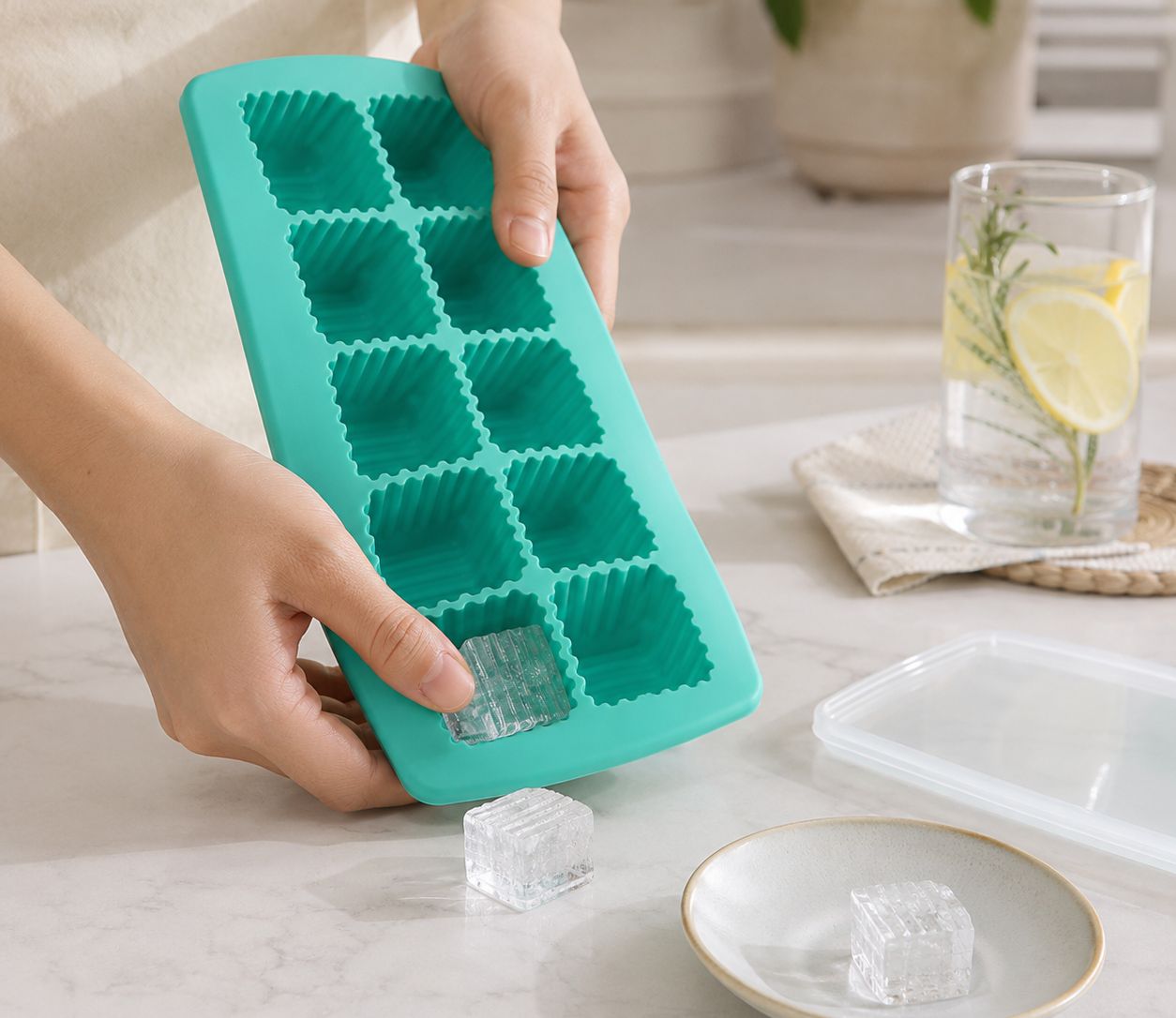
A custom silicone ice tray should communicate the brand without reducing usability. The most effective branding is usually subtle, durable, and consistent with the target price point.
Common branding options include:
| Branding method | Best for | Considerations |
|---|---|---|
| Embossed logo | Durable, premium-looking tray branding | Requires mold integration |
| Debossed logo | Subtle identification and clean appearance | Best used in a visible but non-contact area |
| Raised side logo | Brand visibility during use and photography | Must not interfere with grip |
| Printed logo | Color-specific visual branding | Confirm print durability and use conditions |
| Branded lid | Strong visibility for lidded products | Works well for storage-focused designs |
| Custom retail sleeve | Low-commitment branding for existing molds | Suitable for faster launches |
| Color matching | Collection building and brand consistency | Confirm color approval before production |
For many buyers, custom packaging creates the fastest visual differentiation, while a custom mold creates the strongest long-term product moat.
Color affects product positioning more than many buyers expect.
- Black, charcoal, navy, and deep green often suit premium barware.
- Soft neutrals fit minimalist kitchen collections.
- Bright colors support family, casual, and value-oriented retail.
- Pastels work well in gifting, lifestyle, and social-commerce product lines.
- Seasonal colors can support holiday retail campaigns.
For a unified collection, match the tray color with existing silicone spatulas, baking mats, utensil holders, or lunch accessories. This encourages bundle sales and helps the brand look more established.
The right development path depends on your launch speed, target price, projected volume, and need for exclusivity.
This route is ideal when speed matters. Buyers can select an existing tray format and customize color, logo, packaging, inserts, barcode labels, and carton details.
Benefits include:
- Lower development investment
- Faster sampling and production timeline
- Lower product-development risk
- Easier small-to-medium-volume market testing
- Suitable for seasonal, promotional, and marketplace launches
This approach is often the best first step for a new brand testing demand.
A modified design may involve changes to tray color, cavity quantity, lid style, logo position, rim profile, or packaging configuration. It provides more differentiation than a standard product without requiring a fully new concept.
This can be a practical middle ground for brands that want a more proprietary look while keeping development time under control.
A new mold is appropriate when the product shape, capacity, user function, or brand identity must be unique. It can offer stronger visual differentiation and may support long-term exclusivity, depending on the agreed project terms.
A full custom project should begin with a clear brief covering:
1. Product dimensions and target capacity
2. Ice-cavity shape and number
3. Intended user and retail channel
4. Silicone color and finish
5. Lid or frame requirements
6. Logo placement
7. Packaging format
8. Destination market
9. Compliance documents required
10. Forecast volume and launch date
The more specific the brief, the faster the engineering and sampling process can move.
Product development becomes more efficient when decisions are made in the correct order. Changing the cavity layout after packaging approval, for example, can create unnecessary cost and delay.
1. Define the market position
Confirm whether the tray is for value retail, premium barware, household use, gifting, or a niche use case.
2. Select a design route
Choose an existing mold, a modified mold, or a fully custom mold.
3. Confirm material and test needs
Identify the target market and request the relevant documentation before final production approval.
4. Create the design specification
Finalize dimensions, cavity volume, color, logo position, lid details, and packaging.
5. Review samples
Check fill stability, freezer fit, ice release, surface quality, color, odor, logo clarity, and packaging protection.
6. Approve pre-production details
Confirm the sample, artwork, carton marks, inspection criteria, and shipping requirements.
7. Begin mass production
Coordinate production scheduling, quality checks, packaging, and delivery planning.
For larger programs, early confirmation is important. Our factory capacity supports large-volume orders, including up to 1 million pieces in 60 days, but the final timeline depends on product complexity, material availability, packaging, approvals, and shipping arrangements.
Even a visually attractive tray can underperform if product development overlooks real consumer behavior.
An unusual shape may attract clicks, but it should not be difficult to fill, carry, clean, or release. Test the design with actual water, freezer storage, and repeated use.
A thin silicone tray may flex too much when full. This can lead to spills and negative customer feedback. A reinforced rim or supportive structure can improve handling significantly.
Premium ice molds often need packaging that explains the benefit. Include practical information such as cavity capacity, use case, care instructions, product dimensions, and food-contact claims supported by your documentation.
Retailers and international buyers may ask for certificates, test reports, factory audit records, labeling information, and compliance declarations. Preparing these during development is more efficient than trying to collect them after production.
A lid, frame, multiple shapes, custom print, and complex packaging can all add cost. Each feature should solve a real customer problem or improve commercial appeal enough to justify the investment.
Yangjiang Hongyuan Trading Co., Ltd. supports OEM and ODM projects for silicone ice trays and a broad range of silicone kitchen products. We work with supermarkets, wholesalers, importers, brand owners, and online retailers that need reliable manufacturing, product customization, quality support, and scalable delivery.
Whether you need a quick private-label launch from an existing mold or a fully customized silicone ice cube tray for a new product line, our team can help evaluate the right development path.
Send us your product idea, target market, preferred ice shape, estimated quantity, logo file, and packaging requirements. We will help you turn it into a clear sampling and production plan.
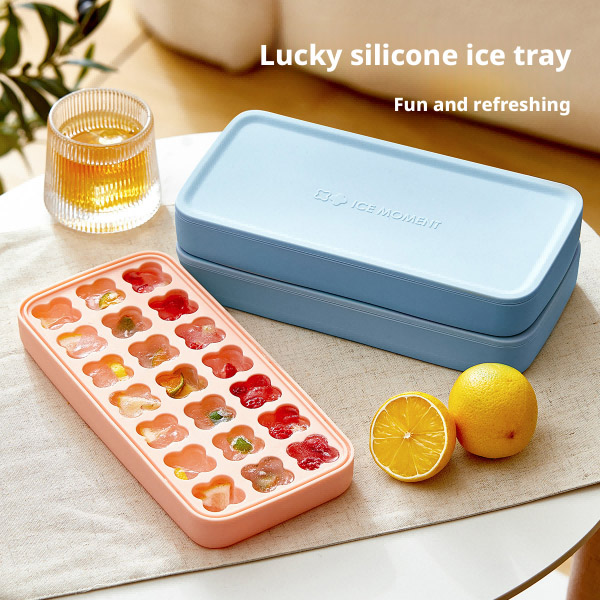
Yes. Common options include embossed logos, debossed logos, printed marks, branded lids, customized colors, retail sleeves, and full-color packaging. The best choice depends on your desired product position, budget, and production volume.
The minimum order quantity depends on whether you choose an existing mold, a modified design, or a completely new mold. Existing products generally offer a more accessible starting point, while custom mold projects usually require a higher volume commitment.
Yes. Brands can select standard colors or provide a color reference for matching. For collection-based kitchenware programs, color consistency should be approved through samples before mass production.
Available support includes ISO 9001, BSCI, LFGB, FDA, and REACH-related documentation, depending on the product, material, and target market. Buyers should confirm their specific compliance needs before placing an order.
Lead time depends on product design, mold development, order quantity, packaging, material availability, sample approval, and shipment planning. For qualifying programs, our manufacturing capacity supports delivery of up to 1 million pieces within 60 days.
Choose an existing mold if you want lower development cost and a faster launch. Consider a new mold if your brand needs a unique shape, exclusive functionality, a distinctive user experience, or stronger long-term differentiation.
Not always. Lids are particularly useful for stackability, spill reduction, freezer organization, odor protection, and portable use. For a basic everyday tray, a lid may not be necessary.
1. European Food Safety Authority. "[Food Contact Materials]."
2. European Commission. "[Regulation (EC) No 1935/2004 on Materials and Articles Intended to Come into Contact with Food]."
3. European Commission. "[Commission Regulation (EC) No 2023/2006 on Good Manufacturing Practice for Materials and Articles Intended to Come Into Contact With Food]."
4. SGS. "[Food Contact Material Regulations – Europe]."
5. U.S. Food and Drug Administration. "[Code of Federal Regulations Title 21, Section 177.2600: Rubber Articles Intended for Repeated Use]."
6. Federal Agency for the Safety of the Food Chain. "[Food Contact Materials]."


