


Views: 292 Author: Hongyuan Silicone Publish Time: 2026-10-25 Origin: Site


Content Menu
● How These Silicone Ice Tray Manufacturers Were Selected
● Why Source Silicone Ice Trays from China?
>> A Broad Silicone Manufacturing Ecosystem
>> Practical Manufacturing Clusters
● Manufacturer Comparison: Capacity, MOQ, and Compliance
● The Top 10 Silicone Ice Tray Manufacturers in China
>> 1. Yangjiang Hongyuan Trading Co., Ltd.
>> 3. Shenzhen Benhaida Rubber & Plastic Products Co., Ltd.
>> 4. Jution Silicone & Rubber (Dongguan) Co., Ltd.
>> 5. Coolnice
>> 6. Chiyip Plastic & Silicone Products / Foshan City Zhiye Plastic & Silicone Products Factory
>> 7. Dongguan Tufeng Rubber Co., Ltd.
>> 8. Kangde Silicone Co., Ltd.
>> 9. Dongguan Hongju Silicone Rubber Products Co., Ltd.
>> 10. Yongkang Qunhao Industry & Trade Co., Ltd.
● Technical Buyer's Guide: What Makes a Reliable Silicone Ice Tray?
>> Specify the Finished Product, Not Just "Food-Grade Silicone"
>> Evaluate Curing and Post-Curing as Controlled Processes
>> Understand Which Compliance Documents Matter
● Common Sourcing Problems—and How to Prevent Them
>> Material Substitution After Sample Approval
>> Capacity Claims That Do Not Match the Product
>> An Insider Control: Link the Test Sample to the Production Recipe
● Factory Verification, Sampling, and Logistics
>> Verify the Production Site Before Approving the Order
>> Use a Staged Sample Approval Process
>> Quote Logistics Against the Final Carton
● Conclusion: Choose the Supplier That Can Document Repeatability
>> 1. How can I verify whether a factory's ISO 9001 certificate has expired or been suspended?
>> 2. Can one food-contact report cover every tray color and size?
>> 3. Does an FDA-related report automatically make the tray acceptable in Europe?
>> 4. How should I evaluate a claim of one million pieces within 60 days?
Choosing a silicone ice tray manufacturer requires more than comparing unit prices. For supermarket buyers, kitchenware brands, wholesalers, and online retailers, the more important questions concern material consistency, production capacity, product-specific compliance, and the supplier's ability to turn an approved sample into a repeatable production specification.
China offers a broad selection of silicone kitchenware suppliers. The companies in this guide illustrate the manufacturing options available across Guangdong—including Yangjiang, Shenzhen, Dongguan, and Foshan—as well as Zhejiang. Their capabilities range from custom silicone molding and private-label packaging to broader kitchenware development. However, their published information varies considerably, so buyers should distinguish between documented capabilities and claims that still require verification.
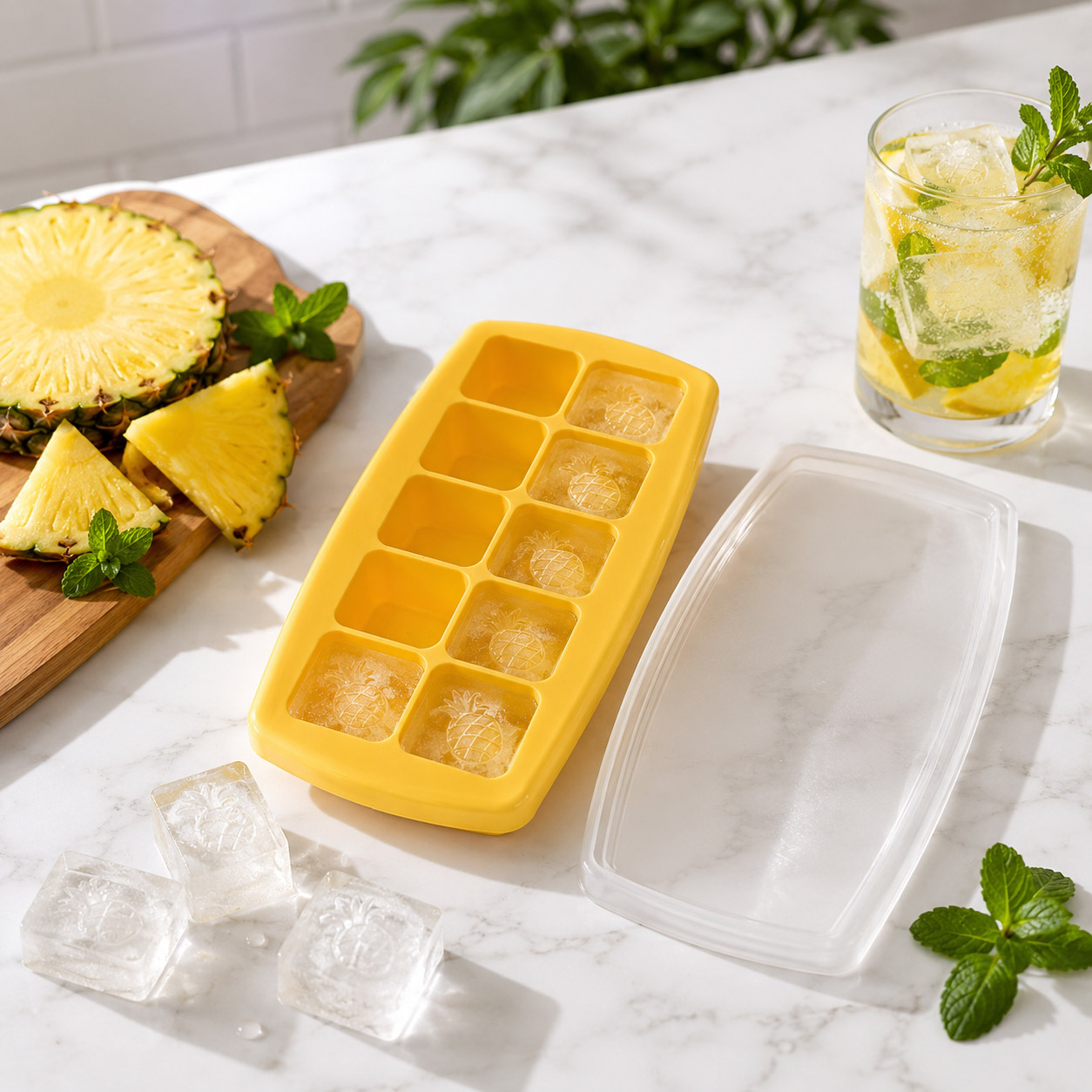
A useful supplier shortlist should explain why each company belongs on it—and what buyers still need to investigate.
The manufacturers and manufacturing-oriented suppliers below were selected using six procurement criteria:
| Selection criterion | What buyers should examine |
|---|---|
| Relevant product experience | Silicone ice trays, freezer molds, kitchenware, or closely related custom silicone products |
| Manufacturing transparency | Factory location, legal entity, production processes, and clarity about outsourced operations |
| Development capability | Drawing review, mold design, prototyping, material selection, and packaging development |
| Quality management | Incoming-material checks, production controls, traceability, and finished-product inspection |
| Compliance documentation | Reports linked to the actual material, color, finished product, and destination market |
| Commercial suitability | Order flexibility, communication, realistic lead times, and repeat-order support |
This is a procurement shortlist rather than an independent factory-audit report. Where a founding year, MOQ, or ice-tray-specific production capacity could not be established from the reviewed sources, it is identified as unverified rather than estimated.
China's silicone industry includes upstream material producers and downstream manufacturers serving numerous applications. A January 2025 ResearchAndMarkets report announcement describes research covering the Chinese silicone sector's industry structure, production capacities, output, producer locations, and company profiles. This supports examining China as a substantial silicone sourcing ecosystem, but it does not establish the size of the silicone ice tray market specifically.
That distinction matters. A report about silicone rubber or polysiloxane should not be presented as evidence of silicone ice tray sales, export volume, or demand growth.
For this product category, supplier-level evidence is more actionable: available molding processes, tooling capability, material traceability, and demonstrated experience with comparable freezer products.
Several companies reviewed here operate in Guangdong: Hongyuan has its kitchenware manufacturing operation in Yangjiang; Benhaida identifies Shenzhen as its base; Jution operates in Dongguan; and Coolnice and Chiyip identify Foshan locations. Qunhao provides a Zhejiang-based alternative in Yongkang.
For purchasing teams, the practical advantage is the ability to compare multiple suppliers within established manufacturing regions. A sourcing trip can combine factory visits, sample reviews, tooling discussions, and packaging checks rather than relying entirely on remote quotations.
The figures below are supplier-published claims, not independently audited production guarantees. "Not verified" means the reviewed sources did not establish a reliable figure.
Capacity must also be interpreted carefully: total silicone-product output is not necessarily capacity reserved for a particular ice tray.
| Manufacturer | Published capacity or manufacturing scale | Published MOQ | Published compliance information | Principal sourcing focus |
|---|---|---|---|---|
| Yangjiang Hongyuan Trading Co., Ltd. | 4,500 m² main factory plus 2,000 m² sub-factory; 200,000 pieces/month stated baseline; up to 1 million pieces within 60 days claimed | Project-specific; confirm directly | ISO 9001 and BSCI claims; LFGB, FDA, and REACH-related claims | Flexible kitchenware development and private-label supply ecosiliconehub |
| RY Silicone / RuiYang | Eight production lines and 50,000 pieces/day claimed across production | Not verified | US FDA-standard material and quality claims | Custom ice tray shapes, dimensions, colors, and branding rysilicone |
| Shenzhen Benhaida | Production capacity not verified | Not verified | LFGB and third-party testing claims | Ice trays within a broader kitchenware and household range benhaida |
| Jution Silicone & Rubber | Company profile lists 51–200 employees; tray capacity not verified | Not verified | Request current site certificates and product reports | Design-to-production custom silicone development |
| Coolnice | In-house molding facilities; tray capacity not verified | Flexible order volumes advertised; numerical MOQ not verified | ISO, BSCI, SEDEX, and material-compliance claims | Integrated product development and private-label support |
| Chiyip / Foshan City Zhiye | Approximately 5,000 m² stated factory area | One listed ice tray shows 100 pieces; not a universal custom MOQ | FDA- and LFGB-standard claims | Silicone bakeware, ice trays, and custom household products |
| Dongguan Tufeng Rubber | Tray-specific capacity not verified | Not verified | Request current documentation | Silicone bakeware and kitchenware manufacturing |
| Kangde Silicone | Not verified | Not verified | Request current documentation | Silicone ice trays and related kitchen products |
| Dongguan Hongju Silicone Rubber Products | Site-specific capacity requires confirmation | Not verified | ISO 9001 and material-compliance claims | Engineered custom silicone and rubber products |
| Yongkang Qunhao Industry & Trade | Tray-specific capacity not verified | Not verified | Request current documentation | Silicone drinkware and coordinated kitchenware ranges |
ISO 9001 certification, social-audit information, and food-contact test reports serve different purposes. Buyers should not treat a list containing "ISO, BSCI, FDA, LFGB, and REACH" as five equivalent product certifications. The relevant question is which document demonstrates which requirement for the actual item being purchased.
Founded: Not stated on the reviewed company profile; request the business license.
Location: Yangjiang, Guangdong, China.
Reported markets: European Union, United States, United Kingdom, Australia, and South America.
Hongyuan is a relevant starting point for smaller and mid-sized kitchenware brands seeking custom development without separating mold design, silicone production, branding, and packaging into different supplier relationships.
The company's published profile describes a 4,500-square-meter main factory and a 2,000-square-meter sub-factory. It states a baseline monthly capacity of 200,000 pieces and the ability to increase production sufficiently to complete a one-million-piece order within 60 days. Published sample timing is 7–10 days, with approximately 45 days for standard mass production and up to 60 days for complex customization.
Its OEM/ODM offering covers:
- Custom molds and product shapes.
- Private-label branding.
- Packaging development.
- Silicone kitchenware and related product sourcing.
- Seasonal product development.
Hongyuan's practical appeal is the combination of kitchenware specialization and a consolidated development service. This can suit buyers who need commercially viable customization rather than a completely new manufacturing platform.
Procurement assessment: Request a written project schedule showing mold development, sample approval, testing, and production separately. The one-million-piece claim should be evaluated against the actual tray weight, mold cavity count, packaging requirements, and available production allocation. It should not be interpreted as a guarantee that every customized design can ship within that period.
Communication efficiency and value should be evaluated through an actual development brief: ask Hongyuan to return a specification review, customization options, and an itemized quotation before comparing it with alternatives.
Founded: 2012, according to its published ice tray page.
Location: China; confirm the contracting entity and production address.
Reported markets: International brands, distributors, and wholesalers; the company claims exports to more than 30 countries, without a verified regional sales breakdown.
RY Silicone provides a product-specific custom silicone ice tray offering. Its published customization options include different shapes, colors, cube sizes, and embossed logos. The company also claims eight production lines and daily output of 50,000 pieces across its manufacturing operation.
Its main sourcing relevance is design variation. Buyers developing novelty ice molds, oversized cubes, or branded promotional trays can use its published customization menu as a starting point for technical discussions.
OEM/ODM scope includes product dimensions, shape development, color matching, packaging, and branding.
Procurement assessment: Confirm whether the quoted output relates to a comparable tray or a much smaller silicone product. Request the proposed mold cavity count and realistic daily output for the exact design.
Founded: 2011.
Location: Longgang District, Shenzhen, Guangdong.
Reported markets: International customers; a current country-by-country sales distribution was not established in the reviewed profile.
Benhaida lists ice cube trays alongside bakeware, kitchenware, baby products, pet products, and tea infusers. Its profile describes an internal team covering design, engineering, development, sales, packaging, and quality control.
The company supports custom mold development from 2D drawings, 3D drawings, and existing samples, together with private labeling and packaging customization. This makes it relevant to brands extending an existing product line into silicone freezer accessories.
Procurement assessment: Ask for examples of recently manufactured ice trays rather than relying on experience in unrelated silicone categories. Also confirm that any food-contact report covers the proposed ice tray material and color, not simply another product in its catalog.
Founded: 2007.
Location: Dongkeng, Dongguan, Guangdong.
Reported markets: Its profile targets product designers and silicone product brands; regional sales shares were not verified.
Jution presents itself as a custom silicone manufacturer supporting projects from design through finished production. Its listed capabilities include silicone tooling, molding, liquid silicone rubber molding, and kitchenware development.
Its relevance is strongest where the buyer needs engineering support: unusual tray geometry, a distinctive release mechanism, or a custom silicone component within a larger freezer-product assembly.
OEM/ODM scope includes product development, tooling, and custom silicone manufacturing.
Procurement assessment: Treat Jution as an engineering-led candidate, and request evidence of comparable ice tray projects. General silicone capability does not automatically establish experience with spill resistance, lid fit, freezer handling, or repeated ice release.
Founded: 2003.
Location: Shunde, Foshan, Guangdong.
Reported markets: International brands, wholesalers, private-label businesses, and online sellers. An additional company profile reports customer relationships across more than 30 countries.
Coolnice describes an integrated service covering design, tooling, prototyping, manufacturing, private labeling, and fulfillment-related support. Its broader range includes kitchenware, household products, and other custom silicone and plastic items.
The company is relevant for buyers who want a differentiated retail product rather than a standard tray with a printed logo. Its development and packaging capabilities may also suit coordinated product launches.
OEM/ODM scope includes custom mold design, branding, packaging, and concept-to-production development.
Procurement assessment: Clarify mold ownership, exclusivity, and the boundaries between proprietary development and modified catalog products. Confirm that any quoted freezer-product experience concerns food-contact ice molds rather than non-food-contact cold-care products.
Founded: 2014, according to the published Chiyip profile.
Location: Shunde, Foshan, Guangdong.
Reported markets: Export-oriented supply; the reviewed profile does not establish a reliable regional sales breakdown.
The supplier's published range includes silicone ice cube trays, bakeware, kitchenware, and promotional products. It describes mold design and development, manufacturing, assembly, and OEM/ODM project support, with a stated factory area of approximately 5,000 square meters.
One listed ice tray has a published MOQ of 100 pieces. This may be useful for initial catalog-product sourcing, but it should not be treated as the minimum for a new mold, custom color, or bespoke retail packaging.
Procurement assessment: Resolve the legal relationship between the Chiyip name, the factory name, and the entity receiving payment. Ensure the contract, invoice, factory audit, and test documentation can be connected to the same supply arrangement.
Founded: 2002, according to its supplier profile.
Location: Dongguan, Guangdong.
Reported markets: A current regional customer breakdown was not verified.
Tufeng's published profile emphasizes silicone bakeware, ice cream tools, cup and bottle accessories, and kitchenware manufacturing.
Its relevance is adjacent-category manufacturing experience. Buyers developing a wider silicone kitchenware collection may find it useful to evaluate alongside more narrowly focused ice tray suppliers.
However, bakeware expertise is not enough on its own. A freezer tray requires its own checks for handling stiffness, release performance, lid compatibility, and dimensional stability.
Procurement assessment: Request an ice-tray-specific catalog, recent production samples, current food-contact reports, and a written statement of customization scope. Tooling, MOQ, and production capacity should remain open items until confirmed.
Founded: Not verified from the reviewed source.
Location: China; confirm the current factory address and legal entity.
Reported markets: Not verified.
Kangde lists silicone ice trays alongside silicone kitchen items, baskets, mats, and baby feeding products. This establishes category relevance, but the reviewed public information provides limited detail about factory scale, founding year, and production allocation.
Kangde is therefore better treated as a candidate for qualification than as a fully documented supplier recommendation.
Procurement assessment: Begin with its business license, factory walkthrough, current product catalog, and product-specific test reports. Confirm available OEM/ODM services, including whether tooling is produced internally and whether private-label packaging is handled by the same organization.
Founded: Its current brand materials describe operations dating to 1999; another published profile refers to establishment in 2000. Confirm the legal entity's registration history before using a definitive incorporation date.
Location: Dongguan, Guangdong.
Reported markets: One company profile names Germany, the United States, Japan, Israel, Korea, France, and Turkey. These should be treated as historical supplier-reported markets rather than a verified current sales distribution.
Hongju is a broader custom silicone and rubber manufacturer rather than a supplier focused exclusively on ice trays. Its published capabilities include engineered molded products and custom rubber components.
This makes it potentially relevant for technically demanding projects involving silicone parts, seals, or multi-component freezer products.
Procurement assessment: Ask for recent, comparable food-contact kitchenware projects before awarding an ice tray program. Industrial rubber experience is useful, but it does not replace finished-product food-contact evidence or freezer-use validation.
Founded: 1998, according to a published company announcement.
Location: Yongkang, Zhejiang.
Reported markets: International wholesalers, importers, distributors, and private-label brands; specific regional shares were not established.
Qunhao's published portfolio includes silicone drinkware, reusable cups, bakeware, kitchenware, lunch boxes, and ice cube trays. Its OEM/ODM services cover logos, colors, designs, and packaging.
Its sourcing appeal is portfolio coordination. Buyers building a broader reusable kitchenware collection may prefer to evaluate ice trays alongside related drinkware or food-storage products.
Procurement assessment: Confirm whether the ice trays are manufactured at the audited site or sourced through a production partner. A broad catalog can simplify purchasing, but the actual production location must remain transparent.

"Food-grade silicone" is an incomplete purchasing specification. Food-contact compliance depends on the relevant formulation, manufacturing conditions, finished article, and intended use—not simply a material description. US requirements for repeated-use rubber articles include 21 CFR 177.2600, while EU requirements start with the food-contact framework and manufacturing rules.
A practical specification should identify:
- Silicone compound or grade.
- Approved pigment system.
- Nominal product weight and permitted tolerance.
- Hardness and dimensional requirements.
- Intended food-contact use.
- Freezer, cleaning, and any claimed heating conditions.
- Applicable testing requirements.
- Traceability and change-control obligations.
If a tray includes a plastic lid, rigid frame, printed markings, or other components, include those in the compliance review rather than testing the silicone body alone.
Hongyuan states that it uses a two-stage vulcanization process totaling eight hours. Such a claim provides a starting point for process review, but buyers should still request the applicable production record and finished-product test results. A published processing duration is not, by itself, proof that every formulation and finished tray meets the intended market's requirements.
Questions for the factory should include:
1. Which compound and curing system will be used?
2. What processing conditions apply to this design?
3. How are batches identified?
4. What happens when material, pigment, or processing conditions change?
5. Which finished-product tests support the claimed use?
For EU sales, food-contact materials must comply with Regulation (EC) No 1935/2004 and be manufactured under the applicable good manufacturing practice requirements. The European Commission also explains that national provisions can apply where specific EU measures do not exist.
Silicone should therefore not automatically be treated as though it were covered identically to plastic under every EU food-contact measure. Ask a qualified laboratory to define the appropriate test program for the destination country and actual product construction.581411)
CE and RoHS claims require particular care. RoHS concerns electrical and electronic equipment; it is not the primary food-contact compliance route for an ordinary, non-electrical silicone ice tray. A RoHS report cannot substitute for the appropriate food-contact assessment.
Likewise, request the underlying evidence behind "FDA compliant" or "LFGB tested" wording. A raw-material report, a report for a different color, or a test on an unrelated silicone product may not establish compliance for the item being ordered.
The central risk is not only visibly poor material. It is an unapproved difference between the sample, the tested article, and mass production.
A finished-product compliance chain should connect the compound, pigment, production batch, and finished article. Material documentation alone is not enough if that chain is broken.
Recommended purchasing controls include:
- An approved material and color specification.
- Written approval before substitutions.
- Batch identification on production records.
- Retained samples from production.
- Independent testing where the risk warrants it.
A factory's total output may combine small accessories, large trays, and other silicone products. RY Silicone's published daily figure and Hongyuan's stated monthly and surge capacities illustrate why buyers must ask what those numbers cover.
Request a product-specific capacity statement showing the proposed mold, cavity count, planned daily output, production allocation, and packaging throughput.
MOQ may apply separately to:
- The tray design.
- Each color.
- A custom mold.
- Logo application.
- Printed packaging.
A listing for 100 standard trays does not establish that 100 fully customized retail-ready units are commercially available. Chiyip's published listing is an example of why MOQ must be tied to a specific configuration.
A less visible procurement weakness is document mismatch: a genuine report may exist, but the buyer cannot demonstrate that the shipped product uses the tested formulation.
The practical safeguard is a "sample-to-shipment" record linking:
1. Approved sample identification.
2. Material grade and pigment.
3. Relevant test report.
4. Approved production specification.
5. Production batch and retained sample.
This is a recommended procurement control, not a claim that every supplier follows it. Its purpose is to preserve the finished-product evidence chain emphasized in food-contact compliance guidance.
Request the business license, factory address, contracting entity, bank beneficiary, and names of any subcontractors.
Then compare the production address with the address appearing on management-system certificates and audit documents. A trading entity can be a legitimate commercial partner, but buyers should know which organization actually manufactures the product.
For ISO certificate checks, use the issuing certification body and, where applicable, IAF CertSearch. The database supports searches by certificate number and distinguishes active, suspended, withdrawn, and expired records.
A practical sampling sequence is:
1. Reference sample to assess an existing product.
2. Prototype or tooling sample to review geometry.
3. Pre-production sample using the intended material, color, lid, and branding.
4. Compliance sample tied to the approved specification.
5. Shipment-retained sample for future comparison.
For custom trays, approve measurable features—not only appearance. Include filled-tray handling, release performance, lid fit, dimensions, weight, and packaging configuration in the approval checklist.
Ask suppliers to quote using the same trade term, named location, quantity, and packaging specification.
Before comparing landed costs, obtain:
- Units per carton.
- Carton dimensions and gross weight.
- Pallet requirements.
- Retail packaging dimensions.
- Inspection and testing costs.
- Proposed customs description and classification for broker review.
- Responsibility for freight, insurance, duties, and delivery.
For recurring orders, the useful comparison is not simply "price per tray." It is the cost of a compliant, correctly packed, saleable unit delivered under clearly defined responsibilities.
The most suitable silicone ice tray manufacturer is not necessarily the company publishing the largest capacity figure or the lowest starting price. It is the supplier that can connect development, material control, testing, production, and shipment documentation into a repeatable supply process.
Yangjiang Hongyuan Trading Co., Ltd. is a relevant first candidate for buyers seeking silicone kitchenware customization, private-label support, and a published capacity pathway for larger orders. Its stated factory footprint, sample timing, and export experience provide concrete starting points for qualification—not substitutes for project-specific verification.
To request a useful quotation from Hongyuan, submit your destination market, tray dimensions, cube layout, lid requirements, target quantity, color options, branding, and packaging brief. Ask for tooling costs, sample milestones, applicable testing, MOQ by configuration, and a production schedule tied to the approved specification.
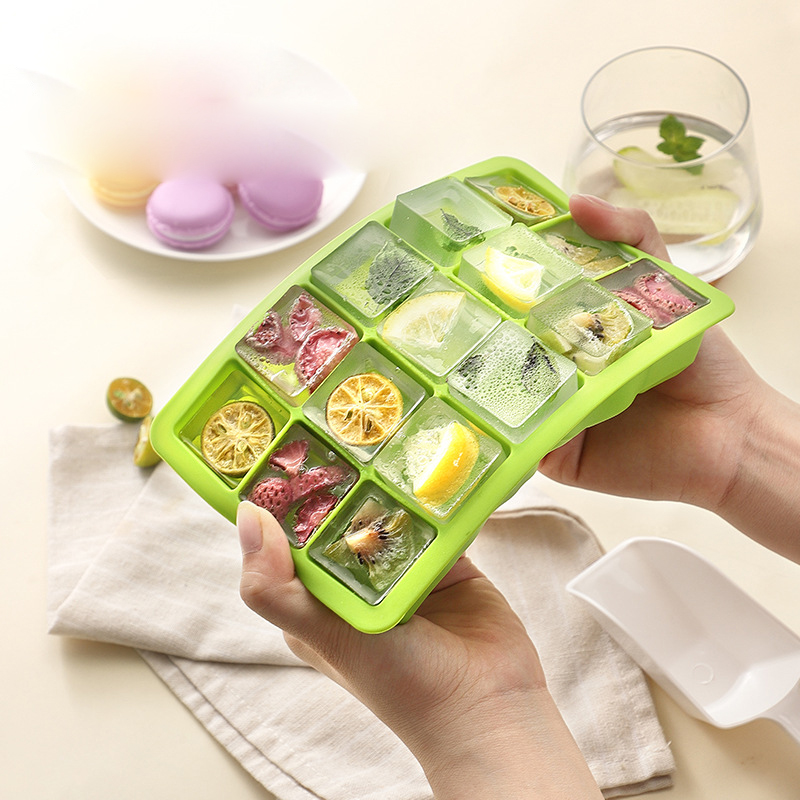
Check the certificate number, legal entity, manufacturing address, scope, issuing body, and validity information. Then verify its current status through the certification body and, where applicable, IAF CertSearch.
Do not rely exclusively on the expiry date printed on a PDF. IAF CertSearch distinguishes active, suspended, withdrawn, and expired records, so a certificate may require investigation even before its printed expiry date.
Do not assume so. Ask the laboratory or compliance specialist whether the tested formulation, pigment system, construction, and intended use justify coverage of the proposed variants.
The central issue is whether the finished products being sold are represented by the evidence—not whether their catalog names look similar. Finished-article compliance depends on the formulation and supporting test conditions.
No. US and EU food-contact requirements are different frameworks. A report referencing 21 CFR 177.2600 does not replace an EU assessment under the applicable framework, manufacturing requirements, and relevant national provisions.
Ask the laboratory to prepare a destination-specific compliance matrix before testing.
First determine whether the period begins before or after tooling, sample approval, and material preparation. Then request a schedule for the actual design, including molding, any post-curing, trimming, inspection, packaging, and shipment preparation.
For Hongyuan, the one-million-piece claim is published alongside a lower baseline monthly figure. Buyers should therefore confirm the additional production arrangements and reserved capacity rather than treating surge output as ordinary, continuously available capacity.
Hold affected stock while investigating. Compare the shipped batch with the retained approved sample and request material, pigment, processing, and batch records.
Use an independent laboratory where appropriate to determine whether the production batch remains consistent with the approved specification and intended use. Avoid treating a report for the earlier sample as conclusive evidence for a potentially changed production batch; finished-product compliance requires a traceable evidence chain.
The resources below support regulatory review, supplier verification, and industry context. The 2025 industry report concerns the broader Chinese silicone sector; it should not be cited as a silicone ice tray market-size estimate. [finance.yahoo]
- European Commission — Food Contact Materials
[https://food.ec.europa.eu/food-safety/chemical-safety/food-contact-materials_en]
- European Commission — Food Contact Materials Legislation
[https://food.ec.europa.eu/food-safety/chemical-safety/food-contact-materials/legislation_en]
- US FDA — 21 CFR 177.2600, Rubber Articles Intended for Repeated Use
[https://www.accessdata.fda.gov/scripts/cdrh/cfdocs/cfcfr/CFRSearch.cfm?fr=177.2600]
- IAF CertSearch — Certificate Verification by Certificate Number
- Ireland Environmental Protection Agency — RoHS Guidance
[https://www.epa.ie/our-services/monitoring--assessment/waste/chemicals/rohs/]
- ResearchAndMarkets — January 2025 China Silicone Industry Report Announcement
[https://finance.yahoo.com/news/china-silicone-companies-market-report-135300684.html]


