


Views: 252 Author: Hongyuan Silicone Publish Time: 2026-09-06 Origin: Site


Content Menu
● Silicone Shelf Life vs. Product Service Life
● How Long Does Silicone Kitchenware Typically Last?
● What Determines Silicone Kitchenware Durability?
>> 1. Silicone Material Quality
>> 2. Curing and Post-Curing Quality
>> 3. Temperature Exposure and Thermal Cycling
>> 4. Mechanical Stress and Product Design
>> 5. Oils, Food Colors, and Cleaning Chemicals
● Signs That Silicone Kitchenware Should Be Replaced
● A Buyer's Checklist for Durable Silicone Kitchenware
● Why Certifications Matter for Silicone Kitchenware
● Practical Product Development Example
● Choosing a Silicone Kitchenware Manufacturer
● Build a Longer-Lasting Kitchenware Range
>> 1. How long can silicone kitchenware last?
>> 2. Does silicone kitchenware expire?
>> 3. Is silicone kitchenware safe for food contact?
>> 4. Why does some silicone kitchenware smell?
>> 5. Can silicone utensils be put in the dishwasher?
>> 6. Can silicone kitchenware be used in the oven?
>> 7. What should importers test before placing a bulk silicone kitchenware order?
High-quality silicone kitchenware can remain useful for years when the correct food-contact silicone grade, molding process, use conditions, and care practices are combined. For importers, retailers, and private-label brands, the more important question is not simply "How long does silicone last?"—it is whether a silicone spatula, baking mold, utensil, or food-storage product will maintain its flexibility, appearance, odor profile, and food-contact performance throughout its intended life.
Silicone has become a major material for modern kitchenware because it is flexible, heat-resistant, easy to clean, and suitable for repeated use when manufactured from an appropriate formulation. However, the durability of silicone kitchen products is not fixed. It depends on factors such as temperature exposure, oil contact, dishwasher use, storage, pigment selection, product thickness, curing quality, and mechanical stress.
For buyers sourcing silicone kitchenware wholesale, building an OEM collection, or evaluating a long-term manufacturing partner, understanding silicone durability helps prevent complaints, reduce returns, and make better product decisions from the first sample stage.
At Yangjiang Hongyuan Trading Co., Ltd., we manufacture silicone kitchenware and related silicone household products for supermarkets, wholesalers, brands, and online retailers serving the EU, United States, United Kingdom, Australia, and South America. With a 4,500 m² main factory and a 2,000 m² supporting factory, our production capacity supports delivery of up to 1 million pieces within 60 days, depending on product specifications, packaging, tooling, and order planning.

The terms shelf life and service life are often used interchangeably, but they describe two different stages of a silicone product's life.
Shelf life refers to how long raw silicone material or finished silicone products can remain in storage before their usability must be assessed. For manufacturers, this matters when managing raw material inventory, color masterbatch, semi-finished goods, and packaged stock.
Service life refers to the period during which a finished product performs as intended in real use. For example, a silicone baking mat may be used repeatedly in an oven, while a silicone spatula may contact hot oil, sauces, cookware edges, and dishwashing detergents every day.
A well-made silicone kitchen tool does not suddenly "expire" on a certain date. Instead, performance changes gradually. Buyers should focus on whether the product retains key functional qualities:
- Flexibility and rebound
- Resistance to tearing and cracking
- Surface smoothness
- Stable color and appearance
- Low residual odor
- Resistance to staining
- Food-contact suitability
- Reliable bonding with handles, inserts, or other components
The original article correctly distinguishes storage life from in-use life, but kitchenware buyers need a more practical purchasing framework. A silicone product may look acceptable after long storage yet perform poorly if its cure quality, formulation, wall thickness, or structural design is unsuitable for repeated kitchen use.
There is no single lifespan for every silicone kitchen product. A passive, thick silicone trivet stored indoors experiences much less stress than a thin silicone spatula repeatedly exposed to heat, oil, bending, and dishwasher cycles.
In general, silicone rubber is valued for long-term resistance to weathering, ozone, and a wide temperature range. However, actual kitchenware durability must be assessed based on the product's intended use rather than broad lifespan claims.
| Silicone Product Type | Typical Stress Level | Main Durability Risks | What Buyers Should Check |
|---|---|---|---|
| Silicone spatula | High | Repeated bending, hot oil, handle separation | Tear resistance, core construction, edge thickness |
| Silicone baking mold | Medium to high | Oven heat, release force, staining | Heat performance, shape recovery, odor after heating |
| Silicone baking mat | High | Repeated baking, surface abrasion, oil residue | Flatness, non-stick surface consistency, edge durability |
| Silicone oven mitt | High | Heat, steam, grip pressure | Insulation design, grip texture, lining quality |
| Silicone trivet | Low to medium | Hot cookware, compression | Heat resistance, thickness, anti-slip stability |
| Silicone food cover | Medium | Stretching, oils, storage deformation | Elastic recovery, rim strength, odor resistance |
| Ice cube tray | Medium | Freezing, twisting, food odor retention | Flexibility, release performance, smell control |
For a brand, the expected lifespan should be communicated carefully. A retailer should avoid promising a specific number of years unless it is supported by a defined product specification, use scenario, and verification method.
A more credible claim is: "Designed for repeated household use when used and maintained according to product instructions."
That language is practical, clear, and less likely to create unrealistic expectations.
Not all silicone kitchenware is made from the same formulation. Material quality strongly affects odor, appearance, flexibility, temperature performance, and long-term stability.
For food-contact applications, the formulation should be selected according to the target market, the intended food contact conditions, and the final product design. A silicone spatula used for stirring hot food requires different performance considerations than a decorative silicone coaster.
Important material factors include:
- Base silicone quality
- Curing system
- Filler content
- Pigment selection
- Volatile residue control
- Hardness range
- Tear strength
- Elongation performance
- Food-contact testing requirements
A lower-cost product may use excessive filler or a poorly controlled formulation. This can contribute to a chalky surface, reduced elasticity, stronger odor, uneven color, or lower resistance to repeated flexing.
For kitchenware brands, the lowest unit price is rarely the best long-term sourcing decision. The cost of poor material quality can appear later through negative reviews, repeat returns, damaged brand trust, and marketplace compliance issues.
Silicone kitchenware is commonly produced through compression molding, liquid silicone rubber molding, or other molding processes depending on product requirements. The curing stage is critical because it transforms silicone into the finished elastic material consumers recognize.
A controlled curing process helps the product achieve consistent physical properties. Post-curing may also be used where appropriate to help reduce residual volatiles and stabilize product performance.
In practical terms, poor curing control can lead to:
- A noticeable odor after opening the package
- Inconsistent hardness between production batches
- Surface stickiness
- Weak tear resistance
- Poor dimensional stability
- Changes after repeated heating
- Uneven coloration
For OEM and ODM projects, buyers should request a pre-production sample and confirm key requirements before mass production. This is particularly important when the product will be sold as a premium kitchenware item or will enter regulated food-contact markets.
Silicone is often chosen because it can tolerate heat better than many common plastics. Yet heat resistance is not unlimited, and product performance depends on the complete design—not only the silicone material.
A silicone utensil may be exposed to different forms of heat:
- Direct contact with hot cookware
- Oven baking
- Steam
- Microwave heating
- Dishwasher drying cycles
- Hot oil splashes
- Repeated transitions between cold and hot conditions
Thermal cycling is especially important. A product repeatedly moved from a cool kitchen environment into a hot oven, then washed and cooled, experiences ongoing expansion and contraction. Over time, that stress can reveal weaknesses in thin sections, bonded areas, corners, seams, and decorative details.
A silicone product should always be used within the temperature range specified by its manufacturer. It should not be placed over an open flame, directly on an exposed heating element, or used in a way that exceeds its intended design.
The durability of silicone kitchenware depends on both material and geometry. A beautiful product design can still fail if it has weak structural points.
For example, a silicone spatula needs enough flexibility to scrape bowls and pans effectively. But if the edge is too thin, the neck is too narrow, or the internal core is poorly designed, repeated bending can shorten product life.
During product development, our team evaluates practical details such as:
- Thickness distribution
- Reinforced stress areas
- Edge geometry
- Handle comfort
- Hanging-hole strength
- Compatibility with internal stainless-steel or nylon cores
- Mold parting-line position
- Surface texture and cleaning convenience
- Packaging protection during shipping
These details matter because consumers judge quality through daily use. A spatula that bends smoothly but returns to shape feels more premium than one that becomes permanently distorted. A baking mold that releases cakes cleanly after repeated cycles creates a better user experience than one that becomes difficult to clean or loses shape.
Silicone is generally easy to clean, but oily foods, strongly colored sauces, spices, and aggressive cleaning products can affect the appearance of some products over time.
Tomato-based sauces, curry, turmeric, dark berries, beetroot, and cooking oils may leave stains or odors, especially on light-colored or highly textured silicone surfaces. This does not always mean the product is unsafe or defective, but it can reduce perceived quality.
To maintain silicone kitchenware, consumers should:
1. Wash products soon after use, especially after contact with oily or strongly colored foods.
2. Use mild dish soap and warm water.
3. Avoid sharp metal scrubbers and abrasive powders.
4. Allow products to dry fully before storage.
5. Avoid storing silicone products in contact with strong-smelling items for long periods.
6. Follow product-specific dishwasher and oven-use instructions.
For brand owners, this creates an opportunity. Clear care instructions on packaging, inserts, product pages, and marketplace listings can reduce preventable complaints.
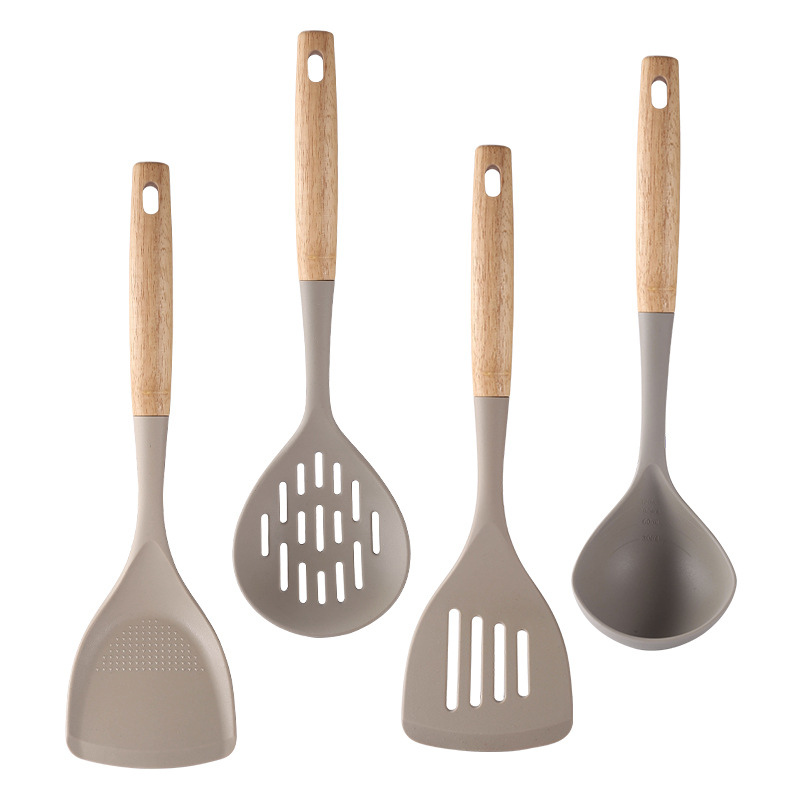
A silicone product does not need replacement simply because it has been used for a long time. Replacement becomes appropriate when its condition affects safety, hygiene, or intended function.
Consumers should inspect silicone kitchenware periodically for the following signs:
- Cracks, splits, or tears
- Sticky or tacky surface texture
- Permanent deformation
- Severe loss of flexibility
- Deep cuts caused by knives or sharp tools
- Loose or damaged handle components
- Persistent odor that remains after proper cleaning
- Material flaking or unusual surface breakdown
- Damage that creates hard-to-clean areas
For products with a metal or nylon core, the silicone exterior should remain fully intact. If the internal structure becomes exposed or the handle separates, the utensil should be replaced.
A simple consumer message is useful: If the surface is cracked, sticky, broken, or difficult to clean thoroughly, replace the item.
When sourcing silicone kitchenware from a manufacturer, buyers should look beyond catalog photos and unit price. A detailed product brief makes quality expectations easier to manage.
- Confirm the intended sales markets.
- Define whether the product requires FDA, LFGB, REACH, or other applicable documentation.
- Specify whether the item is intended for repeated food contact.
- Request product-specific test reports when needed.
- Confirm colorant and material requirements for the final SKU.
- Confirm temperature-use expectations.
- Evaluate odor after unpacking and after heating.
- Check flexibility, rebound, and tear resistance.
- Test dishwasher performance if dishwasher-safe labeling is planned.
- Test actual food-use scenarios, not only visual samples.
- Check staining performance for light-colored products.
- Review factory capability and production planning.
- Confirm mold ownership and tooling specifications for custom projects.
- Define AQL or inspection requirements before production.
- Approve a golden sample before mass production.
- Confirm packaging drop-test needs for e-commerce shipments.
- Plan sufficient lead time for testing, packaging approval, and production scheduling.
For bulk orders, a stable supply chain matters as much as a good first sample. Yangjiang Hongyuan Trading Co., Ltd. supports OEM and ODM projects with scalable manufacturing resources, from color and logo customization to packaging development and export-oriented order coordination.
Certifications and test documentation are not decorative labels. They help buyers verify that a factory has systems and products aligned with relevant market expectations.
Our silicone kitchenware programs can be supported by certifications and documentation including ISO 9001, BSCI, LFGB, FDA, and REACH, depending on the product, market, and customer requirements.
Each document serves a different purpose:
| Document or Standard | Why It Matters to Buyers |
|---|---|
| ISO 9001 | Demonstrates a quality-management framework |
| BSCI | Supports social-compliance assessment within the supply chain |
| LFGB | Commonly requested for food-contact kitchenware sold in Germany and European markets |
| FDA | Commonly requested for food-contact products intended for the U.S. market |
| REACH | Addresses chemical-substance obligations relevant to the European market |
Buyers should remember that compliance is product-specific. A test report should match the correct item, material, color, intended use, and applicable test conditions. A generic document from an unrelated product is not an adequate substitute for appropriate verification.
Food-contact requirements are particularly important because materials and articles placed on the EU market must not transfer substances to food in quantities that could endanger health or cause unacceptable changes to food composition, taste, or odor.
Imagine a retailer wants to launch a six-piece silicone utensil set for the UK, EU, and U.S. markets. The set includes a spatula, slotted turner, spoonula, ladle, pastry brush, and tong.
A stronger development process would include:
1. Confirming the sales channels and markets before selecting the material and documentation route.
2. Choosing an appropriate silicone hardness for each utensil function rather than applying one material specification to every item.
3. Testing high-stress products, such as the turner and tongs, for repeated flexing and joint integrity.
4. Reviewing hot-food performance, including contact with oil and repeated washing.
5. Selecting durable colors that match the brand while considering staining visibility.
6. Approving packaging that protects the set during container shipping and last-mile delivery.
7. Keeping production records so that the final order remains consistent with the approved sample.
This approach adds time at the beginning of a project, but it can save much more time after launch. It helps reduce claims such as "the utensil smells after heating," "the handle bent," "the color faded," or "the product arrived deformed."
A reliable silicone kitchenware manufacturer should be able to discuss more than pricing. The right partner should understand product application, target-market requirements, manufacturing limits, testing needs, packaging risks, and delivery planning.
When evaluating a supplier, ask:
- Can the factory support both standard and custom silicone kitchenware?
- What factory space, equipment, and production capacity are available?
- Can the supplier manage OEM logos, custom colors, molds, and retail packaging?
- How are raw materials and finished products inspected?
- Can the factory provide relevant product documentation for the destination market?
- What is the realistic lead time for samples, tooling, production, and shipment?
- How does the supplier handle quality issues and pre-shipment inspection?
Yangjiang Hongyuan Trading Co., Ltd. combines a 4,500 m² main factory with a 2,000 m² supporting factory to support flexible silicone kitchenware production. For qualified order programs, our operational capacity can support delivery of up to 1 million pieces within 60 days. Final timing should always be confirmed according to product complexity, order quantity, custom tooling, packaging, inspection, and shipping arrangements.
Durable silicone kitchenware starts with the right material, a well-engineered design, controlled manufacturing, and clear care guidance. Brands that treat silicone as a technical food-contact product—not just a colorful commodity—are better positioned to create repeat-purchase value and reduce quality-related risk.
Whether you are developing a private-label utensil set, sourcing silicone baking molds, expanding a supermarket range, or launching a custom e-commerce collection, Yangjiang Hongyuan Trading Co., Ltd. can support your OEM or ODM project with silicone kitchenware manufacturing, product customization, packaging coordination, and export-focused production planning.
Contact our team to discuss your silicone kitchenware specifications, target market, compliance needs, custom logo, colors, packaging, and order timeline.
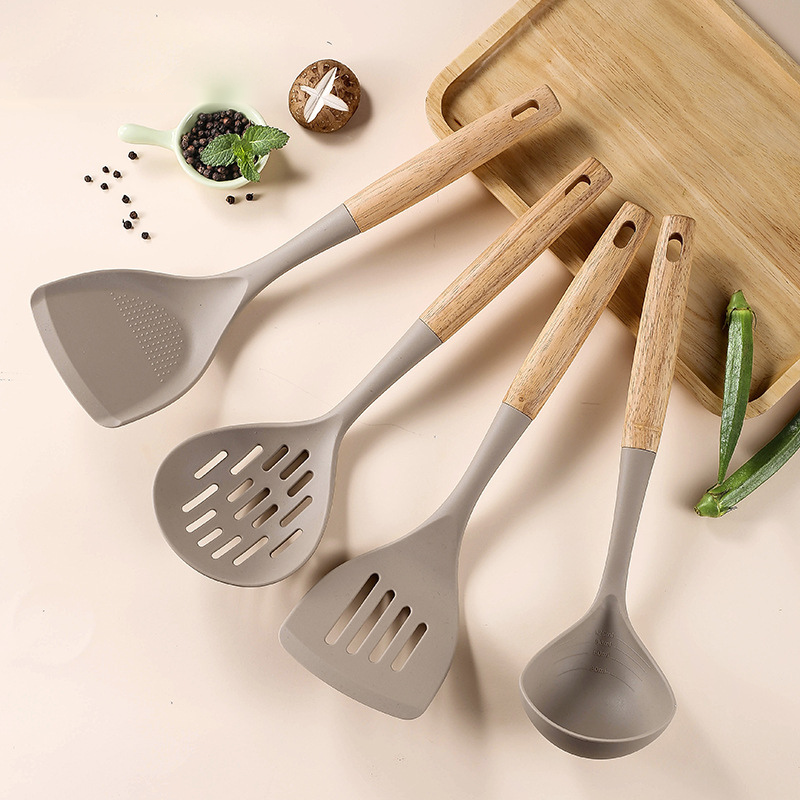
High-quality silicone kitchenware can last for years with normal household use. Its practical lifespan depends on product design, material quality, temperature exposure, mechanical stress, cleaning habits, and whether it has been damaged by sharp tools or overheating. Replace items that become cracked, sticky, torn, permanently deformed, or difficult to clean.
Silicone kitchenware does not normally have a fixed consumer expiration date. However, it can age and degrade over time, especially when exposed to excessive heat, harsh chemicals, direct flame, repeated abrasion, or severe bending. Routine inspection is more useful than relying on a calendar date.
Food-contact suitability depends on the specific material formulation, intended use, and applicable testing or documentation. Buyers should select products that meet the requirements of their destination market and request product-specific evidence where necessary. In the EU, food-contact materials are subject to general safety and inertness requirements under Regulation (EC) No 1935/2004.
A noticeable smell may result from residual volatiles, material formulation, pigment, curing conditions, packaging, or absorbed food odors. Proper material selection, curing control, and post-production handling can help reduce odor. Consumers should wash new products before first use and follow the manufacturer's care instructions.
Many silicone utensils are designed to be dishwasher-safe, but buyers and consumers should follow the product-specific instructions. Dishwasher use can be convenient, yet repeated high-heat drying cycles and strong detergents may affect appearance over time. A dishwasher-safe claim should be validated for the final product design.
Some silicone baking molds, mats, and accessories are designed for oven use within a specified temperature range. However, not every silicone kitchen product is suitable for oven use. Products should never be placed directly over an open flame, on an exposed heating element, or beyond the manufacturer's stated temperature limit.
Importers should evaluate product dimensions, color, odor, hardness, flexibility, tearing, heat performance, staining, dishwasher performance, packaging durability, and any required food-contact documentation. For custom projects, approve a pre-production sample and define quality standards before mass production begins.
1. [Silicone Makers — How Long Does Silicone Rubber Last? Shelf Life & Durability Explained]
2. [European Commission — Food Contact Materials]
3. [European Commission — Food Contact Materials Legislation]
4. [European Union Reference Laboratory for Food Contact Materials — Testing Conditions for Kitchenware]
5. [ISO — ISO 188:2023 Rubber, Vulcanized or Thermoplastic: Accelerated Ageing and Heat Resistance Tests]
6. [U.S. Food and Drug Administration — Food Contact Substances Listed in 21 CFR]


