


Views: 278 Author: Hongyuan Silicone Publish Time: 2026-09-08 Origin: Site


Content Menu
● Pectin vs. Gelatin at a Glance
>> Pectin Texture and Consumer Experience
>> Gelatin Texture and Consumer Experience
● Pectin vs. Gelatin: Detailed Comparison
>> Source and Dietary Suitability
>> Texture, Bite, and Shape Retention
>> Formula Conditions and Processing
>> Flavor, Appearance, and Color
● Choosing the Right Silicone Mold
● Practical Mold Selection by Product Type
● Expert Troubleshooting Guide
>> If Pectin Gummies Are Too Soft
>> If Gelatin Gummies Are Too Weak
>> If Gummies Stick to the Mold
● Pectin vs. Gelatin: Which One Should You Choose?
● Create Your Custom Silicone Mold Program
● FAQ
>> Is pectin better than gelatin for gummies?
>> Can pectin gummies be made without high sugar levels?
>> Why do gelatin gummies melt more easily than pectin gummies?
>> Are silicone molds suitable for both pectin and gelatin?
>> What type of silicone mold is best for gummy bears?
>> Does pectin require acid to set?
>> Can gelatin be used for vegan candy?
Choosing between pectin vs. gelatin is not simply a question of picking a thickener. For confectionery brands, bakeries, food manufacturers, and home creators, the choice directly affects texture, flavor release, dietary positioning, processing conditions, shelf stability, and even the performance required from silicone candy molds.
From our experience supporting buyers of silicone kitchenware and custom food molds, the most common production problems do not come from the mold alone. They often begin with a mismatch between the gelling agent, recipe conditions, molding process, and target consumer. Pectin is usually selected for plant-based, fruit-forward, firmer products, while gelatin remains a preferred choice for soft, elastic, classic gummy textures.
This guide compares pectin and gelatin in detail, explains how each behaves in silicone molds, and helps food businesses select the right option for gummies, desserts, jams, molded candies, and private-label product development.
Both ingredients create gels, but they are fundamentally different materials.
Pectin is a carbohydrate-based gelling ingredient naturally found in fruit cell walls. Commercial pectin is commonly sourced from citrus peel and apple pomace. It is widely used in jams, fruit fillings, jellies, vegan candies, and fruit gummies.
Gelatin is a protein derived from collagen, usually from bovine, porcine, or fish sources. It is well known for creating the chewy, bouncy structure used in gummy bears, marshmallows, panna cotta, jelly desserts, and many traditional confectionery products.
The right answer to "pectin or gelatin?" depends on the final product—not on which ingredient is universally better.
| Feature | Pectin | Gelatin |
|---|---|---|
| Primary source | Fruit-based, commonly citrus and apple | Animal collagen |
| Ingredient type | Polysaccharide | Protein |
| Vegan-friendly | Yes, when formulated without animal ingredients | No, except specialty fish gelatin is still not vegan |
| Typical texture | Firm, short bite, clean break | Elastic, soft, chewy, bouncy |
| Common uses | Jam, jelly, fruit candy, vegan gummies | Gummies, marshmallows, chilled desserts |
| Main setting conditions | Depends on pectin type, acidity, sugar, and/or calcium | Sets as it cools after dissolving |
| Heat behavior after setting | Often more heat-tolerant than gelatin systems | Can soften or melt when warmed |
| Flavor profile | Neutral, often ideal for fruit-forward formulas | Neutral, but texture can amplify chew and lingering flavor |
| Mold release | Usually clean when formulation is correct | Generally easy, especially with a flexible mold |
| Best buyer segment | Vegan brands, fruit snacks, premium jam and candy producers | Traditional gummy, dessert, and confectionery brands |
For commercial product development, the decision should begin with three questions:
1. Who is the target customer?
2. What texture should the consumer feel on the first bite?
3. What temperature, packaging, and distribution conditions will the product face?
Pectin is a naturally occurring structural fiber found in fruits. In food production, it functions as a gelling agent, stabilizer, and thickener. It is especially valuable in fruit-based applications because it supports a clean flavor profile and creates a texture that many consumers associate with premium fruit confectionery.
A major advantage of pectin is its compatibility with vegetarian and vegan positioning. As plant-based confectionery continues to expand, pectin gummies and pectin fruit chews have become important alternatives to conventional gelatin gummies.
Pectin does not work in exactly the same way in every recipe. Its performance depends on the pectin type and the overall formula.
High-methoxyl pectin is commonly used in traditional jams, jellies, and high-solids fruit candy. It generally needs the right balance of sugar and acidity to form a stable gel. Fruit preserves rely on the interaction of fruit, pectin, acid, and sugar to achieve their characteristic set.
Low-methoxyl pectin can form gels with calcium rather than relying mainly on high sugar levels. This makes it useful for reduced-sugar products, modern fruit snacks, and certain health-oriented formulations.
For product developers, this means pectin is not a single plug-and-play ingredient. The pectin grade must match the formula.
Pectin usually creates a firmer and cleaner bite than gelatin. Rather than stretching or bouncing, it tends to break more quickly when chewed. This is one reason it is popular in fruit jellies, pâte de fruit, filled candies, and premium vegan gummies.
A well-made pectin gummy can offer:
- A bright fruit flavor
- A smooth, non-rubbery bite
- A clean cut when bitten
- Good shape definition
- More confidence for plant-based product claims
- A potentially more stable texture in warmer retail conditions
However, pectin formulas require careful process control. Inadequate acid, incorrect solids, poor pectin dispersion, or an unsuitable cooking profile can lead to weak gels, separation, graininess, or weeping.
Gelatin is a food-grade protein created by processing collagen. When mixed with liquid, allowed to hydrate, heated gently, and then cooled, it forms a thermoreversible gel. In simple terms, gelatin sets when cold and softens again when warmed.
This behavior is exactly why gelatin is so important in classic gummy candy. It gives the product its signature stretch, bounce, and chew.
When customers describe a gummy as "juicy," "bouncy," "soft," or "chewy," gelatin is often behind that sensory experience. It creates an elastic network that bends and stretches rather than breaking cleanly.
Gelatin is a strong option when the product requires:
- A traditional gummy-bear texture
- High elasticity and chewiness
- A soft bite for children's candy
- A clear or translucent appearance
- A relatively straightforward cooling-set process
- A familiar dessert texture for jelly cups or molded chilled desserts
That said, gelatin is unsuitable for vegan and vegetarian product lines. It can also be less practical for products that will sit in hot conditions, such as warm summer retail displays, uncooled delivery vehicles, or high-temperature production environments.
The most visible difference is the source.
Pectin is normally derived from fruit-processing by-products, especially citrus peels and apples. This gives it a clear advantage for brands that need vegan, vegetarian, or plant-forward claims.
Gelatin comes from animal collagen. It may be bovine, porcine, or fish-based, so buyers must consider religious, dietary, and regional requirements. For example, a gelatin gummy intended for multiple international markets may require verified halal or kosher sourcing, depending on its target audience.
| Buying Consideration | Pectin | Gelatin |
|---|---|---|
| Vegan product line | Strong choice | Not suitable |
| Vegetarian product line | Strong choice | Not suitable |
| Traditional gummy candy | Possible, but texture differs | Strong choice |
| Fruit snack positioning | Excellent fit | Possible but less typical |
| Halal or kosher program | Often simpler, subject to full recipe review | Requires source-specific certification |
| Clean-label positioning | Depends on grade and formulation | Depends on source and processing |
Texture is where the pectin vs. gelatin comparison becomes most important.
Pectin creates a shorter, firmer bite. It is especially suitable for fruit jellies, vegan gummies, jelly slices, and molded fruit candies. It can deliver sharp mold details and a premium, less elastic mouthfeel.
Gelatin creates a more elastic bite. It is ideal for gummy bears, worms, fruit shapes, jelly desserts, and marshmallows. Consumers often expect this bounce in conventional candy.
For a buyer selecting custom silicone molds, the gelling agent should be part of the mold-development discussion. A highly detailed mold with narrow ears, thin stems, embossed logos, or small cavities may perform differently with a firm pectin gel than with a softer gelatin gel.
Pectin and gelatin demand different production disciplines.
| Production Factor | Pectin | Gelatin |
|---|---|---|
| Preparation | Must be dispersed carefully to prevent lumps | Usually bloomed in cold liquid before heating |
| Key control factors | Pectin grade, sugar, acidity, calcium, solids, temperature | Hydration, bloom strength, temperature, cooling time |
| Typical risk | Weak set, weeping, graininess, premature gelling | Poor hydration, weak gel, heat damage, melting |
| Cooling requirement | Depends on formula and pectin system | Essential for setting |
| Heat resistance in finished product | Often stronger, depending on formula | Lower due to thermoreversible behavior |
An important practical point: never treat all pectin as interchangeable. A pectin designed for high-sugar fruit jam may not perform correctly in a reduced-sugar gummy. Similarly, a gelatin formula can fail if the gelatin is overheated, poorly bloomed, or combined with ingredients that interfere with gel formation.
Pectin is often selected for fruit systems because it can support a vivid, direct fruit profile. It is especially useful for products featuring strawberry, raspberry, mango, citrus, grape, apple, or mixed-berry flavors.
Gelatin can produce a clear and attractive gel, making it useful for translucent gummies and dessert-style products. However, gelatin's soft chew may hold flavor differently in the mouth, often creating a longer-lasting taste experience.
For bright, premium-looking confectionery, the final result also depends on:
- Fruit juice or puree quality
- Colorant stability
- Sugar and acid balance
- Cooking temperature
- Deposit temperature
- Mold cavity finish
- Demolding timing
- Packaging moisture barrier
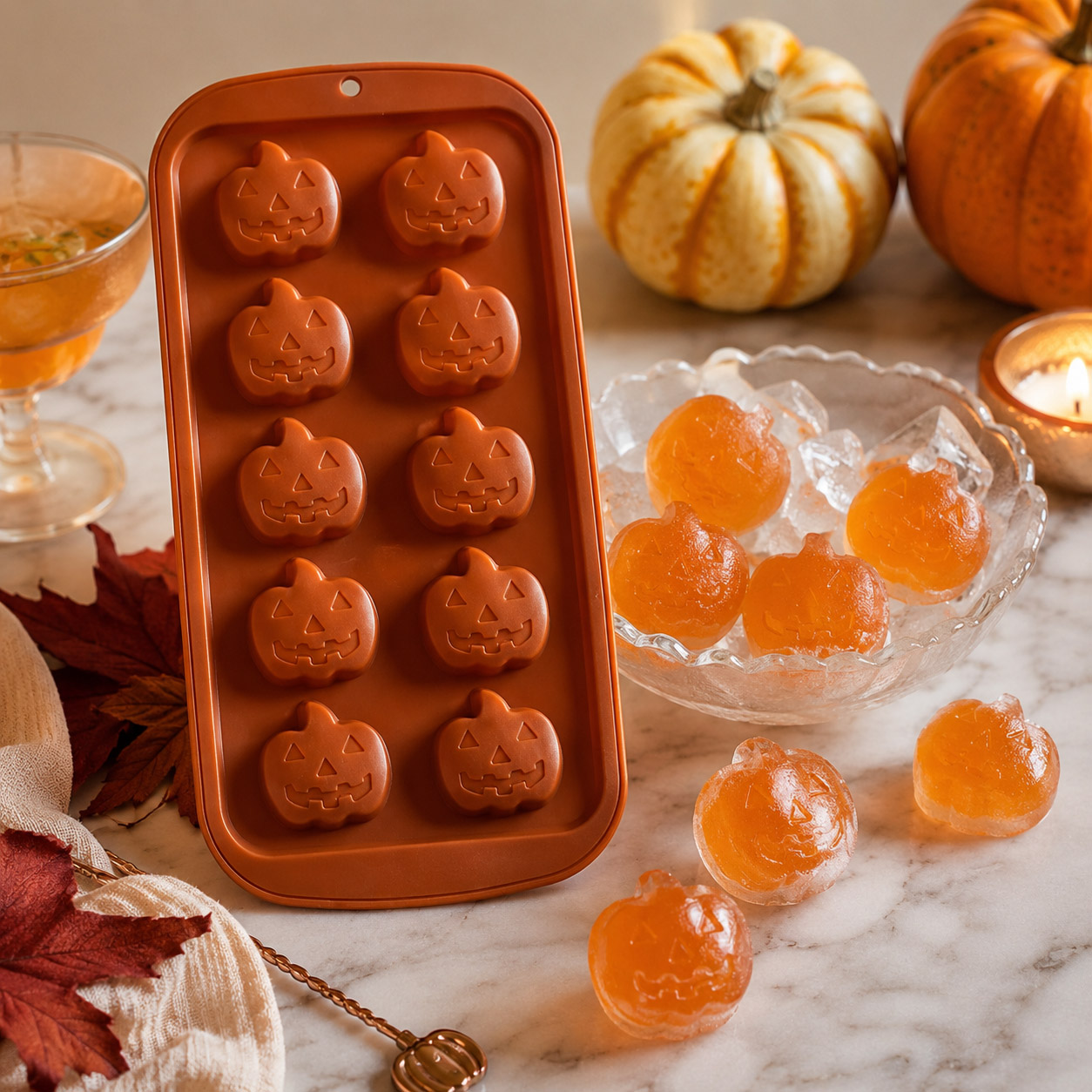
A silicone mold should not be treated as an accessory. It is a production tool that influences shape accuracy, cycle time, surface finish, cleaning efficiency, and repeatability.
At Yangjiang Hongyuan Trading Co., Ltd., we work with buyers who need silicone kitchenware and custom silicone molds for supermarket, wholesale, private-label, promotional, and online retail programs. With a 4,500-square-meter main facility and a 2,000-square-meter branch facility, our production system is built to support large-volume orders, including delivery capacity of up to one million pieces within 60 days, depending on product specification, packaging, and order requirements.
For pectin and gelatin applications, a well-designed silicone mold should offer:
- Food-contact material compliance suitable for the destination market
- Flexible cavity walls for easier demolding
- Stable cavity dimensions for consistent candy size
- Smooth internal surfaces for a clean product finish
- Appropriate cavity depth based on deposit viscosity and target texture
- Durable construction for repeated production use
- Custom branding options, including logos, shapes, colors, and packaging
For EU-bound food-contact products, buyers should evaluate material compliance, traceability, manufacturing controls, and test documentation. Food-contact materials placed on the EU market must comply with the framework requirements of Regulation (EC) No. 1935/2004 and be produced according to applicable good manufacturing practices.
Our silicone kitchenware development process can support OEM and ODM programs for customers in Europe, the United States, the United Kingdom, Australia, and South America. Relevant quality and compliance documentation may include ISO 9001, BSCI, LFGB, FDA, and REACH-related testing or requirements, depending on the product category and destination-market needs.
| Product Type | Recommended Gelling Agent | Recommended Silicone Mold Design |
|---|---|---|
| Vegan fruit gummies | Pectin | Medium-depth cavities with smooth walls and defined edges |
| Classic gummy bears | Gelatin | Detailed bear-shaped cavities with flexible sidewalls |
| Fruit jelly slices | Pectin | Rectangular or geometric cavities for clean cutting and release |
| Marshmallow shapes | Gelatin | Larger, simple cavities with easy-release surfaces |
| Jam-filled dessert bites | Pectin | Shallow cavities with stable bases and clean corners |
| Chilled jelly desserts | Gelatin | Decorative, deeper cavities with flexible demolding zones |
| Branded promotional candy | Pectin or gelatin | Custom logo molds designed around ingredient behavior and cavity detail |
Even a high-quality mold cannot compensate for an unstable formula. Before blaming the mold, review the product system.
Possible causes include insufficient acid, the wrong pectin type, low soluble solids, incomplete cooking, or poor pectin dispersion.
Practical actions:
1. Confirm the pectin grade matches the recipe.
2. Measure ingredients by weight, not volume.
3. Verify acidity and sugar targets.
4. Mix pectin with sugar before adding it to liquid to reduce clumping.
5. Confirm the cooking and depositing temperature.
6. Allow enough time for the gel to develop before demolding.
Common causes include under-hydrated gelatin, insufficient gelatin concentration, excessive water, overheating, or inadequate cooling.
Practical actions:
1. Bloom gelatin fully in cold liquid.
2. Dissolve it gently rather than boiling aggressively.
3. Keep formula ratios consistent from batch to batch.
4. Allow the molded product to cool fully before removal.
5. Avoid prolonged exposure to warm conditions after setting.
Sticking may result from a soft or under-set formula, improper demolding timing, residue buildup, or a mold cavity design not suited to the product.
Use a methodical check:
- Confirm that the candy has fully set.
- Clean the mold thoroughly and dry it completely.
- Review the cavity shape for deep undercuts or overly sharp internal details.
- Test a small batch before large-scale production.
- Evaluate whether a different gel strength or solids target is needed.
Choose pectin if your product needs a plant-based identity, a firm fruit-gel texture, strong shape retention, or improved performance in relatively warm conditions. It is especially suitable for vegan gummies, fruit chews, jam-style products, and premium confectionery with a clean bite.
Choose gelatin if your product needs a classic chewy gummy texture, a soft elastic bite, or a clear jelly-like appearance. It remains a practical choice for conventional gummies, marshmallows, molded desserts, and products where animal-derived ingredients are acceptable.
For many brands, the best strategy is not choosing one ingredient forever. It is building two product lines:
- A pectin-based vegan range for plant-based and fruit-forward consumers.
- A gelatin-based classic range for shoppers seeking traditional gummy texture.
This approach can widen your addressable market while allowing each formulation to deliver the texture consumers expect.
Whether you are developing vegan pectin gummies, classic gelatin candy, chocolate molds, baking molds, ice trays, or custom silicone kitchenware, the mold should support your recipe—not restrict it.
Yangjiang Hongyuan Trading Co., Ltd. provides OEM and ODM silicone kitchenware solutions for importers, wholesalers, brands, supermarkets, and e-commerce sellers. We can help evaluate mold shape, cavity size, logo placement, color, packaging, and market-oriented compliance requirements before large-scale production begins.
Contact our team today to discuss your custom silicone mold project, request a sample plan, or develop a scalable private-label kitchenware collection for your market.

Neither is automatically better. Pectin is better for vegan, fruit-forward, firm gummies, while gelatin is better for soft, elastic, traditional gummy textures. The right choice depends on the target consumer, desired bite, formula, and retail conditions.
Yes. Low-methoxyl pectin can be used in reduced-sugar formulations when paired with calcium-based setting systems. However, the full recipe must be developed carefully because sugar level, acidity, solids, flavor system, and processing conditions all affect the final texture.
Gelatin forms a thermoreversible gel. It sets during cooling and can soften as temperature rises. Pectin systems often have stronger heat stability after setting, although exact performance depends on pectin type, formula, moisture, and storage conditions.
Yes. High-quality silicone molds can be used for both materials. The mold should have smooth cavities, appropriate flexibility, stable dimensions, and food-contact suitability for the intended market. Formula quality and demolding timing remain equally important.
For gummy bears, choose a flexible mold with clearly defined cavities, smooth internal surfaces, and enough depth to create the desired body shape. Gelatin works particularly well for classic chewy bears, while pectin can create a firmer vegan alternative.
Many high-methoxyl pectin systems require the proper balance of acid and sugar to form a gel. Low-methoxyl pectin behaves differently and typically relies more on calcium. Always follow the specification of the specific commercial pectin used in production.
No. Gelatin is animal-derived and is not suitable for vegan or vegetarian candy. Pectin, agar, carrageenan, and starch-based systems are common alternatives for vegan confectionery.
1. [PJ Bold: Pectin vs. Gelatin Gummies—Complete Comparison for Candy Makers]
3. [Pectin Hydrogels: Gel-Forming Behaviors, Mechanisms, and Food Applications]
4. [European Commission: Food Contact Materials]
5. [U.S. Food and Drug Administration: Food Contact Substance Chemistry Guidance]
6. [North Dakota State University Extension: Food Preservation—Jellies, Jams and Spreads]


