


Views: 270 Author: Hongyuan Silicone Publish Time: 2026-10-02 Origin: Site


Content Menu
● What OEM and ODM Mean for Silicone Kitchenware
● OEM vs ODM Silicone Kitchenware at a Glance
>> When OEM Is the Better Choice
>> When ODM Is the Better Choice
● Calculate the Full Cost Before Choosing
● Match Food-Contact Evidence to Each Market
● Build a Brief That Prevents Rework
>> Use a Five-Gate Approval Process
● Protect Tooling, Artwork, and Exclusivity
● How Hongyuan Supports Either Route
● Choose the Model That Fits Your Brand
>> Is OEM always more expensive than ODM silicone kitchenware?
>> Can I add my logo to an ODM silicone utensil?
>> Who owns the mold in an OEM project?
>> Does an FDA or LFGB claim guarantee worldwide compliance?
>> What should I send a manufacturer for an accurate quotation?
>> Can I switch from ODM to OEM later?
>> Is a 60-day production target realistic for every order?
Choosing between OEM and ODM silicone kitchenware is not simply a question of who designs the product. It affects your tooling budget, launch schedule, product differentiation, quality controls, and ability to reorder consistently. If you are building a private-label range of spatulas, baking mats, molds, or utensils, the right model depends on what your brand must own—and what it can afford to develop.
At Yangjiang Hongyuan Trading Co., Ltd., we work with supermarkets, wholesalers, brand owners, and online retailers sourcing silicone kitchen products for markets including the EU, United States, United Kingdom, Australia, and South America. The practical question we recommend asking first is: Which product features will customers actually notice and value? Your answer should drive the sourcing model, not the other way around.
In an OEM silicone kitchenware project, the buyer supplies a product specification or design, and the manufacturer produces to the agreed requirements. That might mean a custom spatula profile, a proprietary baking-mat layout, or a utensil handle shaped to match an established range. The buyer should also define materials, dimensions, tolerances, artwork, packaging, testing, and approval criteria.
In an ODM silicone kitchenware project, the manufacturer contributes an existing design or development platform. The buyer selects a product and agrees on permitted changes, such as color, logo, packaging, or certain features. ODM can shorten development, but an existing base design does not automatically give the buyer exclusive rights.
These terms are commercial shorthand, not a substitute for a written agreement. Some suppliers use "OEM" to describe little more than adding a logo. Ask what is already developed, what is genuinely custom, and who controls each asset.
| Decision factor | OEM: Buyer-led development | ODM: Supplier-led starting point |
|---|---|---|
| Product design | Built to an approved buyer specification | Based on an existing or supplier-developed design |
| Upfront expense | Potentially higher for design work, samples, and new molds | Potentially lower if existing tooling can be used |
| Launch timing | More development and validation steps | Often faster when changes are limited |
| Differentiation | Greater scope for a distinct shape or function | Usually concentrated in branding, color, bundles, or packaging |
| Design rights | Must be assigned or licensed in the contract | Existing design rights may remain with the supplier |
| Main buyer risk | Paying for development without clear milestones or ownership | Assuming a commonly offered design is exclusive |
| Best fit | A brand with a defined product gap or signature range | A retailer testing demand or expanding a familiar assortment |
Neither route is inherently cheaper or safer. A simple OEM utensil can cost less to develop than a complicated ODM product with extensive changes. Compare actual quotations for the same specification and sales channel.
Choose OEM when your proposed kitchenware solves a specific problem that standard products do not. Examples include a spatula head designed for a narrow jar, a baking mold with a distinctive cavity geometry, or a coordinated handle system across multiple utensils.
OEM also makes sense when the shape itself is part of your brand identity. Expect more decisions before production: design files, mold structure, silicone compound, hardness, color standards, fit with any non-silicone components, and final inspection criteria. The benefit is control over the approved design—provided your agreement actually secures the rights you need.
Choose ODM when speed and lower initial development effort matter more than a novel shape. For example, a wholesaler might start with an existing silicone spatula and differentiate it through a coordinated color range, retail-ready packaging, and a useful three-piece bundle.
ODM is also a practical way to test demand before funding a new mold. However, even a familiar product needs sample approval and market-specific checks. A quick route to sampling is not permission to skip validation.
A low unit price rarely tells the whole story. Compare landed cost per sellable unit: product price, tooling amortization, development and test costs, packaging, freight, duties, inspection, and a realistic allowance for defects or returns. Confirm what the quoted Incoterm includes before comparing suppliers.
For a custom mold, a useful planning formula is:
Tooling cost per unit = Total buyer-funded tooling cost ÷ expected units over the tooling's useful commercial life.
Suppose new tooling costs $6,000 and your realistic plan is 30,000 units. The tooling allocation is $0.20 per unit before adding other costs. If you sell only 10,000 units, that allocation becomes $0.60. These figures are illustrative planning examples, not Hongyuan pricing or an industry benchmark.
Ask the same questions for both routes:
- Is the quoted mold new, modified, or shared with other customers?
- Are samples, artwork setup, packaging plates, and laboratory tests included?
- What are the minimum order quantity and minimum quantity per color?
- What happens to the unit price when you reorder at a different volume?
- Who pays for rework if production differs from the approved sample?
An ODM item with low tooling cost may still carry a higher unit price or restrictions on customization. An OEM item may become more economical across several repeat orders. Model the first order and at least one realistic reorder before deciding.
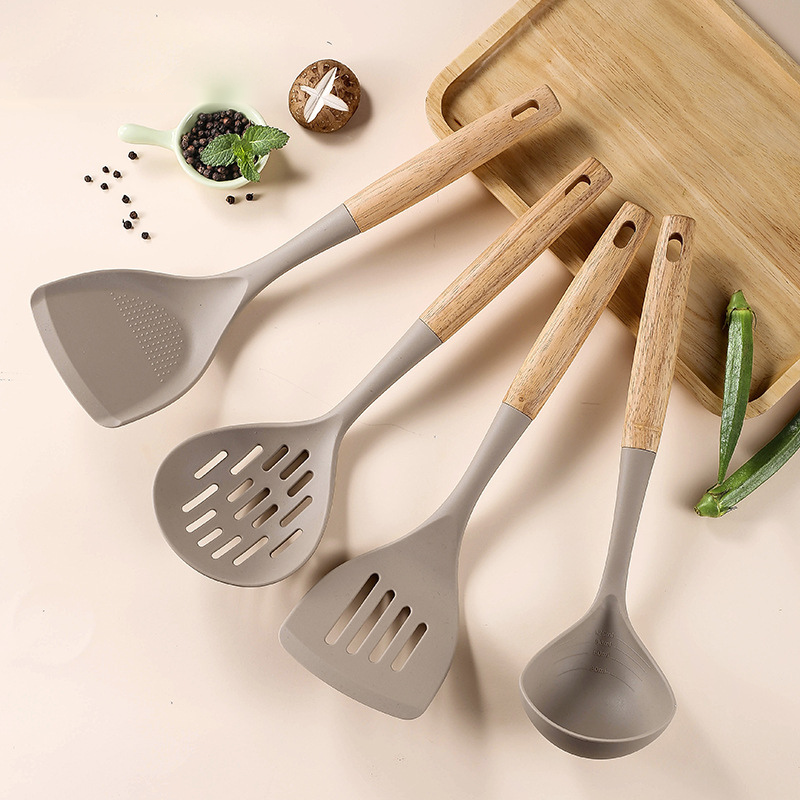
Food-contact requirements apply to the finished product under its intended conditions of use, not to the word "silicone" on a specification sheet. A pastry brush used with hot oil, a baking mold placed in an oven, and a cool-service utensil do not present identical use conditions. Provide the supplier with target markets, food types, contact time, temperatures, and care claims before agreeing on testing.
For the EU, food-contact materials fall under Regulation (EC) No 1935/2004 and must be manufactured under the good manufacturing practice rules of Regulation (EC) No 2023/2006. For silicones, national requirements and technical guidance can also matter. In Germany, the LFGB is relevant, while BfR recommendations provide non-binding scientific guidance for assessing silicone food-contact materials.
For the United States, assess the applicable food-contact provisions for the actual formulation and use. 21 CFR 177.2600 addresses certain rubber articles intended for repeated use; do not assume that calling a material "FDA-grade" proves that every finished SKU meets every relevant requirement. For UK, Australian, and South American orders, identify the destination country's applicable rules rather than treating EU paperwork as a universal passport.
REACH concerns chemical substances and associated obligations; it is not a standalone food-contact approval. Likewise, ISO 9001 addresses a quality management system, and amfori BSCI is a social auditing and improvement system, not a product safety certificate. Request current, scope-relevant documents rather than relying on a row of logos.
Before placing an order, request a product-and-market evidence pack:
1. A complete SKU specification, including all food-contact materials, colorants, components, and intended uses.
2. Relevant laboratory reports showing the tested product, applicable methods, test conditions, dates, and results.
3. The supplier's material declarations and traceability approach for the production batch.
4. Any applicable quality-system certificate and social-audit report, with scope and validity checked separately.
5. Written confirmation of what must be retested if the formulation, pigment, component, or production process changes.
The strongest OEM or ODM project starts with a precise brief. "Food-grade silicone spatula" leaves too much room for interpretation. Describe the end user's task first: scraping thick batter, turning food in a hot pan, or reaching the base of a jar. Then translate that task into measurable requirements.
Include product dimensions and tolerances; silicone hardness targets if relevant; acceptable colors and color-match method; handle material; joint construction; surface finish; logo position; packaging configuration; care instructions; and intended temperature and food-contact conditions. State which claims, such as dishwasher suitability, require validation. Agree on how a sample will be judged before samples are made.
1. Concept gate: Approve the intended user, differentiating features, target market, budget range, and likely order volume.
2. Technical gate: Review the drawing, material specification, tooling proposal, critical dimensions, and proposed test plan.
3. Sample gate: Test real-use performance, appearance, odor, color consistency, and any multi-part assembly against a signed sample record.
4. Pre-production gate: Approve final artwork, packaging, test evidence, inspection criteria, production sample, and any agreed change controls.
5. Shipment gate: Review inspection findings, batch identification, carton marks, documentation, and any corrective actions before release.
Do not approve mass production from a photograph alone. If several stakeholders must sign off, record one controlled version of the specification and one approved reference sample. Changes after approval should trigger a written assessment of cost, schedule, tooling, and testing impact.
A common sourcing mistake is confusing paying for a mold with owning the design. Put the answer in the purchase contract. Specify who owns the design files and molds, where molds are stored, whether the buyer can inspect or move them, and whether the manufacturer may use them for another customer.
For ODM, ask whether the base shape is sold to other buyers and exactly what, if anything, can be exclusive: a colorway, a packaging design, a territory, or a time period. If exclusivity matters, define its geographic scope, duration, volume commitments, and remedies. Have qualified counsel review important intellectual-property terms.
Also define how production changes are approved. A substitute pigment or handle material may appear minor but can change appearance, performance, or the relevance of existing test evidence. A good agreement connects commercial rights, change control, and quality responsibility.
Yangjiang Hongyuan Trading Co., Ltd. manufactures silicone kitchenware and other silicone kitchen products through a 4,500-square-meter main factory and a 2,000-square-meter branch factory. The company states that it can complete orders of up to 1 million pieces within 60 days. Treat that figure as a capacity example to discuss against your specific SKU mix, tooling status, packaging, testing, and confirmed production slot—not as an automatic lead-time guarantee for every project.
Hongyuan supports OEM and ODM sourcing for supermarkets, wholesalers, brands, and online retailers serving the EU, United States, United Kingdom, Australia, and South America. Its stated credentials include ISO 9001, BSCI-related audit documentation, and product testing or compliance documentation associated with LFGB, FDA, and REACH requirements. Ask for the current documents relevant to your exact product and market before making a compliance claim on a listing or package.
A sensible approach is to start with a proven ODM format when you need to validate demand, then move to a custom OEM design once customer feedback identifies a valuable feature. Alternatively, launch with OEM from day one if a distinctive tool is central to the brand. The choice should follow your differentiation strategy, risk tolerance, and reorder forecast.
ODM is often the practical starting point for a fast, controlled market test. OEM is stronger when a distinctive product experience justifies development effort and you have a clear plan to protect it. In either case, success depends on a precise brief, market-specific evidence, transparent costing, and signed approval gates.
Ready to compare both options? Send Yangjiang Hongyuan Trading Co., Ltd. your target product, estimated order quantity, destination market, customization priorities, and launch date. Request an OEM and ODM proposal showing tooling, sampling, testing, packaging, and production milestones side by side.
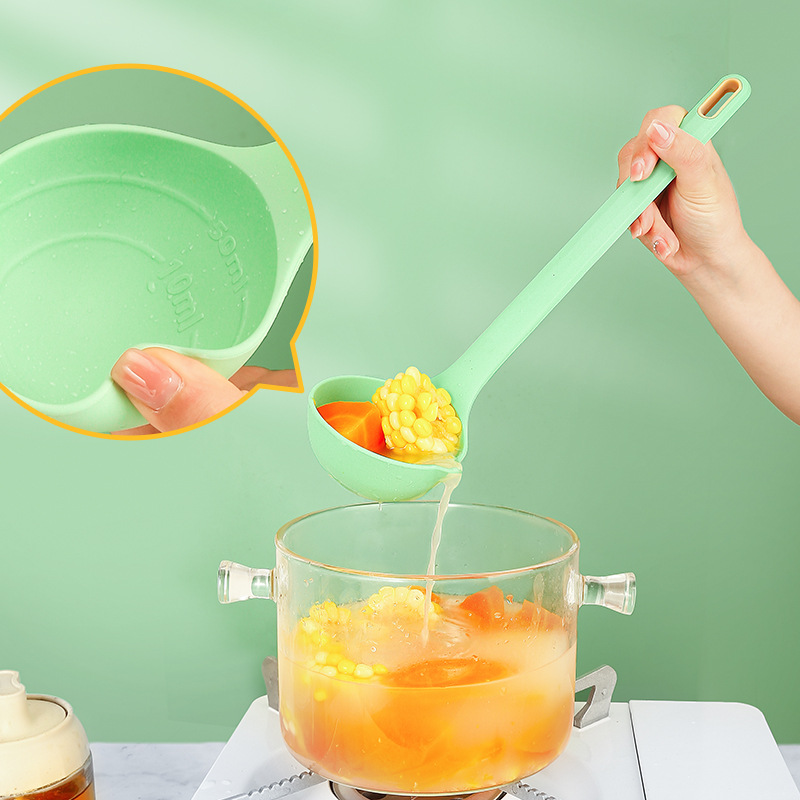
No. OEM often requires more development or tooling, but total cost depends on complexity, order size, component choices, testing, and repeat orders. Compare landed cost across the expected product life, not just the first invoice.
Usually, if the selected design and production method support it. Confirm the logo method, minimum order quantity, setup costs, durability expectations, and whether your artwork remains exclusive to your brand.
Ownership depends on the written agreement, not merely who paid a tooling charge. Specify ownership, storage, maintenance, permitted use, and procedures for transferring the mold before authorizing tooling.
No. Each destination market and intended use needs an appropriate assessment. Ask for test reports tied to the actual finished product, materials, and use conditions; a supplier-level claim alone is not enough.
Send a drawing or reference sample, target quantity, sales countries, intended use, material and color preferences, logo files, packaging requirements, test expectations, and requested delivery terms. State what is flexible and what is non-negotiable.
Yes, but it may require a new design, tooling, samples, and updated testing. Check whether any existing supplier design can legally be modified or used as a starting point for a custom product.
No single timeline fits every project. Capacity, material availability, mold readiness, testing, packaging, and the production queue all affect delivery. Confirm milestones and a written schedule for the exact order.
- [European Commission — Food Contact Materials]: EU food-contact framework and good manufacturing practice requirements.
- [European Commission — REACH Regulation]: EU chemical-substance obligations and consumer information framework.
- [U.S. Electronic Code of Federal Regulations — 21 CFR § 177.2600]: Provisions for rubber articles intended for repeated food contact.
- [German Federal Institute for Risk Assessment — Recommendations on Food Contact Materials]: Scope and non-binding status of recommendations used for silicone assessment.
- [ISO — ISO 9001 Explained]: What a quality management system certification addresses.
- [Intertek — amfori BSCI Audits and Supplier Compliance Services]: Social-audit scope and clarification that amfori BSCI does not issue product certifications.
- [SGS — Food Contact Material Regulations in Europe]: Material-specific EU and national considerations and UK context.
- [Yangjiang Hongyuan Trading Co., Ltd.] Factory areas, stated order capacity, customer markets, OEM/ODM services, and claimed credentials supplied for this article; request current supporting documents for independent verification.


