


Views: 263 Author: Hongyuan Silicone Publish Time: 2026-09-24 Origin: Site


Content Menu
● What Is the Temperature Range of Silicone Rubber?
>> Typical Silicone Kitchenware Temperature Ratings
● Why Silicone Handles Heat and Cold So Well
● Continuous Heat vs. Short-Term Heat Exposure
● What Happens When Silicone Gets Too Hot?
● Silicone Kitchenware Is Not Suitable for Direct Flame
● How to Choose the Right Silicone Temperature Rating
>> Step 1: Define the Actual Product Application
>> Step 2: Match Material Grade to Market Requirements
>> Step 3: Review Product Design, Not Just Raw Material
● Expert Sourcing Insight: Validate the Finished Product
● Cleaning and Care for Silicone Kitchenware
>> Removing Oil Film and Food Odor
● Common Mistakes That Reduce Silicone Product Life
● Why Manufacturing Capability Matters for Large Kitchenware Orders
● Build a Reliable Silicone Kitchenware Range
>> 1. What temperature can silicone kitchenware withstand?
>> 2. Does silicone melt in the oven?
>> 3. Is silicone safe for baking?
>> 4. Can silicone utensils touch a hot frying pan?
>> 5. Can silicone go from the freezer to the oven?
>> 6. Why does silicone become sticky?
>> 7. Is a higher temperature rating always better?
>> 8. What should I ask a silicone kitchenware manufacturer before placing a bulk order?
Silicone kitchenware is valued for its ability to remain flexible in cold environments and stable during high-temperature cooking. However, the real silicone rubber temperature range depends on the silicone grade, curing system, product design, wall thickness, pigment, intended use, and heating duration.
For buyers of silicone spatulas, baking mats, food storage lids, molds, trivets, oven mitts, and other food-contact products, the right question is not simply, "How hot can silicone get?" It is: Can this specific silicone product perform safely and consistently under the actual conditions in which customers will use it?
At Yangjiang Hongyuan Trading Co., Ltd., we manufacture silicone kitchenware for supermarkets, wholesalers, brands, and online retailers across the EU, United States, United Kingdom, Australia, and South America. With a 4,500 m² main factory and a 2,000 m² supporting facility, our production capacity supports orders of up to 1 million pieces within 60 days. We provide OEM and ODM solutions with quality systems and product compliance support for ISO 9001, BSCI, LFGB, FDA, and REACH requirements.
This guide explains what buyers, product developers, and retailers need to know about silicone temperature resistance, including realistic use limits, heat-related risks, product-selection steps, and practical sourcing advice.
Most food-grade silicone rubber products are designed to operate within a broad temperature range, commonly around -40°C to 230°C (-40°F to 446°F) or -50°C to 250°C (-58°F to 482°F), depending on the compound and the manufacturer's validated product specification.
Some specialized silicone rubber compounds can withstand higher short-term temperatures. But a high short-term temperature claim should never be confused with a safe continuous-use temperature.
For kitchenware, the safest approach is simple:
- Use the product only within its stated temperature rating
- Keep silicone away from direct open flames
- Avoid placing silicone directly on exposed electric heating elements
- Consider both temperature and heating time
- Confirm the rating applies to the finished product, not only the raw silicone material
Silicone does not melt in the same way as many thermoplastics. Instead, when exposed to temperatures beyond its design limit, it may gradually lose elasticity, harden, discolor, become sticky, crack, tear, or lose mechanical strength.
| Silicone product type | Typical temperature range | Key usage consideration |
|---|---|---|
| Silicone baking mat | -40°C to 230°C / 250°C | Avoid direct contact with heating elements |
| Silicone baking mold | -40°C to 230°C / 250°C | Ensure stable support when moving filled molds |
| Silicone spatula | Up to 230°C / 250°C | Do not leave on a hot pan or flame |
| Silicone oven mitt | Varies by construction | Heat resistance does not always equal long exposure protection |
| Silicone food cover | Usually freezer-to-heat range | Check whether it is microwave-safe and vented |
| Silicone ice tray | Freezer-safe | Avoid twisting aggressively when frozen |
| Silicone bottle or baby accessory | Depends on compound and design | Confirm sterilization and food-contact requirements |
| Silicone trivet or pot holder | Often high heat resistant | Do not use as a direct flame barrier |
The figures above are practical reference points, not universal guarantees. A product-specific test report and technical specification are more important than a generic material claim.
Silicone rubber has a molecular structure based on silicon and oxygen. This structure differs from many common petroleum-based plastics and helps silicone retain flexibility across a wider temperature range.
For kitchen products, this can provide several useful advantages:
- Flexible performance in freezers and cold storage
- Stable shape during normal oven use
- Good resistance to moisture and steam
- Reduced risk of becoming brittle in low temperatures
- Reusable performance when properly cleaned and maintained
- Compatibility with complex molded shapes, including mats, grips, handles, molds, and collapsible products
However, heat resistance does not mean that every silicone kitchen product is automatically suitable for every cooking scenario.
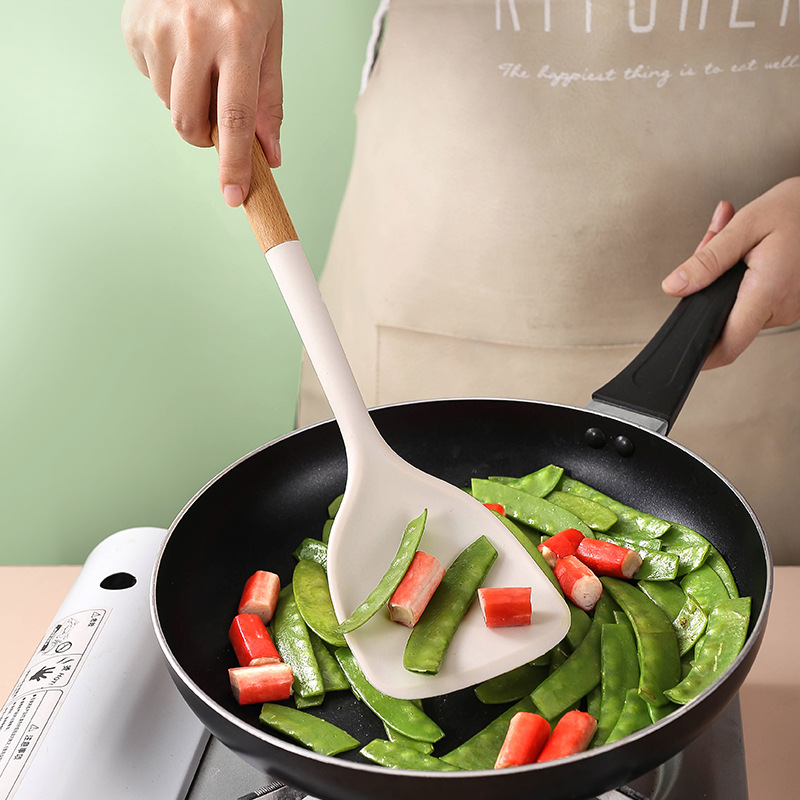
A silicone spatula may perform well when stirring soup, folding batter, or scraping a mixing bowl. The same spatula may be damaged if left against the side of a dry frying pan, placed on a barbecue grate, or exposed to a gas flame.
The material can be heat-resistant while the product design remains vulnerable to misuse.
One of the most important distinctions in silicone product development is the difference between continuous service temperature and short-term heat exposure.
A silicone compound may survive a short temperature spike without immediately failing. But repeated exposure, long oven cycles, direct radiant heat, contact with metal heating elements, and pressure from heavy cookware can accelerate aging.
Continuous heat exposure refers to a product remaining at an elevated temperature for an extended period. Examples include:
- A silicone baking mat used repeatedly in a commercial bakery
- A silicone gasket installed in an oven
- A mold used in repeated production cycles
- A trivet supporting a hot Dutch oven for a prolonged period
- A silicone utensil exposed to a hot cookware rim during cooking
Long-term heat can gradually change the product's physical properties. The silicone may become harder, less elastic, less tear-resistant, or discolored.
Short-term heat exposure may include:
- Brief contact with hot food
- A short oven-baking cycle
- Temporary steam exposure
- Quick contact with hot cookware
- Short-duration microwave heating
A product may tolerate a higher short-term temperature than it can withstand continuously. But the final product should still be labeled conservatively and tested under expected use conditions.
Imagine two silicone baking mats rated to 230°C.
- Mat A is used for 20 minutes at 180°C to bake cookies.
- Mat B is used repeatedly for 90-minute roasting cycles at 230°C and occasionally touches a hot oven element.
Although both mats may carry the same nominal heat rating, Mat B faces far more demanding conditions. Over time, it may show faster discoloration, odor retention, brittleness, or surface damage.
That is why responsible product development requires more than quoting a single maximum temperature.
When silicone kitchenware is used beyond its intended temperature range, it may not fail instantly. Damage can develop gradually and become more obvious after repeated use.
Common signs of excessive heat exposure include:
- Yellowing or darkening of the silicone surface
- Sticky or tacky texture after cleaning
- Loss of flexibility or increased hardness
- Cracking, especially around thin sections or corners
- Tearing when the product is bent or stretched
- Permanent deformation in poorly designed or thin-walled parts
- Strong odor that remains after washing
- Surface deterioration caused by overheating, aggressive cleaners, or oil buildup
If a silicone kitchen tool becomes sticky, cracked, unusually brittle, or visibly damaged, it should be removed from food-contact use.
A product that looks acceptable may still need replacement if it has been exposed to direct flame, an oven heating element, or temperatures outside its labeled range.
This is one of the most important points for consumers and retailers to communicate clearly.
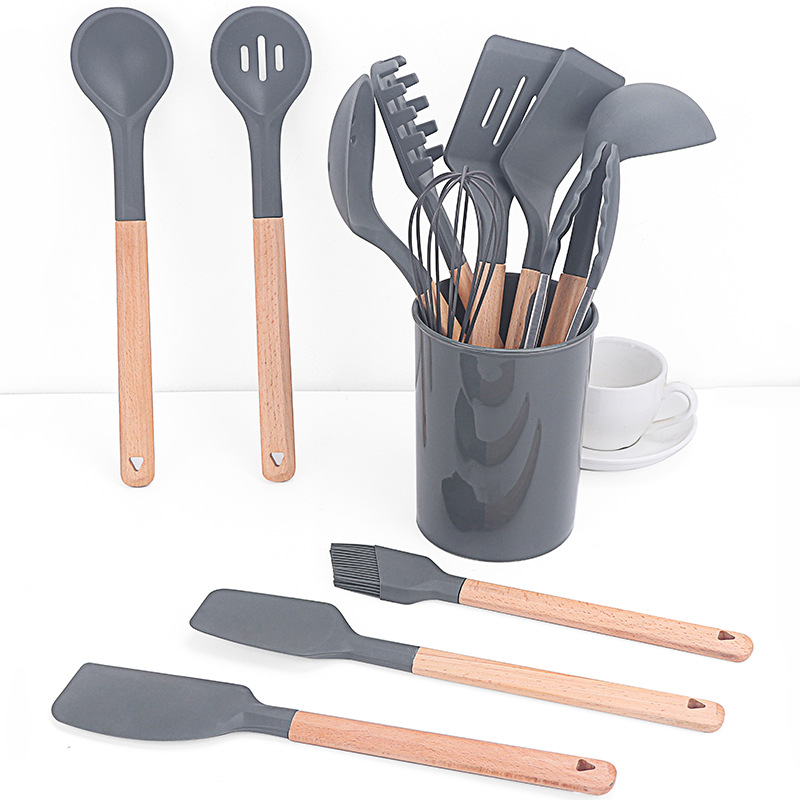
Most silicone kitchenware can tolerate high temperatures, but it is not designed for direct contact with open flames, charcoal, broiler elements, or exposed electric coils unless the product has been specifically engineered and tested for that application.
Avoid using standard silicone products in these situations:
- Directly over a gas burner
- Directly on a barbecue grill grate
- Touching an oven heating element
- Under a broiler without verified approval
- Inside cookware with no food or liquid, where localized temperatures can rise quickly
- As a replacement for metal cookware in high-heat searing applications
For example, a silicone spatula can be excellent for sautéing vegetables at normal stovetop temperatures. It should not rest on the edge of an empty, overheated cast-iron skillet.
For private-label brands, importers, and kitchenware buyers, selecting a silicone product based only on color, shape, or price can create avoidable quality problems. A better process begins with the real use case.
Ask practical questions before choosing a compound or approving a design:
1. Will the item be used in an oven, microwave, freezer, dishwasher, or on a stovetop?
2. What is the highest likely use temperature?
3. How long will the product remain at that temperature?
4. Will it contact food, oil, steam, acidic foods, or fatty foods?
5. Can it touch metal cookware or a heating element?
6. Is the product intended for household use, restaurant use, or repeated commercial use?
7. Does the target market require specific food-contact documentation?
A silicone ice tray and a silicone roasting mat may both be made from food-grade silicone, but their performance requirements are completely different.
For food-contact silicone kitchenware, buyers should review the compliance route required for their destination market.
Common documentation and requirements may include:
- FDA food-contact compliance documentation for the United States
- LFGB-related testing expectations for the German and broader European market
- REACH compliance declarations for substances of concern
- Migration testing where required by the customer, retailer, or market
- ISO 9001 quality-management documentation
- BSCI social-compliance documentation for supply-chain assessment
- Product-specific test reports for temperature performance, odor, migration, or mechanical properties
Documentation should match the specific product, material formulation, color, intended use, and target market. A general certificate does not automatically prove that every SKU, pigment, or production batch meets the same requirements.
Even high-quality silicone can underperform if the design is weak.
Important design factors include:
- Wall thickness consistency
- Reinforced edges and corners
- Molded-in support ribs
- Internal stainless-steel cores in utensils
- Secure bonding between silicone and metal components
- Handle length and heat-transfer control
- Surface texture for grip and easy cleaning
- Drainage, ventilation, and storage features
- Packaging instructions and warning labels
For silicone spatulas, an internal stainless-steel core can improve rigidity. But the core must be fully protected and correctly integrated so that moisture, food residue, and repeated washing do not create long-term quality issues.
In kitchenware sourcing, a common mistake is approving a product after seeing only a material statement or sample appearance.
A stronger quality process evaluates the finished product under realistic conditions.
Before mass production, request or conduct checks for:
- Oven-use simulation at the claimed maximum temperature
- Freezer performance and flexibility
- Dishwasher-cycle resistance
- Odor evaluation after heat exposure
- Color stability after repeated use
- Tear resistance around thin sections
- Compression recovery for lids, seals, and collapsible products
- Bonding performance for silicone-and-metal utensils
- Food-contact compliance documentation for the intended market
- Packaging and care-instruction review
For a retailer, this approach reduces product returns. For a brand owner, it helps protect customer trust. For a manufacturer, it creates clearer quality expectations before production begins.
At Yangjiang Hongyuan Trading Co., Ltd., OEM and ODM projects can be developed around product use, visual identity, packaging, and compliance needs. This includes support for kitchenware ranges such as silicone cooking utensils, baking accessories, food storage products, and customized promotional sets.
Proper cleaning helps maintain silicone products and reduces odor retention, surface buildup, and premature degradation.
1. Wash with warm water and mild dish soap.
2. Use a soft sponge or non-abrasive brush.
3. Rinse thoroughly to remove detergent and food residue.
4. Allow the product to dry completely before storage.
5. Store away from direct sunlight and strong chemical vapors.
Silicone can sometimes retain odors or feel greasy when oils build up on the surface. This is more likely with baking mats, utensils, and molds used with oily foods.
Try these practical methods:
- Wash with hot water and a grease-cutting dish detergent
- Use a mild baking soda paste for stubborn residue
- Rinse thoroughly after cleaning
- Air-dry fully before storing
- Avoid harsh abrasive pads that may damage the surface
Do not use aggressive solvents or strong chemicals unless the product supplier specifically confirms compatibility.
Silicone kitchenware can last through many use cycles, but only if users understand its limits.
Avoid the following:
- Leaving utensils in a hot pan for a long time
- Using a silicone mat directly under a broiler
- Placing silicone against a flame or exposed heating coil
- Cutting directly on silicone baking mats
- Using sharp knives inside flexible silicone molds
- Cleaning with abrasive metal scrubbers
- Storing items while still wet or oily
- Ignoring discoloration, stickiness, cracks, or tears
- Assuming every silicone item has the same temperature rating
The best customer experience starts with accurate instructions. Clear packaging can reduce misuse, complaints, and unnecessary returns.
For supermarket programs, online retail launches, promotional campaigns, and private-label kitchenware collections, material quality is only one part of the purchasing decision. Buyers also need reliable scale, stable lead times, and consistent batch quality.
Yangjiang Hongyuan Trading Co., Ltd. operates a 4,500 m² main factory together with a 2,000 m² supporting factory. This production setup supports the delivery of up to 1 million pieces within 60 days, depending on product complexity, customization requirements, packaging, material availability, and confirmed production schedule.
Our service is designed for buyers requiring:
- OEM silicone kitchenware production
- ODM product development
- Custom colors, logos, molds, and packaging
- Kitchen utensil sets and baking accessory collections
- Bulk orders for supermarkets and wholesalers
- Private-label products for e-commerce brands
- Export-ready support for international markets
- Compliance-oriented documentation and quality control
Whether you are sourcing a simple silicone spatula set or developing a full branded kitchenware collection, the right supplier should understand the relationship between material selection, product design, temperature rating, food-contact requirements, quality inspection, and customer instructions.
A successful silicone kitchenware product is not defined by a single "heat-resistant" claim. It is defined by the right material, the right temperature rating, practical product design, accurate instructions, verified compliance, and stable manufacturing quality.
If you are developing silicone spatulas, baking mats, molds, lids, oven accessories, or a complete private-label kitchenware collection, contact Yangjiang Hongyuan Trading Co., Ltd. to discuss your OEM or ODM requirements, target market, packaging concept, expected order volume, and required compliance documentation.
Many silicone kitchenware products are rated between -40°C and 230°C to 250°C. The exact limit depends on the silicone formulation, product construction, and manufacturer's validated specification. Always follow the temperature limit shown on the product label or technical documentation.
Silicone usually does not melt like standard plastic. When overheated, it may gradually lose elasticity, harden, discolor, become sticky, crack, or break down. Do not exceed the stated temperature rating or allow silicone to contact oven heating elements.
Silicone baking products can be suitable for baking when they are made from appropriate food-contact material, manufactured correctly, and used within their labeled temperature limits. Buyers should request product-specific compliance documentation and test information for their target market.
Silicone utensils can be used with hot cookware during normal cooking, but they should not be left resting in an empty pan, exposed to direct flame, or pressed against extremely hot metal surfaces for prolonged periods.
Many silicone products are designed to tolerate both low and high temperatures, making them useful for freezer-to-oven applications. However, buyers should verify the product's specific rating and avoid sudden extreme conditions that exceed the supplier's instructions.
Silicone may feel sticky because of oil buildup, residue from food or detergent, chemical exposure, aging, or overheating. Clean it with warm water and mild detergent. If stickiness remains after proper cleaning, the product may be degraded and should be replaced.
Not necessarily. The best rating is the one that matches the intended use. A product designed for normal home baking may not need a specialty high-temperature compound. The key is reliable, tested performance under the conditions customers will actually encounter.
Ask for the finished-product temperature rating, food-contact documentation, test reports, material details, sample approval process, customization options, inspection standards, production lead time, packaging specifications, and export-market experience.
- [WACKER Silicone Rubber Overview]
- [WACKER Solid and Liquid Silicone Rubber: Material and Processing Guidelines]
- [WACKER ELASTOSIL R 420/40 S Technical Product Information]
- [European Commission: Food Contact Materials]
- [European Food Safety Authority: Food Contact Materials]
- [Council of Europe / Silicone Europe: Food-Contact Migration Testing Guidance for Silicone Elastomers]
- [Original Article Reviewed: What Is Silicone Rubber's Temperature Range?]


