


Views: 252 Author: Hongyuan Silicone Publish Time: 2026-09-20 Origin: Site


Content Menu
● Top 10 Silicone Cake Mold Manufacturers in China
>> 1. Yangjiang Hongyuan Trading Co., Ltd.
>> 2. Dongguan Liren Kitchenware Co., Ltd.
>> 5. Dongguan Weishun Silicone Technology Co., Ltd.
>> 6. Yuyao Shunyao Rubber Products Co., Ltd.
>> 7. Coolnice
>> 9. Jewelives
>> 10. Yibao Gift / Xinyuan Silicone
● Manufacturer Comparison Table
● Silicone Cake Mold Technical Checklist
>> Shore Hardness and Mold Stability
>> Compression Molding and Flash Control
● The Hidden Risk: Filler-Loaded Silicone
● Buyer's Guide: How to Verify a Supplier
>> Step 1: Confirm the Legal Entity
>> Step 2: Verify Certificates Correctly
>> Step 3: Use a Structured Sample Process
>> Step 4: Confirm Mold Ownership
>> Step 5: Plan Logistics and Packaging
>> Assuming One Test Report Covers Everything
>> Approving Samples Without Heat Testing
>> Forgetting the Filled-Mold Test
● FAQ
>> 1. How can I verify whether an ISO 9001 certificate is still valid?
>> 2. Does FDA compliance mean a silicone cake mold can be sold in every market?
>> 3. What is a reasonable MOQ for custom silicone cake molds?
>> 4. How can I detect poor-quality or filler-heavy silicone before placing a large order?
>> 5. Should I buy directly from a factory or through a trading company?
China remains one of the most practical sourcing locations for silicone cake molds because it combines mature silicone-processing capabilities, established kitchenware supply chains, flexible private-label services, and export experience across North America, Europe, the UK, Australia, and Latin America.
For procurement teams, however, the key question is not simply which supplier can quote the lowest price. A silicone cake mold that looks acceptable at room temperature may reveal major problems after repeated baking cycles: odor release, oil seepage, poor rigidity, color migration, uneven wall thickness, deformation, or an inability to meet the applicable food-contact requirements in the destination market.
This article reviews ten China-based suppliers and manufacturers that buyers may consider when sourcing silicone cake molds, muffin trays, loaf pans, bundt molds, chocolate molds, baking mats, and related food-grade silicone bakeware. The companies are not ranked only by size. They are assessed from a buyer's perspective: manufacturing fit, evidence of technical capability, customization support, quality controls, market compatibility, and suitability for different order profiles.
China's overall goods exports reached RMB 26.99 trillion in 2025, up 6.1% year on year, reflecting the scale and continuing export orientation of the country's manufacturing base. For kitchenware specifically, broader market reports continue to identify bakeware and heat-resistant materials as active product categories, supported by home baking, batch preparation, and private-label retail demand.
A dependable silicone cake mold supplier should be evaluated as a production system, not as a catalogue of attractive product images.
The manufacturers below were selected using the following practical criteria:
| Evaluation Area | What Buyers Should Review | Why It Matters |
|---|---|---|
| Food-contact material control | Raw-material traceability, silicone grade, batch documentation, test reports | Prevents the use of low-grade fillers or non-compliant silicone |
| Manufacturing capability | Compression molding capacity, tooling support, production lines, QC checkpoints | Affects dimensional consistency, delivery reliability, and repeat orders |
| Product engineering | Mold-wall thickness, reinforcing rim design, cavity geometry, demolding performance | Determines actual baking performance and consumer satisfaction |
| Compliance readiness | FDA, LFGB, REACH, ISO 9001, BSCI, third-party testing where applicable | Supports destination-market requirements and retailer compliance programs |
| OEM/ODM support | Color matching, logo molding, custom tooling, retail packaging, insert cards | Essential for private labels and branded product lines |
| Communication and documentation | Quotations, specification sheets, sampling process, test-report availability | Reduces misunderstandings before mass production |
| Order flexibility | MOQ, mixed-SKU capability, trial orders, packaging options | Important for emerging brands and category testing |
| Export experience | Familiarity with EU, US, UK, Australian, and Latin American markets | Helps reduce packaging, labeling, and logistics errors |
A useful practical rule is this: do not evaluate a silicone mold only by its appearance or price. Evaluate its raw material, geometry, repeated-use stability, odor performance, documentation, and production consistency.
China's silicone bakeware supply chain is concentrated mainly in Guangdong, Zhejiang, Fujian, and selected manufacturing areas in eastern and southern China. Different locations tend to serve different functions:
- Dongguan and Shenzhen, Guangdong: Silicone processing, custom tooling, consumer-product development, export-oriented OEM/ODM projects, electronics-adjacent silicone expertise.
- Yangjiang, Guangdong: Kitchenware-related supply chains, export servicing, packaging coordination, and efficient sourcing of complementary kitchen products.
- Yuyao and Ningbo, Zhejiang: Household products, molds, kitchen tools, packaging, and export manufacturing.
- Quanzhou and Xiamen, Fujian: Silicone consumer goods, promotional products, homeware, and export-focused processing.
- Yiwu, Zhejiang: Product aggregation, small-batch sourcing, packaging accessories, and trading support.
For buyers, this regional specialization matters. A supplier with strong food-grade silicone molding may not necessarily be the most suitable partner for retail-ready packaging, custom color matching, or small-volume multi-SKU launches. The right supplier is the one whose operating model matches your commercial model.
Best fit for: Importers, supermarkets, wholesalers, online sellers, and growing private-label brands that need flexible kitchenware sourcing, responsive communication, and deeper OEM/ODM coordination.
Yangjiang Hongyuan Trading Co., Ltd. is a practical option for buyers sourcing silicone bakeware and broader silicone kitchenware categories. Rather than presenting itself only as a high-volume mold producer, the company is positioned for buyers that need commercially focused support across product selection, customization, packaging, compliance coordination, and export delivery.
Its principal manufacturing footprint includes a 4,500 m² main factory and a 2,000 m² supporting factory. The company states that it can complete delivery of up to 1 million pieces within 60 days, an important capability for buyers planning seasonal retail programs, promotional launches, or replenishment orders.
Its product portfolio covers silicone bakeware and other silicone kitchen products. This creates an advantage for buyers building coordinated collections, such as:
- Silicone cake molds and baking pans
- Muffin cups and cupcake trays
- Loaf molds and bread molds
- Silicone baking mats
- Spatulas, brushes, trivets, and utensils
- Private-label silicone kitchenware sets
- Retail-ready gift sets and e-commerce packaging programs
The company serves customers in the European Union, United States, United Kingdom, Australia, and South America. Its stated certifications include ISO 9001, BSCI, LFGB, FDA, and REACH, which is relevant for brands operating in regulated food-contact and retail environments.
For emerging and mid-sized brands, Hongyuan's key advantage is not necessarily the lowest ex-factory price on a single generic mold. Its stronger value proposition is its flexibility: coordinated development, efficient communication, support for OEM customization, and the ability to build a wider silicone-kitchenware program rather than buying disconnected SKUs from multiple factories.
| Supplier Profile | Details |
|---|---|
| Location | Yangjiang, Guangdong, China |
| Core products | Silicone bakeware and silicone kitchenware |
| Manufacturing footprint | 4,500 m² main factory plus 2,000 m² supporting factory |
| Stated delivery capacity | Up to 1 million pieces within 60 days |
| Main export markets | EU, US, UK, Australia, South America |
| Compliance support | ISO 9001, BSCI, LFGB, FDA, REACH |
| OEM/ODM strengths | Color, logo, product selection, packaging, coordinated kitchenware collections |
| Suitable buyer type | Supermarkets, wholesalers, brands, online retailers, importers |
A buyer should still request current certificate copies, product-specific test reports, applicable scope statements, and batch-level documentation before confirming any purchase order.
Best fit for: Brands requiring a broad silicone bakeware catalogue, custom molds, and food-contact positioning for developed markets.
Dongguan Liren Kitchenware is a silicone bakeware-focused manufacturer based in Dongguan. The company states that it has more than 20 years of experience and provides custom silicone mold manufacturing for food-grade consumer products. Its public materials emphasize FDA- and LFGB-oriented silicone bakeware, custom engineering, and a catalogue exceeding 2,000 designs.
For buyers developing a large baking range, Liren may be a strong candidate because catalogue depth can reduce tooling cost and speed up time to market. Instead of creating every item from scratch, a private-label buyer may begin with existing structures and customize the color, logo, sleeve, packaging, or bundled configuration.
The most important due-diligence question is whether the model selected has up-to-date product-specific testing—not only company-level quality statements.
| Supplier Profile | Details |
|---|---|
| Location | Dongguan, Guangdong, China |
| Stated experience | More than 20 years |
| Core products | Silicone bakeware, pastry molds, baby-safe and pet-care silicone products |
| Main strengths | Large design library, custom molding, food-grade positioning |
| Stated compliance focus | FDA and LFGB |
| Suitable buyer type | Brands, distributors, specialized bakeware retailers |
Best fit for: Buyers needing high-volume custom silicone molds, complex shapes, and dedicated tooling support.
Ruiyang Silicone, also known as RY Silicone, is a China-based custom silicone manufacturer established in 2012. The company states that its facility exceeds 10,000 m², operates more than 30 production machines, and can produce up to 100,000 silicone products per day.
Its silicone cake mold offering includes cake, muffin, loaf, chocolate, candy, ice, soap, and specialty molds. The company's manufacturing model is relevant for buyers seeking highly customized shapes, branded cavity layouts, molded logos, or product concepts requiring dedicated tooling.
For silicone cake molds, one of the most important design considerations is wall thickness and rim stability. A mold can pass a basic visual inspection but perform poorly when filled with heavy batter if its outer rim collapses, its base flexes excessively, or cavity walls vary in thickness. Ruiyang's public materials specifically note the importance of wall thickness and rim stability for filled baking molds.
| Supplier Profile | Details |
|---|---|
| Location | China |
| Established | 2012 |
| Stated facility size | More than 10,000 m² |
| Stated equipment | More than 30 machines |
| Stated capacity | Up to 100,000 silicone products per day |
| Core strengths | Custom tooling, complex mold shapes, logo molding, packaging |
| Suitable buyer type | Product developers, established brands, custom-project importers |
Best fit for: Buyers that need low-MOQ OEM/ODM support, rapid samples, and FBA-ready or retail-ready packaging coordination.
Evermore Silicone presents itself as an American-managed silicone-product manufacturer in China offering OEM and ODM services for kitchen, baby, pet, beauty, travel, and related product categories. Its kitchenware and bakeware range includes food-grade silicone boards, liners, molds, storage items, and related products.
The company states that it supports MOQ from 500 pieces and can provide samples in three to seven days for certain projects. This may be valuable for smaller brands, Amazon-oriented sellers, distributors testing a new bakeware category, and buyers that want to validate product-market fit before committing to container-scale orders.
However, buyers should clarify whether the MOQ applies to an existing mold, a standard color, customized packaging, or a fully custom tooling project. These are very different commercial conditions.
| Supplier Profile | Details |
|---|---|
| Location | China |
| Core products | Silicone kitchenware, bakeware, baby products, pet products |
| Main strengths | OEM/ODM, product development, packaging, FBA-ready support |
| Stated MOQ | From 500 pieces for applicable projects |
| Stated sample timing | Three to seven days for applicable samples |
| Stated compliance focus | FDA and LFGB |
| Suitable buyer type | Startups, e-commerce brands, importers, private labels |
Best fit for: Buyers looking for silicone bakeware and kitchenware from a Dongguan-based supplier with BSCI and ISO 9001 claims.
Dongguan Weishun Silicone Technology is a silicone-product supplier established in 2014, according to its public supplier profile. Its categories include silicone bakeware, silicone kitchenware, silicone baby bibs, and silicone baby plates. The company states that it has an R&D team and QC department and can provide LFGB-grade silicone depending on market requirements.
This type of supplier may work well for buyers seeking product bundles, such as a baking set combined with spatulas, pastry brushes, mats, or kitchen accessories. The company's broader silicone portfolio can also be useful for retailers that prefer to consolidate multiple household-SKU purchases with one supplier.
| Supplier Profile | Details |
|---|---|
| Location | Dongguan, Guangdong, China |
| Established | 2014 |
| Core products | Silicone bakeware, kitchenware, baby products |
| Main strengths | R&D support, QC emphasis, broad silicone product range |
| Stated certifications | ISO 9001, BSCI |
| Material option | LFGB silicone available for relevant markets |
| Suitable buyer type | Retailers, distributors, multi-category kitchenware buyers |
Best fit for: Buyers sourcing established silicone bakeware categories from Zhejiang, including molds, utensils, mats, and accessories.
Yuyao Shunyao Rubber Products is a Zhejiang-based silicone-rubber product company integrating product design, mold development, raw-material processing, and manufacturing. Its listed product categories include silicone bakeware, silicone utensils, tableware, kitchen tools, spatulas, gloves, brushes, cake cups, trivets, and mats.
The company states that its products can meet FDA, German LFGB, and EU AP (2004) 5 testing expectations and that it operates high-capacity vulcanizing equipment. Buyers should validate the current relevance of each report to the specific material and SKU being sourced, because a historical report for one item does not automatically cover another color, formula, or product configuration.
Yuyao's strength lies in its integration of mold development and silicone processing. This can make it a useful option for buyers who need practical changes to size, cavity count, wall structure, or molded branding.
| Supplier Profile | Details |
|---|---|
| Location | Yuyao, Zhejiang, China |
| Core products | Silicone bakeware, utensils, mats, gloves, cake cups |
| Main strengths | Mold development, raw-material processing, kitchenware range |
| Stated testing support | FDA, LFGB, EU AP (2004) 5 |
| Suitable buyer type | Kitchenware wholesalers, retailers, established importers |
Best fit for: Buyers building a broader food-grade silicone portfolio across kitchenware, baby products, storage items, and bakeware.
Coolnice markets itself as a food-grade silicone manufacturer in China serving private-label brands, importers, distributors, and product developers. Its product scope includes custom trays, cake molds, muffin cups, pastry mats, baking accessories, storage products, and baby products.
The supplier's public material emphasizes support for FDA- and LFGB-related requirements and lists ISO, FDA, CE, BSCI, and SGS among its qualifications. Buyers should be careful with the word "certified" in this category. A company may hold a management-system certificate, social-compliance audit, or third-party product test report, but those documents have different purposes and validity periods.
For a silicone cake mold program, request the following separately:
- Factory ISO 9001 certificate
- Social audit or BSCI documentation if required by your retailer
- Product-specific food-contact test report
- Raw-material specification or declaration of conformity
- REACH-related statement where relevant
- Packaging-material compliance documentation if selling into Europe
Best fit for: Buyers seeking a technically oriented silicone manufacturer with cross-industry molding capability.
ZSR Silicone Parts is the industrial division of ZSR Group and states that it has more than 20 years of experience in silicone and rubber manufacturing. Its declared product compliance coverage includes FDA, LFGB, SGS, BSCI, REACH, and ISO-related standards.
Because the company also works across electronics, appliances, and industrial silicone applications, it may be a relevant option for buyers with technically demanding designs or for those developing silicone products that combine food-contact silicone with other components.
For standard retail cake molds, a specialist bakeware supplier may provide faster access to proven designs. For an unusual geometry, a reinforced frame, a silicone-and-metal hybrid format, or a product requiring tighter dimensional control, a technically diversified manufacturer may be worth evaluating.
| Supplier Profile | Details |
|---|---|
| Location | Dongguan, China |
| Stated experience | More than 20 years |
| Core strengths | Silicone and rubber manufacturing across consumer and industrial categories |
| Compliance claims | FDA, LFGB, SGS, BSCI, REACH, ISO |
| Suitable buyer type | Technical product developers, custom projects, multi-material designs |
Best fit for: Buyers that need silicone kitchenware, storage, or baby-product sourcing alongside bakeware and emphasize food-contact documentation.
Jewelives is a Chinese supplier specializing in customized silicone products, including kitchenware, silicone lunch boxes, bento boxes, food-storage bags, and baby-feeding products. Its public materials state that the company has more than 21 years of manufacturing experience and offers OEM/ODM services.
The company lists BSCI, Sedex, ISO 9001, Disney FAMA, and GMP among the credentials mentioned in its materials. For buyers supplying licensed retail channels, children's product channels, or large retail chains, social-compliance and brand-audit compatibility can be commercially significant in addition to food-contact performance.
Jewelives may be most relevant where a buyer wants to create a coordinated kitchen and food-storage collection rather than source only a single cake-mold SKU.
Best fit for: Buyers sourcing silicone cake-decorating tools, fondant accessories, and niche baking molds.
Yibao Gift, associated with Xinyuan Silicone in public product listings, offers silicone cake molds and fondant/cake-decorating tools. Its product emphasis may be suitable for baking-accessory retailers, craft suppliers, party-product businesses, and specialty e-commerce sellers.
This type of supplier can be useful when the commercial objective is product variety rather than a highly engineered, large-format silicone baking pan. Buyers should verify the intended use carefully: a small fondant mold, a resin mold, a chocolate mold, and an oven-safe cake pan may all be described broadly as "silicone molds," but they do not necessarily share the same material formulation, heat-resistance requirement, wall thickness, or food-contact documentation.
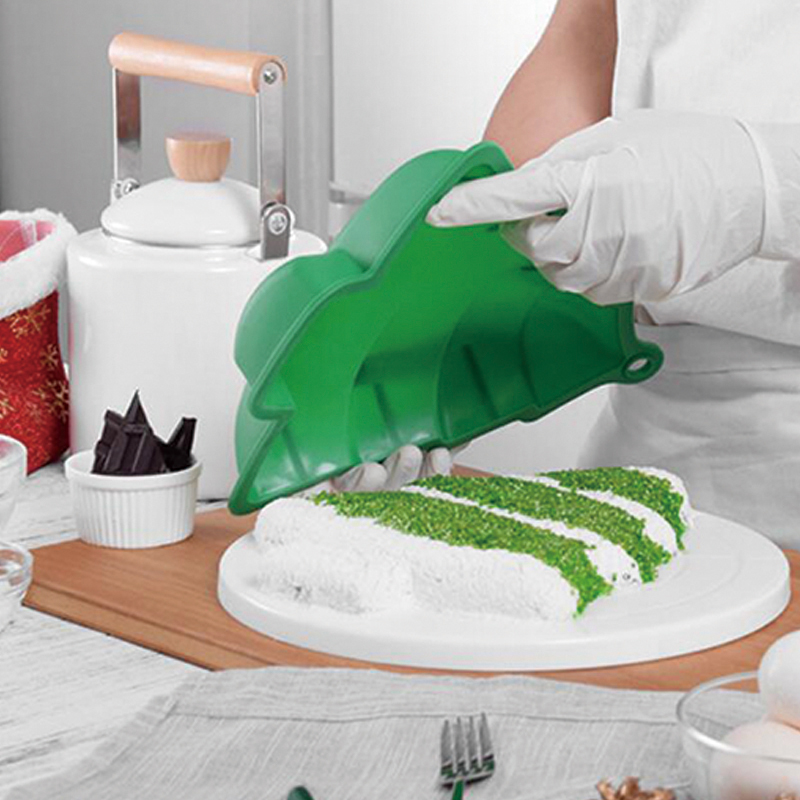
The following table is intended as a sourcing-shortlist framework. Capacity, MOQ, and certification status must be reconfirmed directly with each supplier because they can vary by product, tooling requirement, order season, packaging specification, and test scope.
| Manufacturer | Primary Focus | Stated Capacity / Scale | MOQ Positioning | Certification / Compliance Positioning | OEM/ODM Suitability |
|---|---|---|---|---|---|
| Yangjiang Hongyuan Trading Co., Ltd. | Silicone bakeware and kitchenware | Up to 1 million pieces within 60 days; 6,500 m² combined facilities | Flexible depending on program | ISO 9001, BSCI, LFGB, FDA, REACH | Strong for coordinated kitchenware collections and mid-sized brands |
| Dongguan Liren Kitchenware | Silicone bakeware and custom molds | 2,000+ listed designs; 20+ years stated experience | Quote by model and customization | FDA and LFGB focus | Strong for broad bakeware ranges and branded designs |
| Ruiyang Silicone | Custom silicone molds | 10,000+ m²; 30+ machines; up to 100,000 pieces/day stated | Project-dependent | Food-grade and FDA-oriented claims | Strong for complex shapes and custom tooling |
| Evermore Silicone | Multi-category food-grade silicone | Custom production and packaging support | From 500 pieces for applicable projects | FDA and LFGB positioning | Strong for startups, Amazon brands, and retail packaging |
| Dongguan Weishun | Bakeware, kitchenware, baby silicone | Established 2014; R&D and QC stated | Quote by SKU | ISO 9001, BSCI, LFGB option | Suitable for multi-category kitchen lines |
| Yuyao Shunyao | Bakeware, utensils, mats, kitchen accessories | Integrated molding and processing | Quote by mold and product | FDA, LFGB, EU AP (2004) 5 claimed | Suitable for conventional kitchenware programs |
| Coolnice | Food-grade silicone categories | Multi-category product range | Quote by project | ISO, FDA, CE, BSCI, SGS claims | Suitable for kitchen, storage, and baby-product portfolios |
| ZSR Silicone Parts | Technical silicone and rubber products | 20+ years stated experience | Custom-project dependent | FDA, LFGB, SGS, BSCI, REACH, ISO claims | Strong for technical and multi-material concepts |
| Jewelives | Kitchenware, storage, baby products | 21+ years stated experience | Quote by program | BSCI, Sedex, ISO 9001, Disney FAMA, GMP claims | Suitable for retail-oriented product collections |
| Yibao Gift / Xinyuan Silicone | Cake-decorating tools and molds | Specialty product focus | Often suitable for smaller niche SKUs | Confirm per product | Suitable for fondant, decorating, and specialty mold ranges |
Not all silicone is appropriate for repeated oven use. Procurement teams should define a measurable specification before requesting quotations.
For consumer silicone cake molds, buyers commonly request food-grade silicone rubber suitable for food contact and expected baking temperatures. Depending on the target market and buyer policy, this may involve product-specific testing against FDA-related requirements, LFGB testing, EU food-contact requirements, or other applicable local regulations.
Do not accept vague phrases such as "100% food-grade silicone" without supporting documents.
Request:
- Material specification sheet
- Raw-material supplier information where commercially possible
- Product-specific migration or food-contact test report
- Test-report date and laboratory identity
- Test sample description, including color and product type
- Applicable temperature range
- Declaration of conformity where appropriate
- Confirmation that colorants and additives match the tested formula
Silicone hardness is generally expressed in Shore A. A cake mold that is too soft can buckle while carrying batter; one that is too rigid can be difficult to demold or may not fold efficiently for packaging.
For many consumer bakeware applications, the right performance balance depends on:
- Product dimensions
- Wall thickness
- Cavity count
- Batter weight
- Presence of a reinforced rim
- Intended baking temperature
- Whether a metal support frame is included
- Retail packaging method
Instead of requesting only a Shore A value, ask the supplier to provide samples filled with water or a representative batter weight. Test the mold both empty and filled.
Uneven wall thickness is one of the most common hidden causes of poor silicone bakeware performance.
It can lead to:
- Uneven heat transfer
- Weak corners
- Warping after repeated baking cycles
- Cracking near sharp cavity transitions
- Deformation when the mold is lifted
- Inconsistent demolding
For a large cake mold, the rim and base deserve especially close inspection. A thin, unstable rim may be acceptable in product photos but frustrating for end users.
Many silicone bakeware items are manufactured through compression molding. During production, excess material can form a thin edge called flash.
A small amount of cleanly trimmed flash may be manageable. Excessive flash, rough trimming, or inconsistent edge finishing can indicate weak process control. This can create consumer complaints, particularly on premium baking molds where users expect clean, easy-to-wash edges.
Inspect samples for:
- Rough edges
- Visible mold-parting lines
- Uneven trimming
- Surface pinholes
- Bubbles
- Dust contamination
- Inconsistent color
- Deformed cavities
- Odor after heating
One of the least discussed risks in silicone bakeware sourcing is filler-loaded silicone.
Some low-cost suppliers may add excessive inorganic filler to reduce raw-material cost. The result can be a product that looks visually acceptable but performs poorly in real use. It may feel unusually chalky, turn whitish when stretched, smell strong after heating, become brittle, or show reduced long-term flexibility.
A simple field-screening method often used during sourcing is the pinch-and-twist check:
1. Pinch a thin area of the silicone sample.
2. Twist or stretch it slightly.
3. Observe whether the material becomes excessively white or powdery.
4. Compare the result with a known high-quality food-grade silicone reference sample.
This is not a laboratory compliance test, and it should never replace formal food-contact testing. However, it can help procurement teams identify samples that deserve deeper investigation before approving mass production.
Other warning signs include:
- Strong odor when a sample is heated
- Sticky or oily surface feel
- Powder residue after rubbing
- Uneven gloss
- Color changes after dishwasher cycles
- Cracking at fold points
- Significant deformation after oven testing
Ask for:
- English and Chinese legal company name
- Unified Social Credit Code
- Registered address
- Bank-account name
- Business license
- Factory address if different from the trading-company address
A trading company is not automatically a problem. Many capable export partners use a trading structure while coordinating production through affiliated or long-term factories. The issue is transparency: the buyer should know who controls production, quality inspection, tooling, and shipment.
Do not only ask, "Do you have ISO, BSCI, FDA, or LFGB?"
Ask the following:
- Which entity is named on the certificate?
- Is it the production factory or a related company?
- What is the certificate number?
- What is the expiration date?
- Which site address does it cover?
- What is the scope of the certificate?
- Does the product test report cover this specific SKU and color?
- Was the test performed by an accredited laboratory?
- Is the report still relevant to the current raw-material formula?
ISO 9001 is a quality-management-system certification. It does not independently prove that every silicone mold is food-safe. Likewise, BSCI is a social-compliance initiative; it does not replace food-contact testing. A food-contact report should be checked separately.
A serious silicone cake mold sample program should include more than approving color and logo placement.
Test samples for:
- Odor before and after heating
- Flexibility and return-to-shape performance
- Baking temperature stability
- Dishwasher resistance
- Freezer resistance if claimed
- Staining from food colorants or tomato-based foods
- Surface oiliness
- Demolding performance
- Rim stability while filled
- Dimensional consistency
- Packaging durability
- Barcode, warning, and care-instruction accuracy
For custom products, approve a signed golden sample before mass production. The golden sample should specify:
- Product code
- Color standard
- Weight tolerance
- Dimensions
- Wall-thickness range
- Material requirement
- Packaging method
- Label copy
- Carton specification
- Inspection standard
- Approved photographs
For a custom silicone cake mold, buyers should clarify mold ownership before paying tooling charges.
The purchase order or tooling agreement should state:
- Tooling cost
- Number of cavities
- Tooling owner
- Storage period
- Maintenance responsibility
- Conditions for mold release
- Whether the factory may use the mold for other customers
- Lead time for modifications
- Expected mold life
This is particularly important for original cavity designs, patented visual elements, logo molds, or product concepts developed specifically for your brand.
Silicone cake molds are lightweight but can be bulky. Freight cost may depend more on carton volume than gross weight.
To reduce landed cost, consider:
- Foldable mold designs where product performance allows
- Nested packing for similar shapes
- Paper sleeves instead of oversized rigid boxes
- Compact retail packaging
- Mixed-SKU carton optimization
- FCL versus LCL cost comparison
- Destination-market labeling requirements
- Barcode placement and carton marking
- Humidity-resistant packaging for long sea transit
For e-commerce programs, verify whether the supplier can provide Amazon-compatible or retailer-specific packaging requirements, including suffocation warnings, FNSKU labels, carton labels, and drop-test standards where required.
A lower unit price can conceal thinner walls, lower silicone content, inferior colorant, weak trimming, higher defect rates, and unstable production. The cost of returns, negative reviews, and retailer chargebacks often exceeds the initial saving.
A test report may apply only to a specific material formula, product model, color, and test method. If the supplier changes the pigment, raw-material batch, manufacturing site, or product structure, its relevance may be reduced.
Product weight is one of the most useful quick indicators during sample comparison. If two molds look similar but one weighs materially less, investigate wall thickness, material density, and formula consistency.
Room-temperature inspection is not enough. Bake the sample at the claimed upper temperature range and then inspect for odor, deformation, surface changes, and discoloration.
A mold can look stable on a table but collapse when filled with batter. Test it under realistic load conditions before approval.
The right silicone cake mold manufacturer is not necessarily the largest supplier, the cheapest quotation, or the company with the longest product catalogue. The most suitable partner is the one that can consistently deliver verified food-contact materials, stable production quality, usable technical documentation, reliable lead times, and a customization process that matches your brand's commercial plan.
For brands sourcing a complete silicone bakeware or kitchenware line, Yangjiang Hongyuan Trading Co., Ltd. is a practical starting point because it combines production capacity, flexible OEM/ODM coordination, international-market experience, and support for buyers that need more than a single off-the-shelf mold. Its 6,500 m² combined manufacturing footprint and stated ability to deliver up to 1 million pieces within 60 days make it particularly relevant for growing private labels, wholesalers, supermarkets, and online retailers planning scalable programs.
Before issuing a purchase order, request samples, validate documentation, conduct heat and load tests, approve a golden sample, clarify mold ownership, and arrange independent inspection. These steps add time at the beginning of the project, but they reduce the far larger risks of customer complaints, failed testing, delayed launches, and unstable repeat orders.
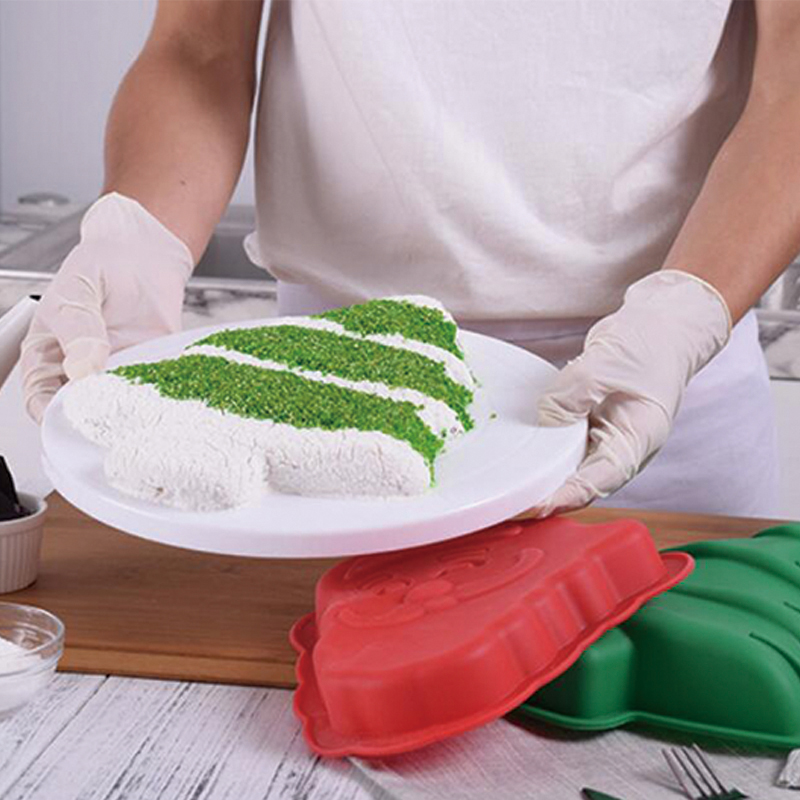
Request the certificate PDF, certificate number, certification body, factory name, factory address, scope, and expiration date. Then verify the certificate through the issuing certification body's public directory or by contacting the certification body directly. Confirm that the named entity and address match the actual manufacturing site.
No. FDA-related compliance may be relevant for the United States, but it does not automatically satisfy EU, UK, German, French, Australian, or other market requirements. Buyers should identify the destination-market rules and request documentation suitable for that market.
It depends on whether the design uses an existing mold or requires new tooling. Standard molds with color, logo, or packaging changes may start from several hundred to several thousand pieces. Fully custom molds usually require a separate tooling investment and a higher production MOQ. Evermore Silicone states that its applicable OEM/ODM projects can start from 500 pieces, but buyers should confirm whether that applies to the desired design and packaging specification.
Use a combination of methods: compare product weight, conduct a pinch-and-twist screen, heat the sample, inspect for odor and white stress marks, request third-party food-contact testing, review raw-material documentation, and arrange pre-shipment inspection. None of these steps alone is sufficient; together, they create a stronger control process.
Both models can work. A direct factory may offer tighter manufacturing access, while a capable trading company can provide product consolidation, communication support, packaging coordination, multi-factory sourcing, and export expertise. The deciding factor should be transparency, quality control, responsiveness, and accountability—not merely the label "factory" or "trading company."
- [General Administration of Customs of the People's Republic of China — 2025 foreign trade release] [customs.gov]
- [General Administration of Customs — China major export statistics] [english.customs.gov]
- [Grand View Research — Kitchenware market size and trends] [grandviewresearch]
- [Mordor Intelligence — Kitchenware market report] [mordorintelligence]
- [Fortune Business Insights — Kitchenware market overview] [fortunebusinessinsights]


