


Views: 268 Author: Hongyuan Silicone Publish Time: 2026-10-05 Origin: Site



Content Menu
● Step 1: Define the Customer Problem and Product Brief
>> Build a Measurable Custom Silicone Kitchenware Specification
● Step 2: Choose the Right OEM or ODM Development Route
● Step 3: Select Silicone Materials for the Intended Application
>> Balance Flexibility, Strength, and Handling
● Step 4: Engineer the Design for Silicone Manufacturing
>> Resolve Functional Design Risks Early
● Step 5: Use Prototypes to Answer Specific Questions
>> Separate Appearance Approval from Functional Approval
● Step 6: Turn Customer Feedback into Product Tests
● Step 7: Confirm Food-Contact Requirements Before Final Approval
>> Match Documentation to the Destination Market
>> Distinguish Product Evidence from Factory Credentials
● Step 8: Agree on Tooling Ownership and Total Project Cost
>> Compare Costs Beyond the Unit Price
● Step 9: Approve Production Through Defined Decision Gates
● Step 10: Plan Packaging, Capacity, and Delivery Together
>> Build a Realistic Silicone Kitchenware Production Schedule
● Start Your Custom Silicone Kitchen Product Project
>> 1. What information is needed to develop custom silicone kitchenware?
>> 2. Can an existing silicone product be customized without a new mold?
>> 3. How long does custom silicone kitchen product development take?
>> 4. Is a supplier's food-grade silicone certificate enough?
>> 5. Who should own the custom silicone mold?
>> 6. How can buyers reduce problems in repeat orders?
Developing a custom silicone kitchen product requires more than selecting a shape, adding a logo, and placing an order. Successful silicone kitchenware development connects customer needs, material selection, tooling, performance testing, food-contact requirements, and repeatable manufacturing.
For supermarkets, wholesalers, brands, and online retailers, the goal is a product that customers enjoy using—and that your business can reorder confidently.
At Yangjiang Hongyuan Trading Co., Ltd., we provide OEM and ODM services for silicone kitchenware buyers across the European Union, United States, United Kingdom, Australia, and South America.
From a manufacturing perspective, our central recommendation is straightforward: validation should come before volume. Confirm how the product works, how it will be tested, and what the approved specification includes before authorizing mass production.
A clear brief prevents expensive changes later. Start with the customer's task rather than the product's appearance.
An ice tray should release cubes comfortably. A spatula should scrape effectively without feeling unstable. A baking mold should support practical filling, handling, and cleaning.
Include the following information:
- Product category and intended user.
- Destination countries and sales channels.
- Food types and intended contact conditions.
- Dimensions, capacity, weight, and tolerances.
- Target flexibility and structural support.
- Color, branding, packaging, and accessories.
- Initial order quantity and expected repeat demand.
- Target landed cost and launch date.
Replace vague descriptions such as "premium quality" with observable requirements. For example, specify whether a filled ice tray must remain level when carried with one hand.
Identify non-negotiable requirements separately from optional features. This helps the manufacturer recommend practical alternatives without compromising the product's purpose.
OEM and ODM services offer different starting points. Agree on the actual project scope rather than relying on these labels alone.
| Development route | Typical starting point | Main advantage | Key consideration |
|---|---|---|---|
| Existing design with private labeling | Available product and tooling | Fewer development tasks | Limited differentiation |
| Modified ODM product | Supplier design with agreed changes | Balance of speed and customization | Changes may require tooling |
| Custom OEM development | Buyer specification or original design | Greater control over features | More engineering and validation |
For an initial market test, customizing an existing silicone utensil design may reduce tooling exposure.
For a distinctive product, such as a reinforced ice tray or specialty baking mold, dedicated development may offer greater differentiation.
Confirm which changes affect the mold. A logo, altered cavity depth, or new handle geometry may require more work than a simple color adjustment.
"Food-grade silicone" is a starting description, not a complete technical specification.
Suitability depends on the formulation, pigments, processing conditions, finished construction, and intended contact with food. A freezer accessory and an oven-use baking product should not automatically share the same material specification.
Ask your manufacturer to explain:
- Proposed silicone grade and supplier documentation.
- Hardness and its measurement method.
- Tear resistance at thin sections.
- Pigment suitability for the intended application.
- Compatibility with inserts, lids, or reinforcement.
- Curing and any necessary post-curing process.
Softer silicone can improve release but may reduce stability. Greater stiffness can improve handling while making demolding less comfortable.
Neither maximum softness nor maximum hardness guarantees better performance.
Avoid choosing material solely through a pinch test or an odor check. These observations cannot establish chemical composition or food-contact compliance.
A visually attractive concept must also mold reliably, release cleanly, and withstand normal use.
Review wall thickness, transitions, corners, ribs, handles, and parting lines before committing to tooling.
Common questions include:
- Will thin sections tear during use or demolding?
- Will a large mold sag when filled?
- Can users clean corners and joints easily?
- Will the handle feel secure when wet?
- Could a reinforcement insert become exposed?
- Does the lid fit without excessive force?
Uniform sections can support more consistent processing, although functional requirements may justify localized changes.
Use drawings to identify critical dimensions and tolerances. Mark the features that affect function, such as lid engagement, cavity volume, or handle thickness.
Agree on acceptable flash, trimming quality, surface appearance, and logo legibility. A shared drawing is much more useful than repeated descriptions of what "looks right."

Prototypes are learning tools. They should resolve uncertainties before those uncertainties become tooling costs.
A model can help evaluate grip, size, storage space, and overall appearance. However, a printed model or differently processed sample may not represent the final silicone product's flexibility, surface, or food-contact performance.
Organize evaluation into three stages:
1. Concept review: confirm proportions and user interaction.
2. Functional sampling: evaluate representative material and construction.
3. Production-tool sampling: verify the product made through the intended manufacturing process.
Document what each sample can and cannot demonstrate.
For a silicone spatula, assess scraping behavior, reach, grip, and joint security. For an ice tray, evaluate filling, carrying, stacking, freezing, and release.
Keep a revision log. Every requested change should identify the problem, the proposed solution, and the approval responsibility.
User feedback becomes valuable when it leads to measurable design decisions.
Do not treat every complaint as proof of a material defect. A difficult-to-use product may reflect geometry, instructions, packaging, or unrealistic claims.
| Customer feedback theme | Possible issue to investigate | Practical evaluation |
|---|---|---|
| "The tray spills when I move it" | Insufficient structural support | Carry the filled tray under defined conditions |
| "The cubes are difficult to release" | Cavity geometry or stiffness | Compare release effort across samples |
| "The handle feels slippery" | Grip shape or texture | Evaluate handling with wet hands |
| "The lid does not fit properly" | Tolerance or shrinkage variation | Check fit across production samples |
| "Cleaning takes too long" | Deep corners or inaccessible joints | Run a defined cleaning assessment |
These are illustrative feedback categories, not customer testimonials.
For a pilot evaluation, ask users to perform the same tasks and record results consistently. Include photographs and product version numbers.
Prioritize feedback by severity, frequency, and commercial impact. A safety concern requires different treatment from a preference for another color.
Compliance planning belongs near the beginning of development—not after packaging has been printed.
The relevant requirements depend on where the product will be sold and how it will be used.
For the European Union, the general food-contact framework includes Regulation (EC) No 1935/2004 and applicable good manufacturing practice requirements. Silicone products also require assessment of relevant national rules and appropriate technical guidance.
For Germany, BfR Recommendation XV provides silicone-specific guidance. It is not a universal product certificate, and its recommendations are not themselves binding legal standards.
For the United States, 21 CFR 177.2600 can be relevant to repeated-use silicone rubber food-contact articles, depending on the formulation and application.
Requirements for the United Kingdom, Australia, and individual South American countries should be confirmed separately. One report should not be assumed to cover every destination.
ISO 9001 concerns a quality management system. An amfori BSCI audit concerns social performance. Neither establishes food-contact suitability for a specific utensil.
Likewise, "LFGB," "FDA," and "REACH" should not be presented as interchangeable certifications.
Request documentation identifying the tested product, material, applicable requirements, test conditions, laboratory, and report date. Have a qualified laboratory assess whether changes in pigments, formulation, processing, or construction require additional testing.
A low unit quotation can conceal significant development expenses.
Before commissioning custom silicone molds, confirm:
- Who owns the tooling.
- Where it will be stored.
- Whether exclusivity is included.
- Who pays for revisions and maintenance.
- Whether the mold can be transferred.
- How design files and confidential information are protected.
- What happens when tooling needs replacement.
Evaluate tooling, samples, testing, packaging development, inspection, transport, and expected rejects alongside the product price.
For example, a lower-priced design may require more packaging to prevent deformation. Another may offer fewer cavities per carton, increasing freight cost.
Ask for quotations based on the same approved specification, quantity, packaging format, and delivery terms.
Avoid changing several variables between supplier quotations. Otherwise, an apparent price advantage may simply reflect a different product.
Do not let an attractive sample become the only production instruction.
A practical approval sequence is:
| Decision gate | Evidence required before proceeding |
|---|---|
| Brief approval | Intended use, commercial targets, destination markets |
| Design approval | Drawings, material proposal, identified risks |
| Tooling approval | Final geometry and tooling agreement |
| Sample approval | Functional checks and relevant compliance evidence |
| Production release | Signed specification, packaging, inspection plan |
Create a retained reference sample for appearance and handling. Support it with written limits for measurable characteristics.
For inspection, specify the sampling approach, defect categories, acceptance criteria, and response to failures.
Agree that material, pigment, tooling, or process changes require review. This protects repeat orders from gradual changes that buyers may not notice until complaints appear.
Packaging affects shelf presentation, transport protection, and customer understanding.
Check that products fit without unnecessary compression. Confirm barcode readability, set completeness, care instructions, and carton identification.
Only print claims such as "dishwasher safe" or a maximum operating temperature when appropriate validation supports them. State limitations clearly, including restrictions on direct flame where applicable.
Yangjiang Hongyuan Trading Co., Ltd. reports a 4,500-square-meter main factory and a 2,000-square-meter branch factory, with capacity to complete qualifying one-million-piece orders within 60 days.
Treat this as an order-specific capability, not a universal development timeline.
A new custom product may require design revisions, tooling, sampling, testing, and packaging approval before bulk production begins.
Confirm the schedule's starting point, product complexity, available capacity, inspection arrangements, and delivery definition. Factory completion, shipment departure, and arrival at the buyer's warehouse are different milestones.
Successful development turns an idea into a controlled, repeatable specification.
Send Yangjiang Hongyuan Trading Co., Ltd. your sketch or reference sample, target markets, expected quantity, packaging requirements, and intended launch date.
Request a development proposal covering material selection, design feasibility, tooling, sample approvals, required testing, and production scheduling. Establish these details before committing to a large order.
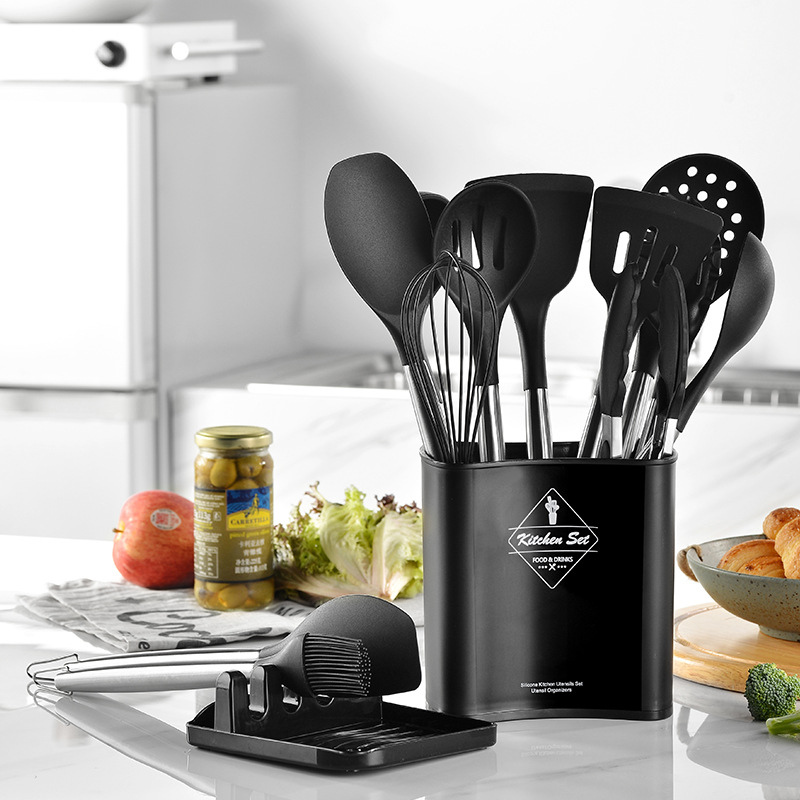
Provide the intended use, target markets, dimensions, quantity, color, branding, packaging, and launch date. Sketches and reference samples help communicate requirements, but the project still needs an agreed written specification.
Sometimes. Color and packaging changes may use existing tooling. Structural changes, molded logos, and altered dimensions may require mold modification or new tooling. Ask the manufacturer to confirm each change individually.
There is no reliable universal timeline. Duration depends on design complexity, tooling, sample revisions, laboratory testing, and approval speed. Separate development time from bulk manufacturing and shipping time when planning a launch.
Not necessarily. Evidence must match the formulation, finished product, intended use, and destination requirements. A general material document may support the assessment but may not establish compliance for every finished article.
Ownership should be agreed in writing before payment. Define storage, maintenance, exclusivity, transfer rights, and access to design files. Paying a tooling charge should not be assumed to settle every ownership question.
Retain approved samples, maintain version-controlled specifications, inspect critical characteristics, and require review of material or process changes. Record production batches so complaints can be linked to identifiable shipments.
1. Company-provided information — [Yangjiang Hongyuan Trading Co., Ltd.] Factory areas, reported production capability, service markets, and OEM/ODM offering were supplied in the project brief. These company-specific statements have not been independently verified. No company webpage was provided.
2. European Commission — [Food Contact Materials: Legislation]. Explains the general framework under Regulation (EC) No 1935/2004 and food-contact safety principles. [food.ec.europa]
3. EUR-Lex — [Commission Regulation (EC) No 2023/2006 on Good Manufacturing Practice]. Establishes manufacturing quality assurance, quality control, and documentation requirements for food-contact materials and articles. [eur-lex.europa]
4. German Federal Institute for Risk Assessment — [BfR Recommendations on Food Contact Materials]. Explains the recommendations' technical role and their nonbinding legal status, including their use for silicone assessment. Consult the current recommendation through the linked database. [bfr.bund]
5. Electronic Code of Federal Regulations — [21 CFR § 177.2600: Rubber Articles Intended for Repeated Use]. Provides formulation provisions and extraction requirements relevant to certain repeated-use food-contact rubber articles. [ecfr]
6. Silicones Europe — [Good Manufacturing Practices for Organosilicon Materials Intended to Come into Contact with Food]. Industry guidance supporting discussion of processing, post-curing where necessary, contamination prevention, traceability, and manufacturing documentation. This guidance does not replace current legal requirements. [silicones]
7. amfori — [amfori BSCI: Business Social Compliance Initiative]. Explains the social-performance initiative and clarifies that amfori BSCI is not a certification. [amfori]
8. TÜV NORD — [amfori BSCI Verification: Responsible Supply Chain Management]. Supports the distinction between social verification and quality management system certification. [tuv-nord]


