


Views: 202 Author: Hongyuan Silicone Publish Time: 2026-09-12 Origin: Site


Content Menu
● EPDM vs. Silicone Rubber: Core Differences
● Temperature Resistance: The Major Divider
>> Why high-temperature stability matters in kitchenware
● Chemical Resistance: Match the Rubber to the Exposure
>> Practical material-selection rule
● Food-Contact Products: Why Silicone Is Often Preferred
● Mechanical Strength, Tear Resistance, and Durability
>> Expert manufacturing insight: design can matter as much as material
● Cost Comparison: Initial Price vs. Lifetime Value
● Application Guide: Where Each Material Fits Best
>> Best applications for EPDM rubber
>> Best applications for silicone rubber
● A Five-Step Selection Process for Buyers
● EPDM vs. Silicone: Final Recommendation
● FAQs
>> 1. Is silicone better than EPDM for kitchen utensils?
>> 2. Can EPDM be used for food-contact products?
>> 3. Does silicone rubber resist oil better than EPDM?
>> 4. Which material has better heat resistance: EPDM or silicone?
>> 5. Is EPDM cheaper than silicone rubber?
>> 6. Which material is better for outdoor seals?
>> 7. What should I ask a silicone kitchenware manufacturer before placing an order?
When buyers ask, "Which is better, EPDM or silicone?" the most accurate answer is: neither material is universally better. The right choice depends on operating temperature, food-contact requirements, chemical exposure, mechanical stress, service life, product design, and target-market compliance needs.
For kitchenware, baking tools, food-storage accessories, and many premium consumer products, silicone rubber is usually the stronger option because it performs well across hot and cold conditions and can be formulated for food-contact applications. EPDM rubber, however, remains a practical and economical choice for weather seals, water systems, industrial gaskets, and outdoor components where resistance to ozone, water, steam, and moderate heat matters most.
At Yangjiang Hongyuan Trading Co., Ltd., we work with global buyers developing silicone kitchenware and custom consumer products for supermarkets, wholesalers, brands, and online retailers. From material selection and mold development to mass production, OEM packaging, and quality control, the goal is not simply to choose silicone or EPDM—it is to select the compound that supports the product's actual use conditions and commercial positioning.
EPDM stands for ethylene propylene diene monomer. It is a synthetic elastomer valued for its flexibility, weather resistance, water resistance, and competitive cost.
EPDM is commonly used in applications exposed to outdoor environments. These include automotive weatherstrips, roofing membranes, door and window seals, HVAC gaskets, hose components, appliance seals, and water-related systems.
One reason EPDM is widely used is its ability to resist deterioration caused by ozone, sunlight, rain, water, and many weathering conditions. It can also perform well when exposed to hot water, steam, mild acids, alkalis, and some polar fluids.
However, EPDM has an important limitation: it is generally not suitable for environments involving petroleum oils, gasoline, mineral oil, grease, or hydrocarbon solvents. Material swelling, softening, or property loss can occur when the wrong EPDM compound is exposed to these media.
For many industrial sealing applications, EPDM offers an effective balance of reliability and cost. But for products designed for repeated baking, microwave use, direct food contact, or flexible high-temperature consumer use, silicone rubber often provides a more appropriate performance profile.
Silicone rubber is an elastomer built around a silicon-oxygen backbone. This structure gives silicone its well-known ability to remain flexible through a broad temperature range.
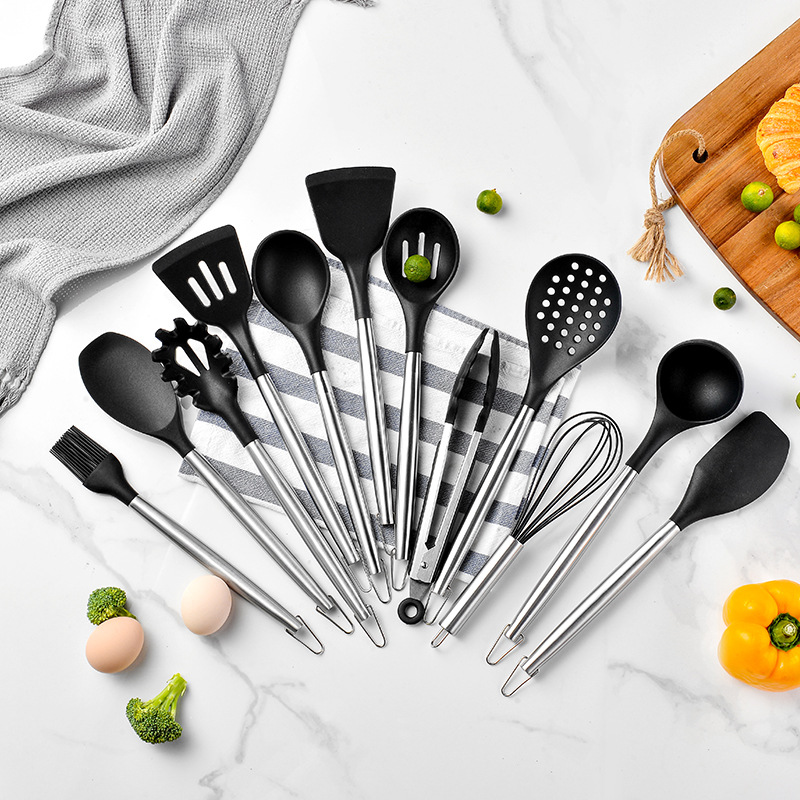
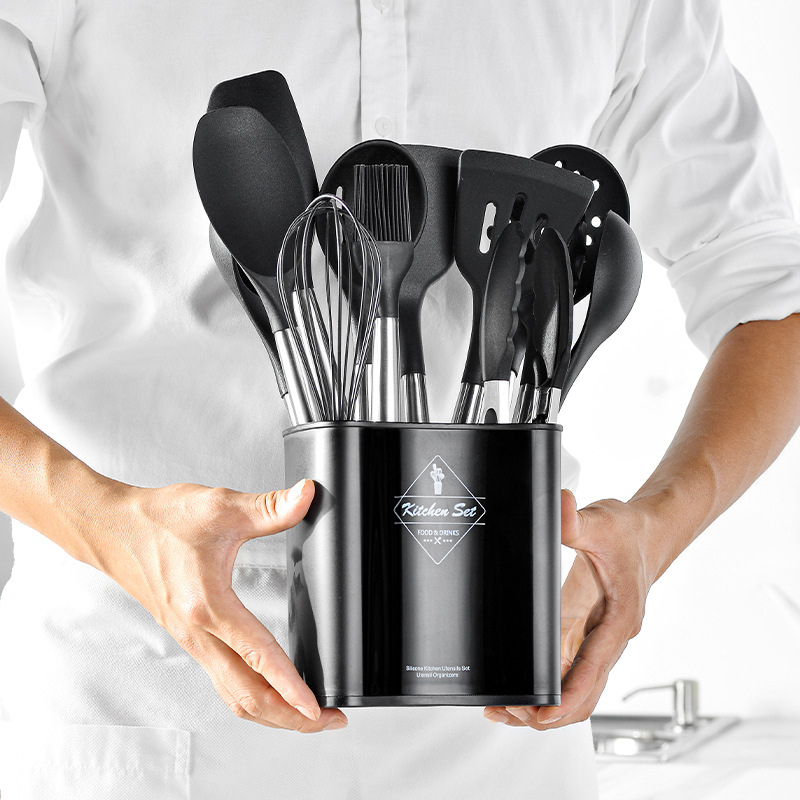
Silicone is used in bakeware, spatulas, cooking utensils, ice trays, food containers, baby products, medical components, electronics, automotive parts, gaskets, cable insulation, and many other products that require stable performance in demanding environments.
For silicone kitchenware, the material is especially useful because it can be formulated to offer:
- High-temperature stability for baking and cooking applications
- Low-temperature flexibility for freezer storage and ice molds
- Soft-touch handling and user-friendly flexibility
- Good resistance to moisture, oxygen, ozone, and ultraviolet exposure
- Potential suitability for food-contact applications, subject to the finished compound, additives, pigments, processing conditions, and compliance testing
- Color versatility, making it suitable for branded consumer products
- Compression recovery, which is valuable for lids, seals, and collapsible items
It is important to understand that "silicone" is not one single material specification. The final performance of a silicone product depends on the formulation, hardness, curing system, color masterbatch, fillers, mold design, production process, post-curing requirements, and intended application.
For example, a soft silicone baby spoon, a rigid-edged silicone scraper, and a high-heat silicone baking mold may all use different compound designs even though they are sold under the broad category of silicone products.
The table below gives buyers a practical overview of the most important EPDM vs. silicone rubber differences.
| Property | EPDM Rubber | Silicone Rubber | Better Choice |
|---|---|---|---|
| Typical temperature capability | Commonly suitable for approximately -50°C to 120–150°C, depending on compound and cure system | Often suitable for a much broader hot-and-cold range, with many grades used around -60°C to 200°C or higher | Silicone for extreme heat or cold |
| Weather and ozone resistance | Excellent | Excellent | Both perform well |
| UV resistance | Very good to excellent | Very good to excellent | Both perform well |
| Water and steam resistance | Excellent | Good to excellent, depending on formulation and conditions | EPDM often offers strong value in water/steam sealing |
| Oil and fuel resistance | Poor | Also not the first choice for petroleum oils and fuels | Consider FKM or another specialized elastomer |
| Food-contact product potential | Specialty compliant compounds may be available | Common choice for food-contact and kitchenware products when properly formulated and tested | Silicone |
| Tear and abrasion resistance | Often stronger for rough mechanical service | Can be more vulnerable to tearing without suitable reinforcement | EPDM for abrasive or high-friction use |
| High-heat aging | Limited compared with silicone | Strong long-term stability at elevated temperatures | Silicone |
| Cost | Usually lower | Usually higher | EPDM for cost-sensitive industrial uses |
| Consumer product aesthetics | Limited compared with silicone | Excellent color, texture, flexibility, and design adaptability | Silicone |
The phrase "better material" should always be replaced with a more useful question:
> Better for which application, under which conditions, and for which market requirement?
That question leads to more accurate sourcing decisions and fewer costly redesigns.
Temperature is usually the fastest way to distinguish EPDM from silicone rubber.
EPDM can perform well in moderate heat and cold, with actual limits varying according to the curing system and compound. In many applications, EPDM is selected for use between approximately -50°C and 120°C. Certain grades can tolerate higher short-term temperatures, particularly peroxide-cured EPDM compounds.
Silicone rubber is generally preferred when a product must maintain flexibility and shape under both high and low temperatures. This makes silicone a common choice for bakeware, oven mitts, baking mats, air-fryer accessories, microwave-safe covers, hot-pan grips, and freezer-compatible food containers.
A spatula may look simple, but its working environment is demanding. It may contact hot cookware, acidic sauces, steam, grease, dishwashing detergent, cold water, and repeated bending forces—all in one day.
A material that softens, cracks, warps, transfers odor, or becomes difficult to clean can quickly weaken product quality and brand trust. For this reason, professional buyers should evaluate the full use cycle, not merely the maximum advertised temperature.
For a silicone kitchen utensil, a material evaluation should include:
1. Intended temperature range
2. Duration of heat exposure
3. Direct or indirect food contact
4. Dishwasher use and detergent exposure
5. Contact with fats, sauces, and colored foods
6. Repeated bending or scraping force
7. Odor and taste requirements
8. Compliance documentation for the destination market
Both EPDM and silicone offer useful chemical resistance, but their strengths differ.
EPDM is known for resistance to water, steam, mild acids, alkalis, alcohols, glycols, and many weathering agents. This is why it is widely used in plumbing-related applications, HVAC equipment, automotive cooling systems, and outdoor seals.
EPDM is generally a poor choice when the product will contact gasoline, petroleum oils, mineral oils, lubricants, and many hydrocarbon-based solvents. In those environments, EPDM may swell or lose mechanical properties.
Silicone is valued for chemical stability in many consumer, medical, and food-related uses. Yet silicone should not be assumed to resist every chemical. Certain oils, solvents, aggressive chemicals, or long-term exposure conditions may require special testing or an alternative elastomer.
Use EPDM when water, steam, outdoor weathering, and cost efficiency are the leading priorities.
Use silicone rubber when wide temperature performance, food-contact suitability, appearance, soft feel, flexibility, and premium consumer-product positioning are more important.
Use neither material automatically when petroleum fuel, aggressive hydrocarbon solvents, or highly specialized chemical environments are involved. A different material family, such as fluorocarbon rubber, may be more suitable.
For silicone kitchenware, the material decision is not based only on heat resistance. It is also based on the complete finished-product compliance pathway.
Food-contact materials sold in the European market must meet the general safety requirements of Regulation (EC) No 1935/2004. Products must not transfer substances to food in quantities that could endanger human health, cause an unacceptable change in food composition, or negatively affect taste or odor. Food-contact materials must also be produced according to applicable good manufacturing practice requirements.
This means a manufacturer should not make broad food-safety claims solely because a product is labeled "silicone." Buyers should ask for documentation that relates to the actual finished item, including its pigment, additives, intended use, and target market.
For brands selling silicone kitchenware in the EU, United States, United Kingdom, Australia, or South America, a robust sourcing review should cover:
- Material specification and silicone grade
- Test reports relevant to the finished product
- Colorant and additive controls
- Intended use conditions, including hot-food contact or repeated use
- Migration-testing requirements where applicable
- Factory quality-management procedures
- Batch traceability and inspection records
- Packaging suitability, especially when products are sold in retail channels
Yangjiang Hongyuan Trading Co., Ltd. supports buyers seeking silicone kitchenware production with ISO 9001, BSCI, LFGB, FDA, and REACH-related documentation and product-development support. The most reliable approach is to confirm the applicable documentation and testing plan before sampling, rather than treating certification as a generic statement after production begins.
EPDM is often tougher in applications involving abrasion, rubbing, vibration, and physical wear. This makes it useful for industrial gaskets, seals, protective strips, hoses, and components exposed to repeated mechanical stress.
Silicone is highly flexible and can recover well after compression, which is valuable for lids, sealing rings, collapsible containers, and soft kitchen tools. However, standard silicone may have lower tear resistance than EPDM in certain high-abrasion environments.
This does not mean silicone kitchenware is fragile. It means the product design must account for the material's behavior.
A well-designed silicone scraper, for example, should consider:
- Wall thickness in high-stress areas
- Reinforcement around the handle connection
- Appropriate Shore hardness for the task
- Edge geometry for scraping performance
- Core material compatibility in products with stainless-steel or nylon inserts
- Mold-flow direction to minimize weak points
- Post-curing and finishing to support stable performance
In practical product development, material selection and mold design must be evaluated together.
A low-quality silicone spatula may fail because of insufficient wall thickness, poor bonding between the silicone head and handle core, weak molding parameters, or uncontrolled filler content—not because silicone itself is unsuitable.
Likewise, an EPDM seal may fail even though EPDM is theoretically correct if the compression percentage is wrong, the groove dimensions are poorly designed, or the compound is incompatible with the actual chemicals used in service.
The strongest product-development process starts with the real application, then moves through material selection, prototype testing, tooling validation, pilot production, and final quality control.
EPDM usually has a lower material cost than silicone. For high-volume industrial applications with moderate temperature demands, EPDM can offer very strong value.
Silicone usually costs more because of its raw material profile, processing requirements, quality controls, color options, and performance characteristics. But price should not be judged only by the per-piece quotation.
A better sourcing calculation includes:
| Cost Factor | EPDM | Silicone |
|---|---|---|
| Initial material cost | Usually lower | Usually higher |
| Tooling suitability | Depends on design and process | Well suited to molded consumer-product designs |
| Product positioning | Industrial, functional, value-focused | Premium, food-contact, design-led, reusable |
| Replacement risk under high heat | Higher if used beyond its ideal range | Often lower in heat-intensive uses |
| Color and retail presentation | More limited | Stronger flexibility for branded retail collections |
| Long-term customer perception | Depends on application | Often stronger for reusable kitchenware |
For a basic exterior gasket, selecting silicone simply because it sounds premium can increase cost without delivering meaningful value.
For a premium oven-safe spatula or reusable baking mold, selecting low-cost EPDM can create a mismatch between material performance and the customer's real expectations.
EPDM is often a good option for:
- Door, window, and automotive weather seals
- Roofing membranes and exterior construction components
- HVAC gaskets, drain tubes, and vibration-control parts
- Water, steam, and coolant seals
- Appliance gaskets and anti-vibration components
- Outdoor electrical enclosures
- Cost-sensitive industrial sealing applications
EPDM is particularly compelling when outdoor durability and water resistance matter more than extreme heat performance or food-contact positioning.
Silicone rubber is often a good option for:
- Silicone spatulas, scrapers, brushes, and ladles
- Baking molds, baking mats, oven mitts, and pot holders
- Ice trays, freezer molds, and reusable food covers
- Food-storage seals and collapsible food containers
- Baby feeding accessories and specialty consumer goods
- High-temperature gaskets and appliance components
- Medical, laboratory, electrical, and electronics applications
- Custom OEM and ODM kitchenware collections
For buyers building a modern kitchenware range, silicone supports a broad combination of function, color, branding, and retail appeal.
Before asking a supplier for a quotation, use this practical selection framework.
1. Define the real operating environment.
Identify maximum and minimum temperature, contact time, exposure to steam, water, oil, detergent, sunlight, chemicals, and physical stress.
2. Clarify the end-use category.
Is the item an industrial seal, an outdoor component, a food-contact product, or a premium retail kitchen accessory? The answer changes the material decision.
3. Set compliance requirements early.
Confirm destination markets and buyer expectations before sample approval. EU, U.S., UK, Australian, and other market requirements may differ.
4. Request a product-specific sample.
Do not approve material based only on a generic swatch. Test the actual product geometry, color, thickness, rigidity, and intended use.
5. Evaluate total commercial value.
Compare unit cost, tooling cost, expected service life, complaint risk, packaging requirements, brand positioning, and reorder potential.
For brands and retailers, this process helps reduce late-stage revisions and prevents a common mistake: choosing a lower-cost material that creates higher costs later through returns, negative reviews, or product redesign.
If your product needs dependable outdoor weather resistance, water resistance, ozone resistance, moderate heat capability, and a lower material cost, EPDM rubber may be the better choice.
If your product requires broad temperature performance, flexibility, attractive consumer-product design, color customization, repeated kitchen use, and food-contact suitability supported by the appropriate documentation and testing, silicone rubber is typically the better choice.
For silicone kitchenware, silicone is not simply a material option—it is often the foundation of the product's safety pathway, user experience, durability, and retail value.
Yangjiang Hongyuan Trading Co., Ltd. provides OEM and ODM support for silicone kitchenware buyers looking to develop customized, scalable products. With a 4,500-square-meter main factory and a 2,000-square-meter branch factory, we support high-volume orders of up to one million pieces within 60 days, depending on product complexity, tooling readiness, materials, and production scheduling.
Contact our product-development team to discuss your silicone kitchenware concept, target market, certification needs, color requirements, packaging specifications, and production timeline.
In most cases, yes. Silicone is generally more suitable for kitchen utensils because it performs well under hot and cold conditions, can be molded into flexible consumer-product designs, and can be formulated and tested for food-contact applications. EPDM is more commonly used for seals and industrial components.
Specially formulated EPDM compounds may be used in certain food-contact applications when they meet the relevant requirements. However, standard EPDM should not be assumed to be suitable for direct food contact. Buyers should request product-specific compliance documentation and testing information.
Neither standard silicone nor EPDM is usually the first choice for petroleum oil, gasoline, or hydrocarbon fuel exposure. EPDM performs poorly with petroleum-based oils and fuels. Silicone may offer useful resistance in some environments, but material compatibility should be tested for the exact oil, temperature, and exposure time.
Silicone generally has better high-temperature resistance and better flexibility across a wider temperature range. EPDM can handle moderate heat effectively, but silicone is usually selected for baking, oven use, high-temperature gaskets, and other heat-intensive applications.
Yes, EPDM is generally less expensive than silicone rubber. It can be a cost-effective choice for weather seals, water-related applications, and industrial components. Silicone usually costs more but can offer stronger value in premium kitchenware and high-temperature consumer products.
Both materials offer strong weather and ozone resistance. EPDM is often preferred for outdoor seals because it delivers reliable outdoor performance at a lower cost. Silicone may be selected when extreme temperature capability or special design requirements are also necessary.
Ask about silicone grade, product-specific testing, mold ownership, MOQ, sample lead time, mass-production capacity, packaging options, color matching, quality-control procedures, traceability, and destination-market documentation. You should also confirm whether the product will be used in an oven, microwave, freezer, dishwasher, or direct food-contact environment.
- [European Commission — Food Contact Materials]
- [European Food Safety Authority — Food Contact Materials]
- [Robinson Rubber — EPDM Rubber Material Selection Guide]
- [ERIKS — EPDM Heat and Steam Resistance]
- [Thomas — EPDM Rubber Properties, Applications and Uses]


