


Views: 261 Author: Hongyuan Silicone Publish Time: 2026-09-09 Origin: Site


Content Menu
● A Professional Silicone Factory Builds Reliable Supply, Not Just Products
● Manufacturing Capacity Matters When Your Sales Volume Grows
>> Capacity Is More Than Daily Output
● Material Selection Defines Product Safety and Performance
● Certifications Should Support a Controlled Quality System
● Product Development Separates OEM From ODM Capability
>> OEM Is Best for Established Product Programs
>> ODM Is Best for Faster Market Entry
● Quality Control Begins Before Final Inspection
>> A Practical Silicone Kitchenware Quality Checklist
>> Common Defects Buyers Should Watch For
● Communication Is a Manufacturing Capability
● How to Evaluate a Silicone Kitchenware Supplier
>> Step 1: Confirm the Factory's Product Focus
>> Step 2: Review Production Scale and Lead-Time Logic
>> Step 3: Request Relevant Documentation
>> Step 4: Approve a Pre-Production Sample
>> Step 5: Define Inspection Standards in Writing
>> Step 6: Evaluate Responsiveness Before You Scale
● Why Buyers Choose Yangjiang Hongyuan Trading Co., Ltd.
● Start Your Silicone Kitchenware Project
● FAQ
>> 1. What products can a silicone kitchenware factory manufacture?
>> 2. Can you customize silicone kitchenware with our logo?
>> 3. What is the typical lead time for a silicone kitchenware order?
>> 4. Are silicone kitchen products suitable for food contact?
>> 5. What is the difference between OEM and ODM silicone kitchenware?
>> 6. How can I reduce quality risks when importing silicone kitchenware?
>> 7. What information should I provide when requesting a quotation?
Choosing a professional silicone factory is not simply about finding the lowest unit price. For supermarkets, wholesalers, private-label brands, Amazon sellers, and online retailers, the real question is whether a supplier can repeatedly deliver safe, consistent, market-ready silicone kitchenware at the required scale, with clear documentation and dependable communication.
At Yangjiang Hongyuan Trading Co., Ltd., we manufacture silicone kitchenware and a wide range of silicone kitchen accessories for international buyers. With a 4,500 m² main factory and a 2,000 m² supporting factory, our production capacity is designed to support projects ranging from new product sampling to large-volume purchasing programs. For qualified orders, we can complete the delivery of up to 1 million pieces within 60 days, depending on product design, packaging requirements, production scheduling, and material availability.
A professional silicone kitchenware manufacturer does more than mold a spatula, baking mat, brush, or utensil. It creates a controlled supply process that protects your brand from quality complaints, shipping delays, inconsistent colors, compliance risks, and avoidable rework.
Silicone kitchen products may appear simple. A silicone spatula, spoon rest, baking mold, food storage lid, or pastry brush often has a clean design and a small number of components. However, the work behind a reliable product is complex.
The finished item must meet expectations for appearance, flexibility, odor, color consistency, food-contact suitability, heat resistance for its intended use, packaging, labeling, and shipment durability. When the product is part of a private-label collection, it must also match the buyer's brand language, retail positioning, and target-market requirements.
That is why a professional silicone factory works as a long-term manufacturing partner rather than a basic order-taking workshop.
For buyers, this means a supplier should be able to answer practical questions clearly:
- What raw material is being used?
- Is the material suitable for the intended food-contact application?
- Can the color match an approved sample or Pantone reference?
- What dimensions, weight range, and appearance standards apply?
- How will the factory control flashing, bubbles, deformation, dust, and color variation?
- Can the supplier provide the relevant test reports and quality documents?
- What happens if an issue is found during inspection or after delivery?
- Can the supplier scale from a trial order to a large retail program?
A factory that cannot provide structured answers may still produce samples. But it may not be ready to protect a growing brand at volume.
A professional silicone kitchenware supplier must have more than equipment. It needs production planning, skilled workers, internal coordination, material control, and realistic lead-time management.
Yangjiang Hongyuan Trading Co., Ltd. operates a 4,500 m² main factory together with a 2,000 m² supporting factory. This combined production footprint helps us organize product manufacturing, finishing, inspection, packing, and order coordination with greater flexibility.
For large purchasing programs, capacity is especially important because delivery performance affects more than freight timing. It influences:
- Product launch schedules
- Retail shelf availability
- Promotional campaigns
- Seasonal inventory planning
- Marketplace stock levels
- Cash-flow forecasts
- Customer satisfaction and seller ratings
When a buyer places a high-volume order, a professional factory should not promise a lead time based only on optimism. It should assess tooling status, production complexity, curing cycles, color requirements, packaging materials, inspection needs, and shipping deadlines.
Our capability to support delivery of up to 1 million pieces within 60 days gives qualified customers a scalable option for large silicone kitchenware programs. However, responsible manufacturing also means confirming the final schedule before production begins. A complex custom silicone baking mold with retail packaging requires different planning from a standard silicone utensil packed in bulk.
A high daily production number is not always a sign of a better supplier. The more meaningful question is whether the factory can maintain quality while producing at speed.
A reliable manufacturing process should include:
1. Order review before production
The factory confirms product drawings, sample approval, material requirements, color references, logo specifications, packaging files, carton marks, and target delivery date.
2. Production scheduling
The team allocates machinery, molds, workers, raw materials, and quality-control checkpoints based on the order quantity and complexity.
3. In-process inspection
Products are checked during production rather than only at the end. This helps identify defects before they become a large-scale problem.
4. Final inspection and packing verification
The factory checks finished appearance, quantity, packaging accuracy, barcode placement where applicable, carton condition, and shipping marks.
5. Shipment coordination
Buyers receive clear information about completion timing, carton details, loading arrangements, and document preparation.
This structured approach is particularly valuable for importers that supply supermarkets, distributors, e-commerce warehouses, and branded retail programs.
Silicone kitchenware is not a single, uniform material category. The quality of a silicone kitchen item depends on the formulation, intended application, manufacturing control, design, and testing requirements.
For food-contact silicone products, buyers should avoid relying on vague statements such as "100% silicone" or "food grade" without further clarification. A professional factory should help define the product specification according to how the item will actually be used.
For example, a silicone pastry brush, baking mold, cooking spatula, ice tray, baby feeding accessory, or collapsible food container may face different conditions of use. These conditions can include contact with fatty foods, repeated washing, high temperatures, long-term storage, or use in ovens and microwaves.
A responsible supplier discusses the details early:
| Buyer requirement | Why it matters | Factory response |
|---|---|---|
| Target market | Requirements can differ by destination | Review market-specific documentation needs |
| Intended use | Baking, cooking, storage, and serving create different conditions | Select and evaluate the appropriate material approach |
| Temperature expectation | High heat can affect product design and use instructions | Confirm product suitability for stated use |
| Food-contact need | Products must be evaluated for the intended food-contact application | Arrange relevant material and product testing where required |
| Color and appearance | Bright colors can create consistency challenges | Use approved color standards and production samples |
| Odor expectation | Odor complaints can damage retailer reviews | Control material sourcing and curing processes |
| Retail packaging | Packaging affects shelf presentation and compliance communication | Review artwork, labeling, inserts, and carton requirements |
The European Union requires food-contact materials placed on its market to comply with Regulation (EC) No 1935/2004, which is intended to maintain a high level of food safety. In the United States, food-contact substances are regulated based on their identity, intended use, and conditions of use. These frameworks show why buyers should evaluate silicone kitchenware as a product-and-use-case decision, not as a generic material claim.
Certifications and test reports are important, but buyers should understand what each document is designed to demonstrate. A professional silicone factory does not use certification names as decoration. It uses documented systems and testing processes to support buyer confidence.
Yangjiang Hongyuan Trading Co., Ltd. supports customers with products and manufacturing processes associated with ISO 9001, BSCI, LFGB, FDA, and REACH requirements and documentation, depending on the product, material, market, and customer program.
Different documents serve different purposes. Before confirming an order, ask which documents apply specifically to the product you plan to buy.
- ISO 9001 relates to a quality management system. It is not a product safety certificate, but it indicates that the organization follows a structured quality-management framework.
- BSCI is commonly requested by buyers that evaluate social compliance and responsible supply-chain practices.
- LFGB testing is often requested for food-contact products intended for Germany and other European retail channels.
- FDA-related compliance documentation may be relevant for silicone kitchen products intended for the United States, depending on the applicable material and intended use.
- REACH documentation may be requested for products placed on the European market, particularly for chemical-substance compliance and supply-chain communication.
The key principle is simple: documents must match the actual item, material, intended use, and destination market.
For example, a test report for one silicone baking mold should not automatically be treated as proof for a different product with another color, formulation, structure, or intended use. A professional factory helps the buyer identify when existing documentation is relevant and when additional testing or updated reports may be needed.
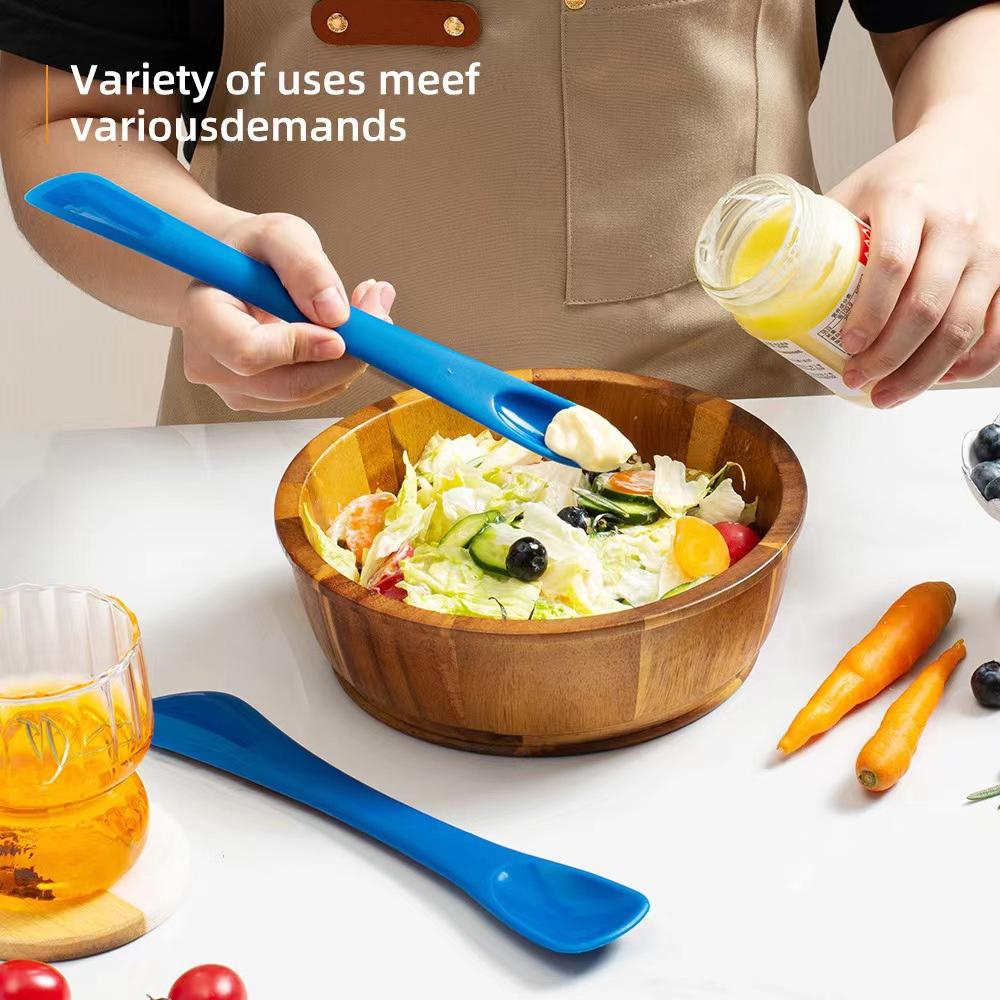
Many buyers use the terms OEM and ODM interchangeably, but the services are different.
OEM silicone kitchenware manufacturing generally means producing an item according to the buyer's established design, specifications, branding, packaging, or technical requirements.
ODM silicone kitchenware development generally means supporting buyers who need help selecting, adapting, customizing, or creating products based on existing factory capabilities and market needs.
At Yangjiang Hongyuan Trading Co., Ltd., we provide both OEM and ODM support for global buyers. This allows customers to choose a development path that fits their time frame, budget, and brand strategy.
OEM may be suitable when you already have:
- Approved product drawings or samples
- Defined dimensions and functional requirements
- A confirmed logo method
- Pantone or color references
- Retail packaging artwork
- Barcode and carton-mark requirements
- Existing testing standards or retailer requirements
In this situation, the factory's job is to convert a clear specification into repeatable mass production.
ODM support may be more suitable when you need:
- Product recommendations for a specific customer group
- Existing mold options to reduce development time
- Design adjustments for color, logo, packaging, or bundle configuration
- Advice on popular silicone kitchenware categories
- A supplier that can help turn an initial idea into a purchasable product
For example, a new online kitchen brand may begin with an existing silicone utensil set, then build differentiation through a coordinated color palette, branded packaging, a storage solution, product bundle, and clear care instructions. This can be faster and less risky than developing an entirely new mold for every item.
One of the most common mistakes buyers make is focusing only on pre-shipment inspection. Final inspection is important, but it cannot fully solve problems that started earlier in the process.
Professional quality control begins before bulk production and continues through every major stage.
Before placing a large order, establish an approved specification covering the following points:
- Product dimensions and tolerance
- Product weight and acceptable variation
- Silicone color reference
- Surface finish and texture
- Logo position, size, and clarity
- Flashing limits around mold lines
- Acceptable appearance standards
- Odor expectations
- Functional tests, such as flexibility or fit
- Packaging method and accessories
- Individual package artwork
- Master-carton quantity and shipping marks
- Inspection standard and defect definitions
For silicone products, minor details matter. Excess flashing can make a kitchen tool look cheap. Uneven color can cause retail returns. A weak logo can fade after washing. Poor packaging can leave clean products dusty or distorted by the time they reach a warehouse.
A professional factory uses approved samples and written standards to avoid subjective discussions later. The goal is not merely to say a product is "good quality." The goal is to define what acceptable quality looks like before mass production begins.
Silicone kitchenware buyers should inspect for defects that affect appearance, user experience, and resale value:
- Excess flashing or rough mold edges
- Visible air bubbles, pits, or surface marks
- Color inconsistency between pieces or production batches
- Dust, stains, or contamination
- Warping or deformation
- Weakly bonded parts in multi-material products
- Off-center printing or unclear embossed logos
- Incorrect accessories or missing components
- Packaging errors, barcode mistakes, or carton-count discrepancies
Experienced factories reduce these risks through process control. They do not wait until the container is ready to discover them.
For international customers, clear communication can be as important as factory equipment. Delays often happen not because a factory cannot produce the item, but because product expectations were not fully confirmed.
We work with customers across the European Union, the United States, the United Kingdom, Australia, and South America. These markets may differ in product preferences, packaging expectations, compliance needs, purchasing quantities, and retail channels.
A professional supplier should make cross-border purchasing easier by providing clear, timely information about:
- Quotation assumptions
- Minimum order quantities
- Sample timing
- Tooling requirements
- Production lead times
- Test-report availability
- Packaging specifications
- Shipping carton dimensions
- Product photos and approval samples
- Production updates
- Inspection findings
- Final loading information
For buyers, this reduces uncertainty. For the factory, it reduces avoidable changes, misunderstandings, and cost increases.
The best working relationship is built on transparency. If a requested color may create a longer development cycle, the supplier should explain it early. If a packaging material has a long procurement lead time, the buyer should know before confirming the purchase order. If a test is needed for a target market, it should be planned before shipment booking.
Before choosing a silicone kitchenware manufacturer, use a structured evaluation process rather than comparing quotations alone.
Ask whether the supplier regularly produces silicone kitchenware, silicone baking tools, silicone utensils, food storage accessories, or related food-contact products. A supplier experienced in your category is more likely to understand the practical details that affect production quality.
Ask about factory size, available capacity, sample lead time, normal mass-production lead time, and how the supplier handles peak-season demand. A credible answer should explain the conditions behind the lead time.
Ask for documentation that is relevant to your target market and exact product. Confirm whether the report applies to the specific material, product construction, and intended use.
Do not rely only on catalog photos. Approve a physical sample or documented pre-production sample before bulk manufacturing. This is the benchmark for color, finish, logo, construction, and packaging.
Agree on critical defects, major defects, minor defects, acceptable quality limits if applicable, quantity verification, and packaging checks. Written standards reduce disagreements later.
A supplier's response during sampling often predicts its performance during mass production. Look for accurate answers, realistic timelines, proactive questions, and a willingness to clarify unclear requirements.
A professional silicone factory should make purchasing simpler, safer, and more scalable. Our role is to help global buyers move from product concept to shipment with stronger control over material selection, customization, production quality, packaging, and delivery planning.
Our manufacturing strengths include:
- Focused silicone kitchenware manufacturing for retail, wholesale, private-label, and e-commerce buyers
- 7,500 m² combined factory space across a main factory and supporting factory
- Scalable production capacity, including support for qualified orders of up to 1 million pieces within 60 days
- OEM and ODM services for branded and customized silicone kitchen products
- International market experience across the EU, United States, United Kingdom, Australia, and South America
- Documented quality and compliance support associated with ISO 9001, BSCI, LFGB, FDA, and REACH requirements
- Clear project coordination from sampling and product confirmation through production, inspection, packing, and shipment preparation
Whether you are sourcing a single silicone kitchen tool, developing a full utensil collection, building a supermarket program, or launching a new private-label brand, the right factory partner helps you reduce risk before it reaches your customer.
If you are looking for a silicone kitchenware manufacturer with scalable production capability, OEM and ODM support, international-market experience, and a structured quality process, Yangjiang Hongyuan Trading Co., Ltd. is ready to discuss your project.
Send us your product images, drawings, target quantity, preferred colors, logo requirements, packaging concept, and destination market. Our team can help you evaluate the most practical path from sample development to mass production and shipment.
Contact Yangjiang Hongyuan Trading Co., Ltd. today to request a quotation, product catalog, sample plan, or customized silicone kitchenware solution.
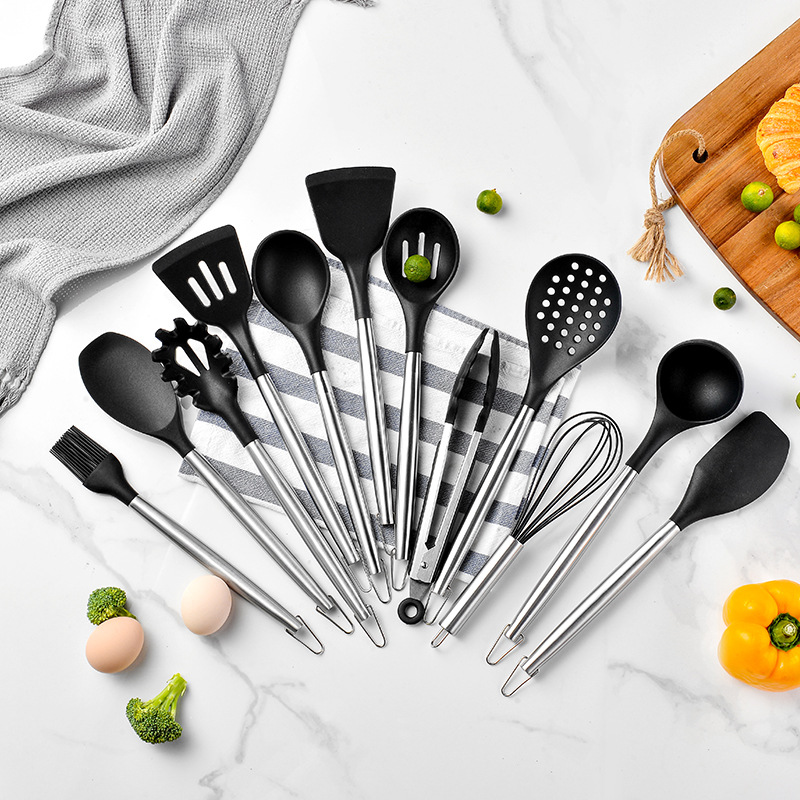
A silicone kitchenware factory can produce items such as silicone spatulas, turners, cooking spoons, ladles, pastry brushes, baking mats, baking molds, oven mitts, pot holders, trivet mats, ice trays, food covers, storage accessories, and customized silicone kitchen tools. Product availability depends on the factory's molds, production equipment, design capability, and material specifications.
Yes. Silicone kitchenware can commonly be customized with a logo through methods such as molding, embossing, debossing, printing, laser marking, or logo labels, depending on the product design and desired appearance. The best method should be confirmed during sampling because logo durability, visibility, and cost can vary.
Lead time depends on product complexity, order quantity, mold availability, customization, testing requirements, packaging materials, and production schedules. Standard items may require less time than fully customized products. For high-volume qualified projects, Yangjiang Hongyuan Trading Co., Ltd. can support delivery of up to 1 million pieces within 60 days, subject to final project confirmation.
Suitability depends on the specific product, material formulation, intended use, and applicable regulations in the destination market. Buyers should request product-relevant documentation and testing information rather than relying on general claims. Requirements may differ for markets such as the European Union, Germany, the United States, the United Kingdom, Australia, and South America.
OEM manufacturing follows the buyer's existing product design, branding, and specifications. ODM support helps the buyer develop or customize a product using the factory's available designs, molds, and product-development knowledge. ODM can be a practical option for buyers who want faster market entry with lower development risk.
Start with a detailed product specification, approve a sample before production, confirm material and documentation requirements, define inspection standards, verify packaging details, and work with a supplier that provides clear production updates. Do not rely only on product photos or the lowest quotation.
Provide product photos, drawings, dimensions, expected quantity, target market, preferred color, logo method, packaging requirements, testing needs, target price range if available, and requested delivery timing. The more complete the information, the more accurate the quotation and production plan can be.
1. [European Commission — Food Contact Materials]
Explains the European Union framework for food-contact materials, including Regulation (EC) No 1935/2004.
2. [U.S. Food and Drug Administration — Inventory of Food Contact Substances Listed in 21 CFR]
Provides FDA information on food-contact substances and their regulation by identity, intended use, and conditions of use.
3. [International Organization for Standardization — ISO 9001:2015 Quality Management Systems]
Describes ISO 9001 as an international quality-management system standard.
4. [SGS — Food Contact Material Regulations in Europe]
Summarizes the EU food-contact-material framework and relevant references for silicone materials.
5. [FDA — Guidance for Industry: Preparation of Premarket Submissions for Food Contact Substances]
Describes the regulatory approach and chemistry information associated with food-contact substance submissions.
6. [Compliance Gate — Food Contact Materials Regulations in the European Union]
Offers practical context on documentation, traceability, good manufacturing practice, and migration-related compliance expectations for food-contact materials.


