


Views: 228 Author: Hongyuan Silicone Publish Time: 2026-08-31 Origin: Site


Content Menu
● Why Silicone Kitchen Utensils Remain a Strong Wholesale Category
● What Wholesale Buyers Should Evaluate First
>> Food-Contact Material Documentation
>> Construction and Functional Performance
>> Reliable Capacity and Lead-Time Planning
● Choosing the Right Silicone Kitchenware Product Mix
>> Core Silicone Kitchen Tools
>> Higher-Value Silicone Utensil Sets
>> Market-Specific Assortment Planning
● OEM vs. ODM: Which Route Fits Your Business?
>> OEM Silicone Kitchenware Development
>> ODM Silicone Kitchenware Programs
● A Practical Quality-Control Checklist
● Compliance, Social Responsibility, and Buyer Confidence
● How to Compare Silicone Kitchenware Suppliers
● Work With Yangjiang Hongyuan Trading Co., Ltd.
>> What is the typical MOQ for silicone kitchen utensils wholesale?
>> Can I add my logo to silicone kitchen utensils?
>> How long does custom silicone kitchenware production take?
>> Are silicone kitchen utensils suitable for non-stick cookware?
>> What is the difference between FDA and LFGB silicone kitchenware testing?
>> Can I order a complete silicone utensil set with custom packaging?
>> What information should I send when requesting a quotation?
Sourcing silicone kitchen utensils wholesale is no longer just about finding a low unit price. For distributors, supermarket buyers, kitchenware brands, and online retailers, the real challenge is securing a dependable supply partner that can combine compliant materials, consistent quality, scalable production, practical packaging, and customization that supports long-term sales.
As a professional silicone kitchenware manufacturer, Yangjiang Hongyuan Trading Co., Ltd. supplies OEM and ODM silicone kitchen tools for buyers in the EU, United States, United Kingdom, Australia, and South America. With a 4,500 m² main factory plus a 2,000 m² supporting facility, our production system is structured to complete orders of up to 1 million pieces within 60 days, depending on product complexity, packaging requirements, and order confirmation timing.
This guide explains how distributors can evaluate wholesale silicone kitchenware suppliers, build an assortment that sells, reduce sourcing risk, and choose the right OEM or ODM development route.
Silicone kitchen utensils are widely used in home kitchens, restaurants, bakeries, catering operations, and gift sets because they are flexible, easy to clean, and suitable for common cooking tasks. A well-designed silicone utensil can help protect non-stick cookware from scratches while providing a comfortable and visually distinctive alternative to metal or rigid plastic tools.
For distributors, the category has several commercial advantages:
- It supports high-volume everyday demand, not only seasonal purchasing.
- It can be sold as single tools, coordinated sets, cookware accessories, baking tools, and gift-ready bundles.
- It is suitable for multiple retail channels, including supermarkets, homeware stores, discount chains, Amazon sellers, DTC brands, and hospitality supply businesses.
- It offers broad customization possibilities in colors, handles, packaging, logo placement, tool combinations, and retail positioning.
- It can be designed for different price tiers, from promotional kitchen tools to premium branded utensil sets.
However, silicone utensils are not interchangeable commodities. Product performance depends on material formulation, hardness, wall thickness, mold precision, handle construction, curing conditions, odor control, trimming quality, and inspection standards. Buyers who focus only on a quotation may later face returns caused by discoloration, weak handles, unpleasant odor, inconsistent colors, or poorly fitted cores.
A reliable wholesale program begins with product specification—not simply a product photo.
Before selecting a silicone kitchen utensils manufacturer, distributors should define the product requirements that affect safety, usability, logistics, and retail acceptance.
Silicone kitchenware intended for food contact must be evaluated against the requirements of the target market. In the European Union, food-contact materials must be made so that any transfer of substances does not create a health concern, unacceptably alter food composition, or negatively affect food quality, including taste and odor. The broad EU framework applies to all food-contact materials, while silicone remains an area where national requirements and testing expectations can also matter.
For a distributor, this means asking for documentation that matches the exact product rather than relying on generic statements.
A practical supplier documentation request should include:
- Food-contact test reports for the relevant silicone material or finished product.
- LFGB test documentation where required by customers or target markets.
- FDA-related food-contact compliance documentation for U.S.-oriented programs.
- REACH-related declarations or test information where applicable.
- Product specifications covering materials, dimensions, temperature range, colors, and construction.
- Batch identification and traceability procedures.
- Packaging material information for retail programs.
- Factory quality-control procedures and inspection records.
Important: A certificate name alone does not prove every SKU, color, decoration method, or component has been assessed in the same way. Ask which exact product, material, laboratory, test method, and report date are covered.
A silicone spatula, spoon, ladle, tongs, brush, or scraper must work under real kitchen conditions. The tool should remain stable in the hand, maintain appropriate flexibility, and withstand normal contact with hot cookware without poor odor, deformation, cracking, or separation between components.
For most product briefs, buyers should clarify:
| Evaluation point | Why it matters for distributors |
|---|---|
| Silicone grade | Influences odor, touch, flexibility, durability, and food-contact positioning |
| Core material | Determines strength and resistance to bending |
| One-piece or detachable design | Affects cleaning, durability, mold complexity, and perceived quality |
| Heat resistance | Must align with intended cooking use and product claims |
| Handle shape | Influences comfort, grip, hanging storage, and shelf appeal |
| Edge design | Determines scraping performance and compatibility with cookware |
| Surface finish | Affects appearance, stain visibility, cleaning perception, and branding |
| Color stability | Important for coordinated sets and repeat orders |
| Logo method | Determines branding clarity and long-term visual quality |
For example, a soft silicone spatula for batter and sauces needs a thin, flexible edge. A turner for eggs or pancakes needs a stronger internal structure and controlled flexibility. A ladle needs enough rigidity to carry soup without excessive bending. These are different usage scenarios, even when the products are grouped under the same category.
Large retail programs require more than a promise of capacity. They require production planning that accounts for mold availability, silicone curing, accessory sourcing, quality inspection, packaging assembly, carton preparation, and shipment scheduling.
Yangjiang Hongyuan Trading Co., Ltd. operates a 4,500 m² main factory and a 2,000 m² supporting factory. This production footprint supports scalable silicone kitchenware programs and enables the company to target delivery of up to 1 million pieces within 60 days for confirmed orders, subject to finalized specifications, production scheduling, packaging readiness, and order complexity.
For buyers, the useful question is not simply, "What is your monthly capacity?" Instead, ask:
1. How many pieces can be produced for this exact SKU or set?
2. Is a new mold required, and what is the mold-development timeline?
3. How many colors are included in the program?
4. Are metal cores, wooden handles, nylon parts, or other components required?
5. Does the order require retail packaging, barcode labels, display boxes, or inserts?
6. What percentage of production time is reserved for inspection and rework?
7. Can the supplier provide a production schedule with key milestones?
A realistic production plan is a sign of a manufacturer that understands distributor risk.
A successful wholesale catalog usually combines fast-moving basics with higher-value sets and differentiated items. This approach gives distributors a broader customer base while reducing dependence on one product type.
These are the products most buyers expect in a basic wholesale program:
- Silicone spatulas and scrapers
- Slotted turners and solid turners
- Silicone cooking spoons
- Slotted spoons
- Soup ladles
- Pasta servers
- Whisks with silicone-coated components
- Tongs
- Basting brushes
- Measuring cups and measuring spoons
- Jar scrapers
- Spoon rests
- Silicone trivets and pot holders
These products work well for mass retail, replenishment programs, bundled promotions, and online listings.
Sets are especially effective for brands, supermarket promotions, and online retailers because they increase perceived value and allow stronger visual merchandising. A set can also help a distributor create a more defensible product offer than single-item price competition.
Common set configurations include:
- 5-piece starter utensil sets
- 7-piece everyday cooking sets
- 10-piece or 12-piece premium kitchen tool sets
- Utensil sets with a storage holder
- Silicone utensil and bamboo-handle combinations
- Baking tool gift sets
- Color-coordinated kitchen accessory collections
For premium positioning, consider including a branded storage holder, recipe card, gift box, care instructions, or color-matched packaging. For discount retail, prioritize durable construction, compact packaging, fewer SKUs, and easy price communication.
Different customer groups often need different product strategies.
| Buyer type | Suitable wholesale approach |
|---|---|
| Supermarkets | High-volume basics, value sets, barcoded retail packaging, stable replenishment |
| Wholesalers | Broad SKU range, mixed cartons, flexible colors, competitive pricing |
| Online retailers | Product bundles, photo-ready colors, branded inserts, compact packaging |
| Private-label brands | Custom colors, logo application, exclusive set combinations, branded packaging |
| Promotional buyers | Seasonal colors, gift-ready sets, lower-MOQ simple items |
| Hospitality suppliers | Functional tools, durable designs, easy-clean construction, bulk packing |
The best assortment is not necessarily the largest. It is the one that aligns with your channel, price point, storage capacity, and replenishment model.
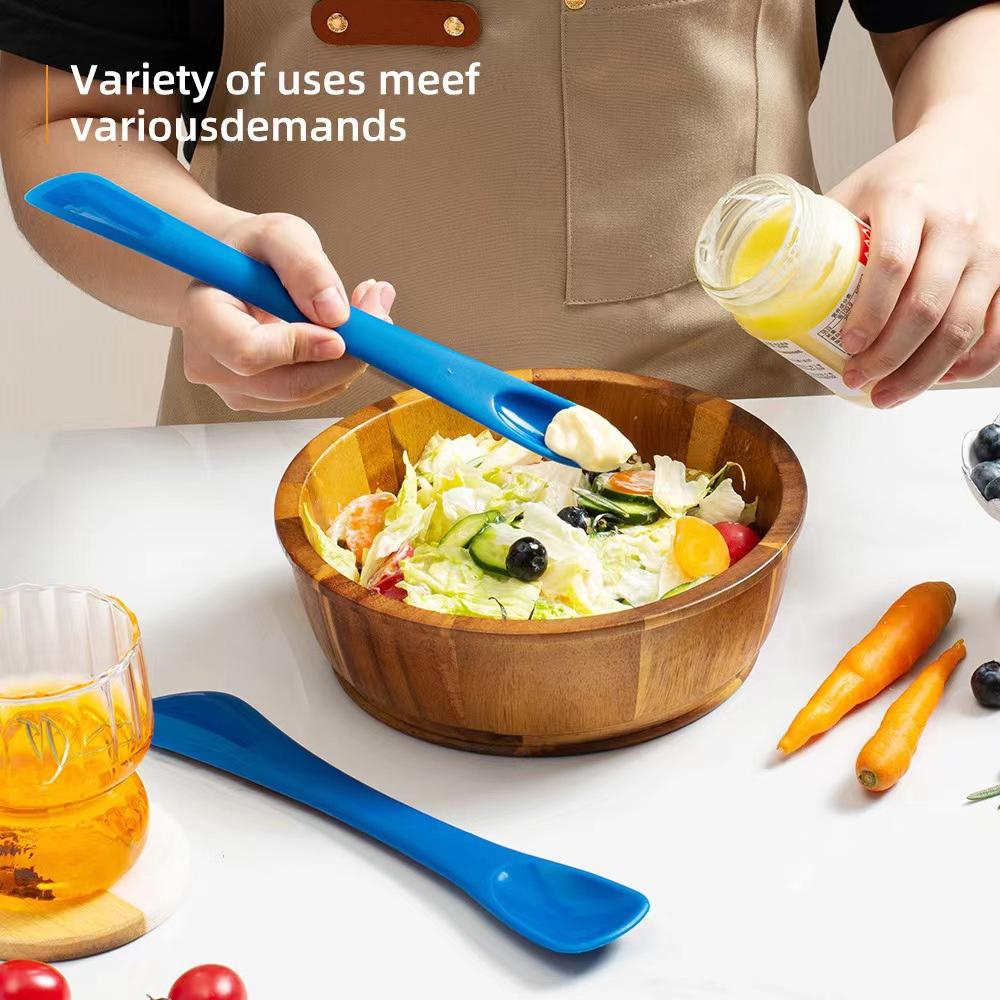
Distributors often use the terms OEM and ODM loosely, but the distinction matters for cost, timing, exclusivity, and brand control.
OEM is appropriate when a buyer already has a clear product concept, drawing, sample, packaging design, logo standard, or technical requirement. The manufacturer produces the item according to the buyer's specifications.
OEM may include:
- Custom product dimensions
- New silicone tool shapes
- Custom internal cores
- Buyer-owned molds
- Specific silicone colors
- Embossed or printed logos
- Custom labels and packaging
- Exclusive retail configurations
OEM development can create a more differentiated product line, but it usually requires longer lead times, mold investment, and careful sample approval.
ODM is often the faster and lower-risk route for distributors who want to launch quickly. The buyer selects from existing product designs and then customizes colors, logos, packaging, set combinations, or labeling.
ODM is especially suitable when:
- You need to test a new market before investing in molds.
- You want to launch a retail collection quickly.
- You are building a private-label range with controlled development cost.
- You want proven product structures with lower technical risk.
- You need multiple SKUs for a catalog or e-commerce store.
A practical strategy is to begin with ODM sets, validate demand, and then use sales data to decide which best-selling SKUs deserve OEM investment.
Quality control should begin before mass production, not after goods are packed. The strongest wholesale programs use defined checkpoints throughout the process.
Confirm the approved standard before production begins:
- Approved product sample
- Final color reference
- Logo artwork and position
- Product dimensions and tolerance
- Handle and core construction
- Packaging dieline and artwork
- Barcode and carton marks
- Required testing documents
- Acceptance quality limits
- Order quantity by SKU and color
The approved sample should become the reference standard for production inspections. If the buyer changes color, packaging, logo size, or material during production, the timeline and quality standard must be reviewed again.
During production, inspectors should check:
- Material consistency
- Molded shape and surface quality
- Flashing, trimming, and sharp edges
- Silicone thickness where relevant
- Core alignment and insertion quality
- Handle stability
- Color consistency across batches
- Logo accuracy
- Product cleanliness
- Functional fit for assembled components
For silicone kitchen utensils with metal cores, pay particular attention to end sealing, core movement, and the transition between silicone and the handle area. This is where poor assembly can affect both appearance and long-term performance.
Final inspection should cover:
- Quantity verification
- Random functional checks
- Appearance inspection
- Packaging and labeling accuracy
- Barcode readability
- Carton drop or transport suitability where required
- Carton quantity and shipping marks
- Moisture protection or inner bags where needed
- Final photo records for buyer confirmation
This process reduces the chance of a distributor receiving goods that look acceptable in a factory photo but fail at warehouse receiving or retail shelf inspection.
For international buyers, compliance is both a product issue and a supplier-management issue. Product materials must be appropriate for their intended food-contact use, while the factory should demonstrate responsible operational controls.
Yangjiang Hongyuan Trading Co., Ltd. holds ISO 9001, BSCI, LFGB, FDA, and REACH-related credentials and documentation to support global customer requirements. Buyers should still verify the scope, validity period, and product applicability of all documents during their supplier approval process.
ISO 9001 is generally associated with a structured quality-management system. BSCI is a social-audit framework focused on improving working conditions and supply-chain practices; it is not itself a product certification. Its assessment scope can include worker involvement, fair remuneration, working hours, occupational health and safety, prohibition of child and forced labor, environmental protection, and ethical behavior.
This distinction is important. A factory social audit does not replace food-contact testing, and a food-contact report does not replace a social-compliance review. Professional distributors examine both.
When reviewing supplier quotations, use a scorecard rather than choosing solely by unit price.
| Supplier comparison factor | Questions to ask |
|---|---|
| Product quality | Can the supplier provide samples and a product specification sheet? |
| Material documentation | Are reports relevant to the actual product and destination market? |
| Manufacturing capability | Does the facility control molding, assembly, finishing, and packing? |
| Capacity | Can it deliver your required quantity within your launch window? |
| Customization | Can it support colors, logos, packaging, and set combinations? |
| Communication | Does the team answer technical questions clearly and quickly? |
| Quality control | Is there a documented inspection process before shipment? |
| Social compliance | Is current audit documentation available where required? |
| Commercial flexibility | Can it support mixed SKUs, staged orders, or repeat programs? |
| Long-term value | Will the supplier help improve the assortment after launch? |
The lowest quotation can become expensive if it leads to returns, missed delivery dates, inconsistent quality, or costly rework. The better decision is usually the supplier that provides dependable specifications, transparent documentation, responsive communication, and repeatable production.
Yangjiang Hongyuan Trading Co., Ltd. supports distributors, importers, supermarket buyers, wholesalers, and private-label brands seeking dependable silicone kitchenware wholesale supply.
Our team can support your project from product selection through production and shipment preparation, including:
- OEM and ODM silicone kitchen utensil development
- Custom colors and coordinated collections
- Private-label logo applications
- Retail-ready packaging and labeling
- Wholesale utensil sets and mixed product assortments
- Food-contact documentation support
- Quality inspection and production reporting
- Large-volume order planning
- Export-oriented service for global markets
Whether you are launching a first private-label collection or expanding an established kitchenware catalog, start with a clear product brief. Tell us your target market, sales channel, estimated quantity, desired products, preferred colors, packaging needs, logo requirements, and target delivery date.
Contact Yangjiang Hongyuan Trading Co., Ltd. today to request a silicone kitchen utensils catalog, sample proposal, quotation, and customized OEM or ODM sourcing plan.
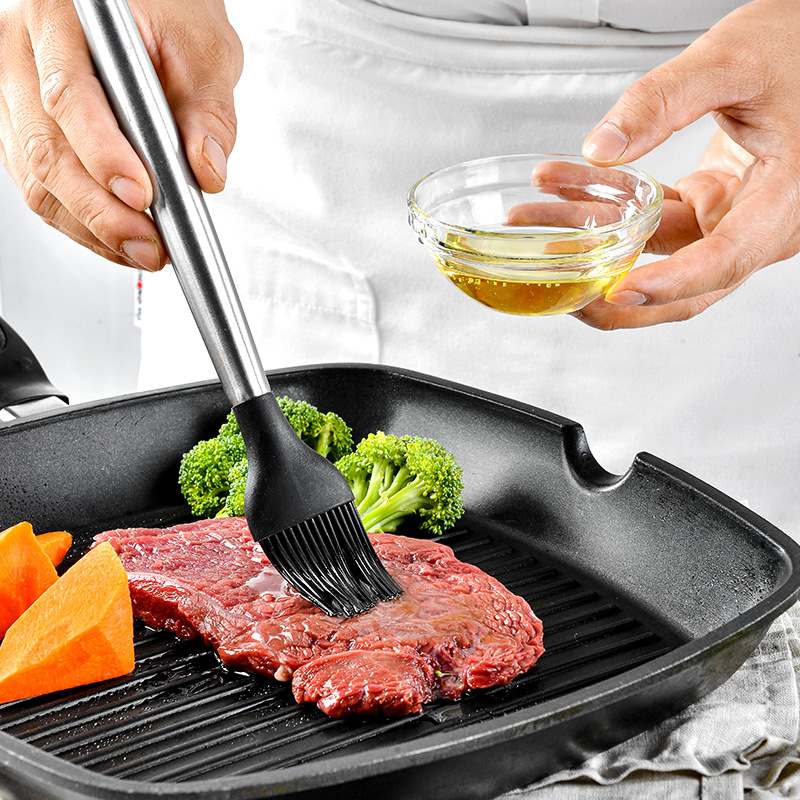
MOQ depends on the product design, color quantity, logo method, packaging, and whether you choose an existing product or a new mold. Existing ODM items usually allow a more accessible starting point than fully customized OEM projects. Request MOQ by SKU, color, and packaging type before finalizing an assortment.
Yes. Common branding options include embossed logos, debossed logos, printed logos, laser marking on selected components, hang tags, labels, color boxes, and carton marks. The best method depends on the utensil material, logo detail, retail positioning, and intended order quantity.
Timing depends on whether the project uses an existing design or requires a new mold. Product sampling, artwork approval, material preparation, molding, assembly, packaging, inspection, and shipping preparation all affect the schedule. For larger confirmed programs, Hongyuan can plan orders of up to 1 million pieces for completion within 60 days, subject to final specifications and production conditions.
Many silicone kitchen tools are designed for use with non-stick cookware because silicone contact surfaces are softer than metal utensils. However, buyers should evaluate each tool's design, edge structure, heat-use conditions, and intended application before making product claims.
Both are commonly requested for food-contact silicone kitchenware, but they relate to different regulatory or market expectations. Buyers should identify the destination market and customer requirements first, then request relevant documentation for the specific product and material. Do not assume a general document automatically applies to every SKU, color, or component.
Yes. A wholesale program can include a custom set configuration, selected colors, a storage holder, branded sleeves, color boxes, barcode labels, instruction cards, and export cartons. Provide your packaging artwork and retail requirements early because packaging development can affect the overall production schedule.
Include product photos or specifications, estimated quantity, target market, preferred colors, logo requirements, packaging type, target price range if available, requested certifications, and expected delivery date. The more complete the brief, the more accurate the quotation and production plan will be.
1. [European Food Safety Authority — Food Contact Materials]
2. [National Institutes of Health / PMC — Risk Assessment of Food Contact Materials II]
3. [UL Solutions — amfori BSCI Social Audit Program]
4. [Eurofins — What Is an amfori BSCI Audit?]


