


Views: 261 Author: Hongyuan Silicone Publish Time: 2026-09-02 Origin: Site


Content Menu
● What Are Silicone Kitchen Tools?
● Why Silicone Kitchenware Remains Popular
● Main Types of Silicone Kitchen Tools
>> Silicone Spatulas and Scrapers
>> Silicone Food Storage Products
>> Silicone Oven Mitts, Pot Holders, and Trivets
>> Silicone Ice, Candy, and Dessert Molds
● How to Choose the Right Silicone Tool for Each Task
● Material Quality and Food-Contact Expectations
● A Practical Quality-Control Checklist
>> Visual and Surface Inspection
>> Packaging and Retail Readiness
● How Manufacturers Support Large Silicone Kitchenware Programs
● Building a Better Private-Label Silicone Range
● Common Buying Mistakes to Avoid
● Partner With a Silicone Kitchenware Manufacturer
>> Are silicone kitchen tools safe for food contact?
>> What silicone kitchen tools should a new private-label brand launch first?
>> What is the difference between a one-piece silicone spatula and a silicone-head spatula?
>> Can silicone kitchenware be customized with a logo?
>> How should buyers evaluate silicone kitchenware samples?
>> How long does a large silicone kitchenware order take to produce?
Silicone kitchen tools have become a core category for modern cookware brands, supermarkets, online retailers, and homeware wholesalers. From spatulas and baking mats to collapsible containers and ice molds, silicone kitchenware offers a practical combination of flexibility, heat resistance, easy cleaning, and broad color-customization potential.
However, not all silicone utensils are made to the same standard. For buyers sourcing silicone kitchen tools for the EU, United States, United Kingdom, Australia, or South American markets, the real question is not simply "Which silicone products sell?" It is: Which silicone kitchen tools match the intended use, target price, safety requirements, packaging strategy, and customer expectations?
This guide explains the major types of silicone kitchen tools, how they are used, what buyers should inspect before placing an order, and how to build a silicone kitchenware range that is both commercially practical and suitable for international retail channels.
Silicone kitchen tools are food-contact products made from silicone rubber or silicone-based compounds. They are widely used for preparing, cooking, baking, storing, freezing, and serving food.
Unlike rigid metal or hard plastic utensils, silicone kitchenware is valued for its soft-touch feel, non-slip performance, flexibility, and ability to protect cookware surfaces. A properly designed silicone spatula can scrape the last portion of batter from a bowl. A silicone baking mat can reduce the need for disposable parchment paper. A silicone trivet can protect a countertop from a hot pan while taking up very little storage space.
For food-contact products, material selection, manufacturing control, testing, traceability, and intended-use instructions matter. In the European Union, food-contact materials are governed by a general legal framework designed to ensure that materials do not transfer substances into food at levels that could endanger health or unacceptably change the food's composition, taste, or smell.
For importers and private-label buyers, that makes product development more than a color-and-logo exercise. It is a process that should connect design, compliance documentation, production consistency, and retail usability.
Silicone cookware and utensils serve a wide range of everyday kitchen tasks. Their versatility makes them suitable for both single-item retail sales and coordinated kitchen tool sets.
The main commercial advantages include:
- Flexible performance for scraping, folding, releasing baked goods, and demolding frozen food.
- Cookware protection because soft silicone heads are less likely to scratch non-stick pans, coated cookware, glass bowls, or bakeware.
- Color customization for private-label collections, seasonal promotions, children's baking ranges, and coordinated countertop displays.
- Easy-care potential because many designs can be washed by hand or in a dishwasher when the full construction is suitable.
- Compact storage for foldable, stackable, collapsible, or hanging designs.
- Wide product coverage across cooking tools, baking accessories, food-storage products, and barware.
The best-selling silicone kitchenware collections usually solve an obvious user problem. A customer may need a spatula that reaches into a narrow jar, a pastry brush that does not shed bristles, a lid that covers bowls without single-use wrap, or an oven mitt that gives a safer grip on hot cookware.
That problem-solving role is important for product positioning. A practical product story is usually stronger than a generic "eco-friendly" or "high-quality" claim.
Silicone spatulas are among the most recognizable silicone kitchen tools. They are used for mixing batter, folding ingredients, spreading frosting, scraping sauces, and transferring food from bowls or pans.
Common styles include:
- One-piece silicone spatulas
- Flexible bowl scrapers
- Spoon spatulas
- Jar spatulas
- Mini baking spatulas
- Offset icing spatulas
- Fish turners with silicone-coated heads
- Wide turners for eggs, pancakes, and burgers
A one-piece design can be particularly attractive for retail buyers because it eliminates the joint between the head and handle, which can simplify cleaning. However, the internal structure must still be designed for the intended task. A thin scraper needs flexibility; a turner for heavier foods needs a firmer core and a shape that supports lifting.
Buyer insight: Do not evaluate a spatula only by color and surface finish. Test the edge flexibility, handle balance, head thickness, resistance to twisting, and performance under real mixing or flipping conditions.
This category includes the everyday tools used at the stovetop and dining table. It often forms the foundation of a silicone kitchen tool set.
Typical products include:
- Cooking spoons
- Slotted spoons
- Ladles
- Pasta servers
- Tongs
- Whisks
- Skimmers
- Turners
- Serving spoons
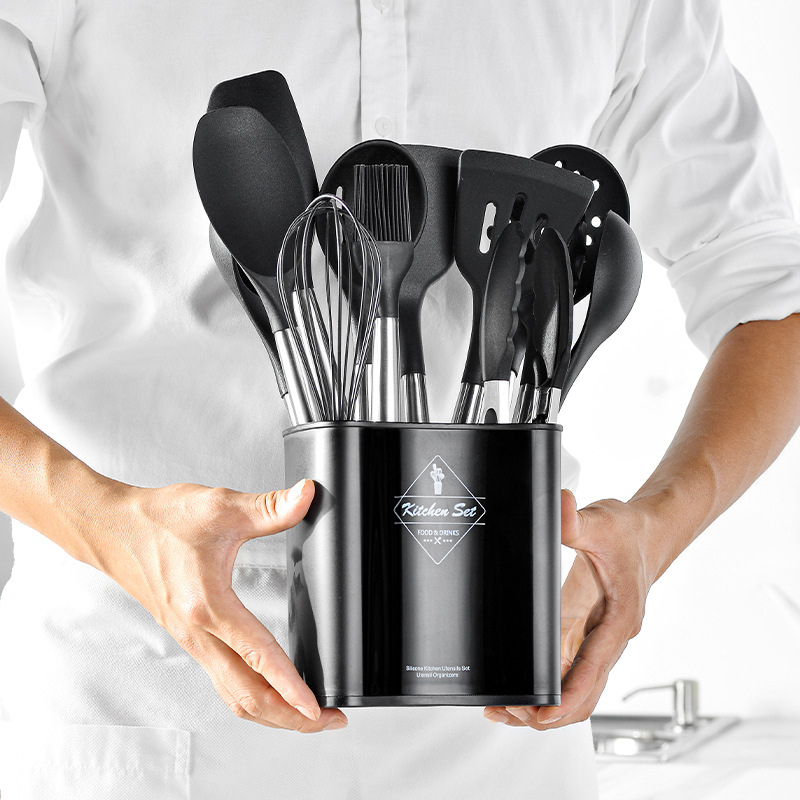
- Basting brushes
- Slotted turners
Many brands combine a silicone working head with a stainless-steel, nylon, wooden, or silicone handle. Each construction changes the product's look, price level, weight, durability profile, and cleaning requirements.
For example, a stainless-steel core may communicate a more premium feel, while a full-silicone one-piece tool can support a minimalist and easy-cleaning message. Wooden-handle designs may appeal to consumers looking for a warmer, natural kitchen aesthetic, but they require different care instructions than fully washable silicone constructions.
Silicone baking tools are especially important for bakeries, home bakers, specialty stores, gifting programs, and online retail.
The category can include:
- Silicone baking mats
- Pastry mats
- Rolling-pin guides
- Dough scrapers
- Cupcake molds
- Cake pans
- Loaf molds
- Muffin cups
- Chocolate molds
- Ice-pop molds
- Macaron mats
- Pastry brushes
- Icing tools
- Oven mitts
- Pot holders
A silicone baking mat is one of the most commercial products in this category because it can be positioned as a reusable alternative to disposable baking paper. Measurement markings can add practical value for dough preparation, pastry work, pizza making, and baking demonstrations.
For baking molds, release performance is only one consideration. Buyers should also assess wall thickness, structural stability, odor control, tray-support needs, shape precision, and whether the mold performs consistently in repeated heating and cooling cycles.
Food storage is a fast-growing product direction because consumers increasingly want reusable, space-saving options for meal preparation, leftovers, snacks, and travel.
Popular silicone food storage products include:
- Stretch lids
- Bowl covers
- Reusable food bags
- Collapsible lunch boxes
- Collapsible bowls
- Foldable cups
- Portion containers
- Ice cube trays
- Freezer trays
- Silicone freshness covers
These products require special attention to sealing performance. A silicone food bag may look attractive in product photos, but a poorly designed closure can create negative reviews if it leaks, is difficult to open, or traps food residue.
Practical product-development tip: Ask the factory to test a reusable storage product with liquids, oily sauces, colored foods, and repeated dishwasher cycles. Product samples should be checked after actual use, not only after a visual inspection.
Silicone heat-protection products are designed to improve grip and help users handle hot cookware, baking trays, lids, and serving dishes.
This category includes:
- Silicone oven mitts
- Silicone pinch mitts
- Pot holders
- Pan handle covers
- Trivets
- Countertop protectors
- Jar openers
Grip pattern is critical. Raised textures, honeycomb surfaces, ribbed designs, and non-slip finishes can improve handling, but the final product must remain comfortable and easy to clean.
These products should be marketed carefully. Heat resistance does not mean unlimited protection. The actual performance depends on material thickness, construction, contact time, the temperature of the object, and whether the user is handling dry or wet cookware. Clear product instructions and use limitations help reduce misuse and customer complaints.
Silicone molds are widely used for ice cubes, chocolates, candies, jelly, mini cakes, frozen snacks, and novelty desserts. They are popular in gift stores, kitchenware chains, party-supply retailers, and e-commerce channels because they offer strong visual appeal.
Common designs include:
- Sphere ice molds
- Large cocktail ice molds
- Letter molds
- Animal-shaped molds
- Seasonal molds
- Chocolate bar molds
- Candy molds
- Mini dessert molds
- Coffee ice cube trays
- Baby food freezer trays
Novelty products can generate attention, but the most durable commercial opportunities usually come from functional designs. For example, a large-cube ice mold for cocktails, a portioned freezer tray for baby food, or a covered ice tray that reduces freezer odor exposure can offer a clearer long-term reason to buy.
A successful silicone kitchenware assortment should match product design with real user behavior. The table below helps buyers connect common kitchen tasks with suitable product types.
| Kitchen Task | Recommended Silicone Tool | Important Design Feature |
|---|---|---|
| Mixing thick batter | Spoon spatula or firm scraper | Reinforced inner core and comfortable grip |
| Scraping bowls and jars | Flexible scraper or jar spatula | Thin, flexible edge and narrow head |
| Flipping eggs or pancakes | Wide turner | Stable core and tapered leading edge |
| Baking cookies and pastries | Baking mat or pastry mat | Flat surface, stable dimensions, easy cleaning |
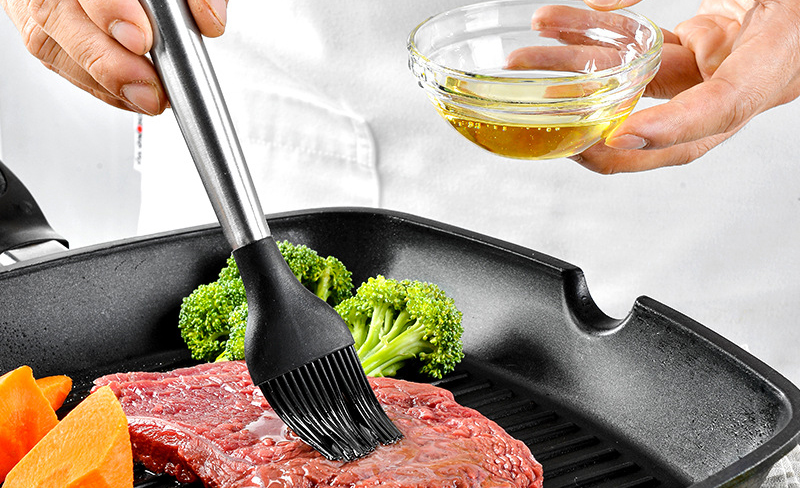
| Applying oil or glaze | Silicone pastry brush | Dense bristles that do not shed |
| Storing leftovers | Stretch lid or reusable bag | Reliable seal and easy-open closure |
| Removing hot cookware | Oven mitt or pot holder | Non-slip texture and suitable insulation |
| Making ice or desserts | Ice tray or dessert mold | Easy release and stable mold shape |
A product range does not need to include every possible item. Many retailers perform better with a focused assortment that has a consistent design language, clear price architecture, and coordinated packaging.
For example, a mid-market private-label collection might include a utensil set, baking mat, pastry brush, oven mitt, trivet, and food-storage lid set in three coordinated colors. This creates cross-selling opportunities without overwhelming customers with too many similar products.
Silicone is often described as heat resistant, flexible, and durable, but buyers should avoid using broad claims without validating the finished product. The quality of silicone kitchenware can vary according to raw materials, fillers, pigments, additives, curing methods, mold design, post-curing procedures, and manufacturing discipline.
When sourcing silicone kitchen tools, ask suppliers for clear answers to the following questions:
1. What is the intended temperature range for this specific product?
2. Is the product designed for direct food contact?
3. Which tests have been completed for the finished item?
4. Can the supplier provide the relevant test reports and declarations?
5. Are the pigments and printing inks suitable for the intended food-contact application?
6. Is the product one-piece silicone, silicone with a core, or a multi-material assembly?
7. How is batch traceability managed?
8. What quality checks take place before packing and shipment?
In the EU, food-contact materials must comply with general safety requirements and Good Manufacturing Practice requirements. The EU framework also emphasizes that food-contact products should not release components at levels that harm health or cause unacceptable changes to food composition, taste, or odor.
For brand owners, this means documentation should travel with the product strategy. Do not wait until the shipment is ready to ask about testing records, product declarations, carton markings, or import-market requirements.
Experienced buyers know that product defects are rarely limited to one visible problem. A soft utensil may have weak bonding. A baking mold may have uneven walls. A reusable bag may have an unreliable seal. A printed measuring mat may show poor color adhesion after repeated washing.
Before approving mass production, evaluate these areas:
Check for:
- Flashing around mold edges
- Uneven color
- Black spots or contamination
- Air bubbles
- Surface stickiness
- Visible seams
- Poor logo clarity
- Inconsistent texture
- Strong or unusual odor
Test the product in the way the final customer will use it:
- Bend spatulas repeatedly to assess cracking or deformation.
- Fill storage containers with water and test sealing at different angles.
- Use baking molds with real batter and inspect release performance.
- Wash products repeatedly to evaluate color and print durability.
- Test oven mitts with controlled handling procedures appropriate to the product's stated use.
- Freeze and thaw ice molds to assess shape recovery and demolding.
A strong product can still fail in retail if it arrives in weak packaging or lacks understandable instructions.
Confirm:
- Barcode placement
- Warning labels
- Care instructions
- Material statements
- Country-of-origin marking
- Packaging durability
- Carton drop protection
- Color consistency across sets
- Retail display requirements
- Private-label logo placement
Large buyers often need more than a standard catalog. They may require custom colors, branded packaging, logo application, revised dimensions, coordinated sets, compliance documents, and staged delivery plans.
At Yangjiang Hongyuan Trading Co., Ltd., we manufacture silicone kitchenware and related silicone kitchen products for international buyers. Our production capacity is supported by a 4,500-square-meter main factory and a 2,000-square-meter branch facility. This production arrangement supports orders of up to 1 million pieces within 60 days, subject to final product design, tooling, packaging requirements, and order confirmation.
We work with supermarkets, wholesalers, brand owners, and online retailers across the EU, United States, United Kingdom, Australia, and South American markets. Our team supports OEM and ODM projects covering product selection, color matching, logo customization, packaging development, quality inspection, and export-oriented order coordination.
Our product programs are supported by certifications and testing capabilities including:
- ISO 9001
- BSCI
- LFGB
- FDA
- REACH
ISO 9001 is an internationally recognized quality-management standard that helps organizations consistently meet customer and regulatory requirements through structured quality processes. For buyers, this can support a more disciplined approach to specifications, inspection procedures, corrective action, and production consistency.
Certification alone is not a substitute for product-specific verification. The best approach is to align the target market, product use case, material specification, and required documentation before production begins.
The strongest private-label silicone kitchenware programs usually follow a simple formula: select proven product categories, create a coherent visual identity, and eliminate common customer frustrations before launch.
Here is a practical five-step approach.
1. Choose a clear target customer. Decide whether the range is for value retailers, premium homeware stores, online marketplaces, professional baking users, families, or gift buyers.
2. Build around core products. Start with versatile, easy-to-understand products such as spatulas, baking mats, pastry brushes, oven mitts, trivets, and storage lids.
3. Create a coordinated color system. Use a small palette rather than too many unrelated colors. Neutral tones, muted pastels, and modern dark shades can help products look more cohesive on shelves and in online images.
4. Improve the details customers notice. A hanging hole, measurement markings, reinforced core, non-slip handle, easy-open tab, or better packaging insert can be more valuable than adding unnecessary features.
5. Validate before scale-up. Review pre-production samples, test packaging, confirm documentation, and approve a final golden sample before mass production.
For instance, an online retailer selling baking accessories could combine a pastry mat, two spatulas, a brush, a dough scraper, and a set of cupcake molds in one branded kit. The bundle gives consumers a complete starting point while improving average order value for the retailer.
Many silicone kitchenware sourcing problems can be prevented early. Watch for these common mistakes:
- Selecting a product only from photos without physical sample testing.
- Comparing suppliers only by unit price rather than total quality, packaging, and documentation value.
- Assuming every silicone product has the same heat performance.
- Using broad safety claims without matching reports for the finished product.
- Ignoring odor, surface feel, and cleaning performance during sample approval.
- Choosing complicated product designs that are difficult to inspect or pack.
- Delaying private-label packaging decisions until production is already scheduled.
- Failing to define acceptable quality limits before bulk production.
A lower initial quotation can become expensive if it creates returns, negative reviews, packaging damage, or delayed market entry. The right supplier should help reduce risk, not merely provide a lower price.
Silicone kitchen tools can be simple products, but successful sourcing requires careful attention to material quality, practical design, food-contact expectations, packaging, and dependable production management.
Whether you are developing a silicone utensil set for a supermarket, a baking collection for an online store, or a customized private-label kitchenware program, Yangjiang Hongyuan Trading Co., Ltd. can support your project from product selection through production and export coordination.
Contact our team to discuss your target market, product specifications, color requirements, logo application, packaging concept, certification needs, and order quantity. We can help you create a silicone kitchenware range designed for practical use, stronger shelf appeal, and long-term customer satisfaction.
Food-contact suitability depends on the finished product's material formulation, intended use, production controls, and relevant testing or documentation. Buyers should request product-specific reports and declarations rather than relying only on general material claims. EU food-contact rules require that materials should not transfer substances into food at levels harmful to health or unacceptably affect the food.
A practical starter range often includes silicone spatulas, turners, cooking spoons, a pastry brush, a baking mat, oven mitts, trivets, and reusable food-storage lids. These products solve familiar kitchen problems and can be grouped into coordinated sets.
A one-piece silicone spatula has a continuous external silicone construction that can be easier to clean. A silicone-head spatula typically uses another material, such as stainless steel or nylon, inside or as part of the handle. The best option depends on desired flexibility, strength, appearance, price position, and cleaning requirements.
Yes. Common options include molded logos, embossed logos, debossed logos, printed logos, customized colors, product dimensions, retail packaging, barcode labels, hang tags, and bundled gift sets. The best branding method depends on the product shape, production method, and intended retail position.
Buyers should inspect appearance, odor, color consistency, flexibility, structural strength, food-release performance, sealing ability, print durability, and packaging quality. They should also perform real-use tests such as baking, washing, freezing, bending, and handling before approving mass production.
Lead time depends on product complexity, tooling, color quantity, packaging, testing requirements, and order volume. With our 4,500-square-meter main factory and 2,000-square-meter branch facility, Yangjiang Hongyuan Trading Co., Ltd. can support projects of up to 1 million pieces within 60 days, subject to final specifications and production scheduling.
1. European Food Safety Authority. "Food Contact Materials." [https://www.efsa.europa.eu/en/topics/topic/food-contact-materials]
2. European Commission. "Regulation (EC) No 1935/2004 on Materials and Articles Intended to Come into Contact with Food." [https://eur-lex.europa.eu/eli/reg/2004/1935/oj]
3. European Commission. "Commission Regulation (EC) No 2023/2006 on Good Manufacturing Practice for Materials and Articles Intended to Come into Contact with Food." [https://eur-lex.europa.eu/eli/reg/2006/2023/oj]
4. International Organization for Standardization. "ISO 9001:2015—Quality Management Systems: Requirements." [https://www.iso.org/standard/62085.html]
5. European Food Safety Authority. "Food Contact Materials: Safety Assessment and Regulatory Framework." [https://www.efsa.europa.eu/en/topics/topic/food-contact-materials]
6. National Center for Biotechnology Information. "Risk Assessment of Food Contact Materials II." [https://pmc.ncbi.nlm.nih.gov/articles/PMC9131608/]


